
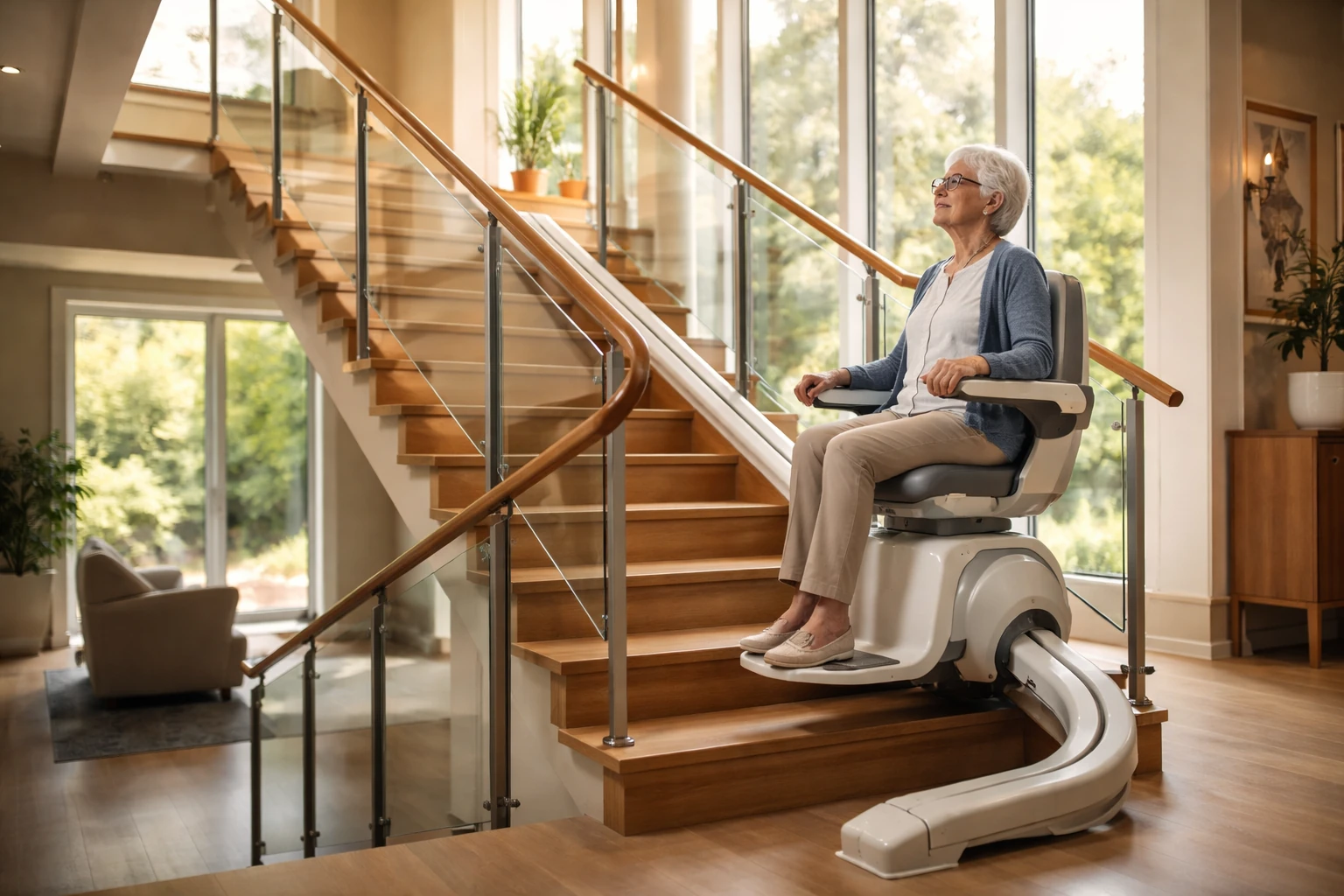
Stairs can become a serious barrier when mobility changes begin with age. Many homeowners start seeking safer access before stair use becomes dangerous. A
stair lift
can reduce risk while preserving independence inside multilevel homes.
That benefit explains growing demand for residential mobility equipment solutions today.
Many people begin researching a
stair lift chair
after falls or balance concerns. Others compare
stair lifts for seniors
while planning long-term aging in place.
Some homeowners simply want safer movement between floors without major remodeling work.
Understanding options early often prevents costly mistakes during the buying process later.
The market offers many products, features, rail designs, and safety technologies today. However, not every stair lift fits every staircase, user, or mobility condition equally. Some models serve straight staircases, while others handle curved or narrow stair layouts. Certain systems prioritize budget, while others focus heavily on advanced safety features.
Costs also vary widely based on staircase design, customization, and installation complexity. That often creates confusion for buyers comparing products across different manufacturers online. Many people also struggle deciding whether home elevators or stair lifts make sense. This guide removes that confusion through practical explanations, comparisons, and buying advice.
You will learn what a stair lift is and how these systems operate daily. You will compare major stair lift types and understand where each option works best. This guide also covers pricing factors, installation basics, and essential safety considerations. It also explains mistakes many buyers make before choosing the wrong mobility solution.
If you are evaluating stair lift options, this guide offers a decision framework first. It is designed to help homeowners make informed choices before requesting product estimates. By the end, choosing the right system should feel much clearer and less overwhelming.
What Is a Stair Lift
A stair lift is a motorized mobility device designed to move a person safely between floors using a rail attached directly to stairs. For people facing reduced mobility, it often becomes a practical solution that supports independence without requiring relocation or major structural renovation.
Unlike residential elevators, a stair lift uses a compact rail system mounted to stair treads, allowing installation in many homes with minimal disruption. This makes a stair lift at home a common choice for homeowners who want better accessibility while preserving their existing living space.
Most people picture a basic moving chair, yet modern stair lift systems offer far more advanced functionality than many buyers initially expect. Today’s models combine safety engineering, ergonomic design, and customization features that serve different stair layouts, user needs, and long-term mobility goals.
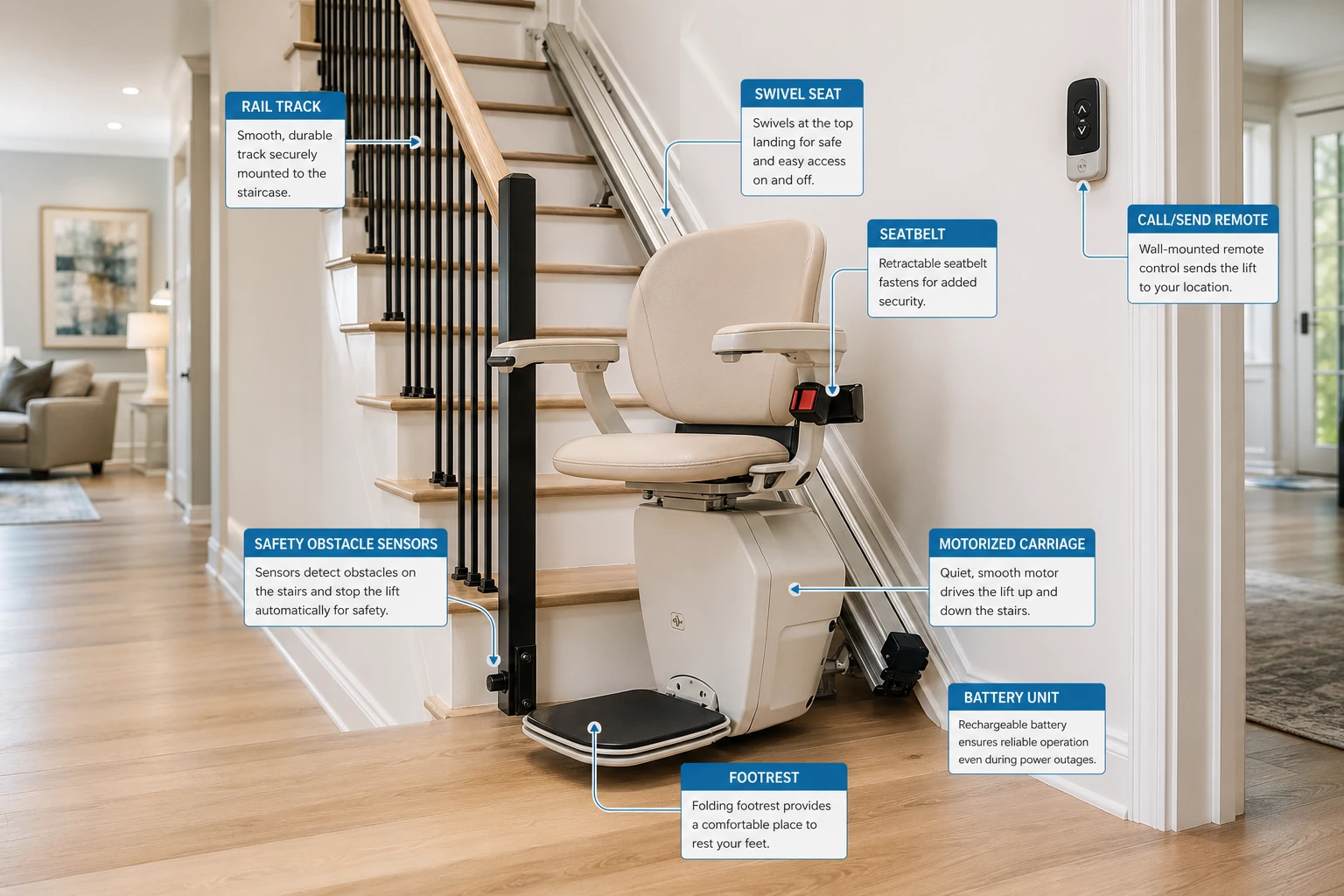
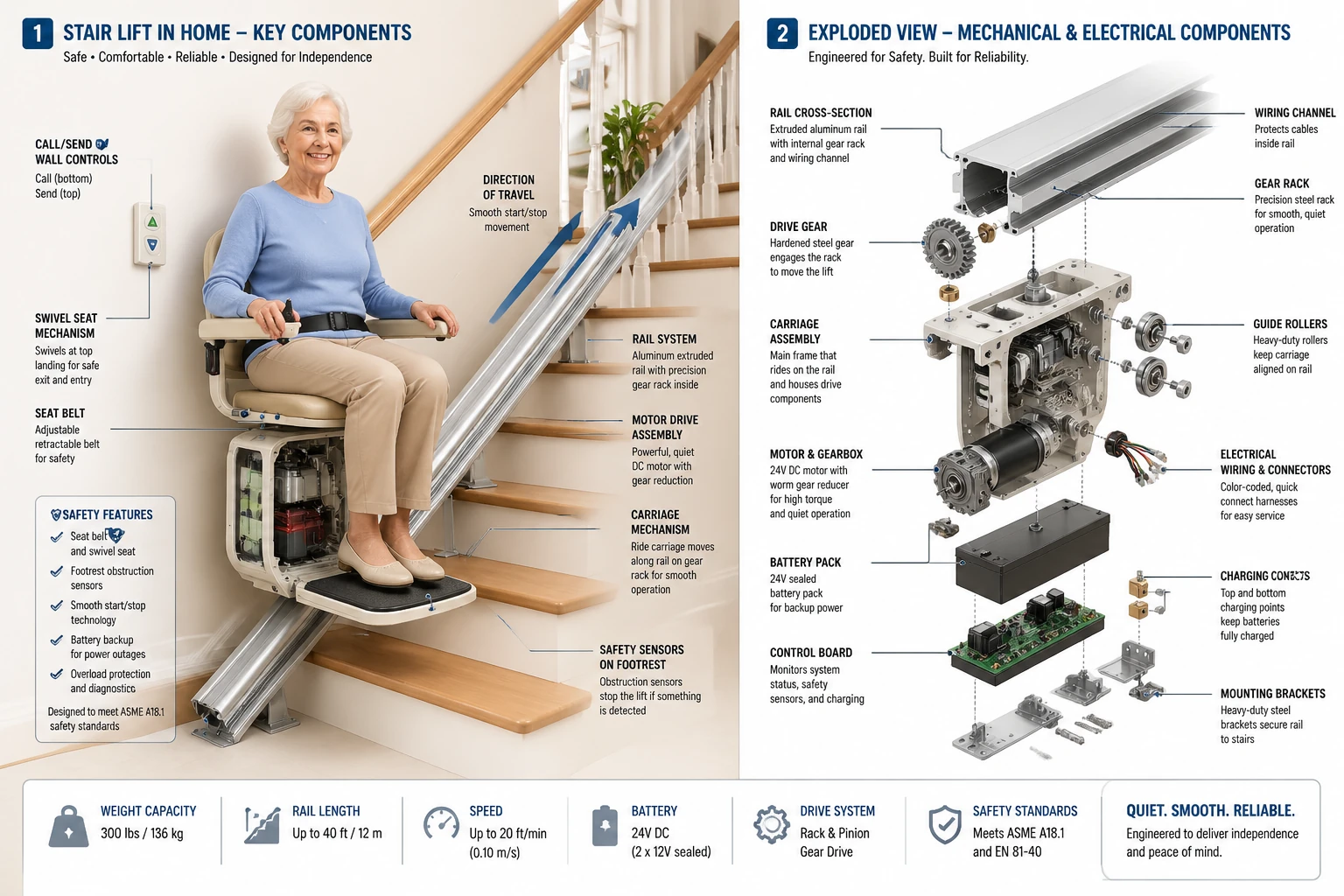
A typical stair lift system usually includes several core components working together to provide controlled movement, comfort, and protection during every trip.
Core Components of a Stair Lift
A standard stair lift commonly includes:
- Rail mounted to staircase treads
- Motorized drive system
- Seat or perch platform
- Footrest and arm supports
- Seat belt restraints
- Call and send controls
- Safety obstruction sensors
- Battery backup charging system
Each part contributes to reliability, but the rail and carriage system form the mechanical foundation of the lift. The rail guides movement up and down the staircase using a motorized carriage that travels at controlled speeds for stable transportation.
Rather than attaching heavily to walls, rails usually secure directly to stair treads, reducing remodeling requirements and simplifying installation. Most stair lift chairs fold when not operating, which helps preserve walkway space on narrow staircases where clearance may be limited.
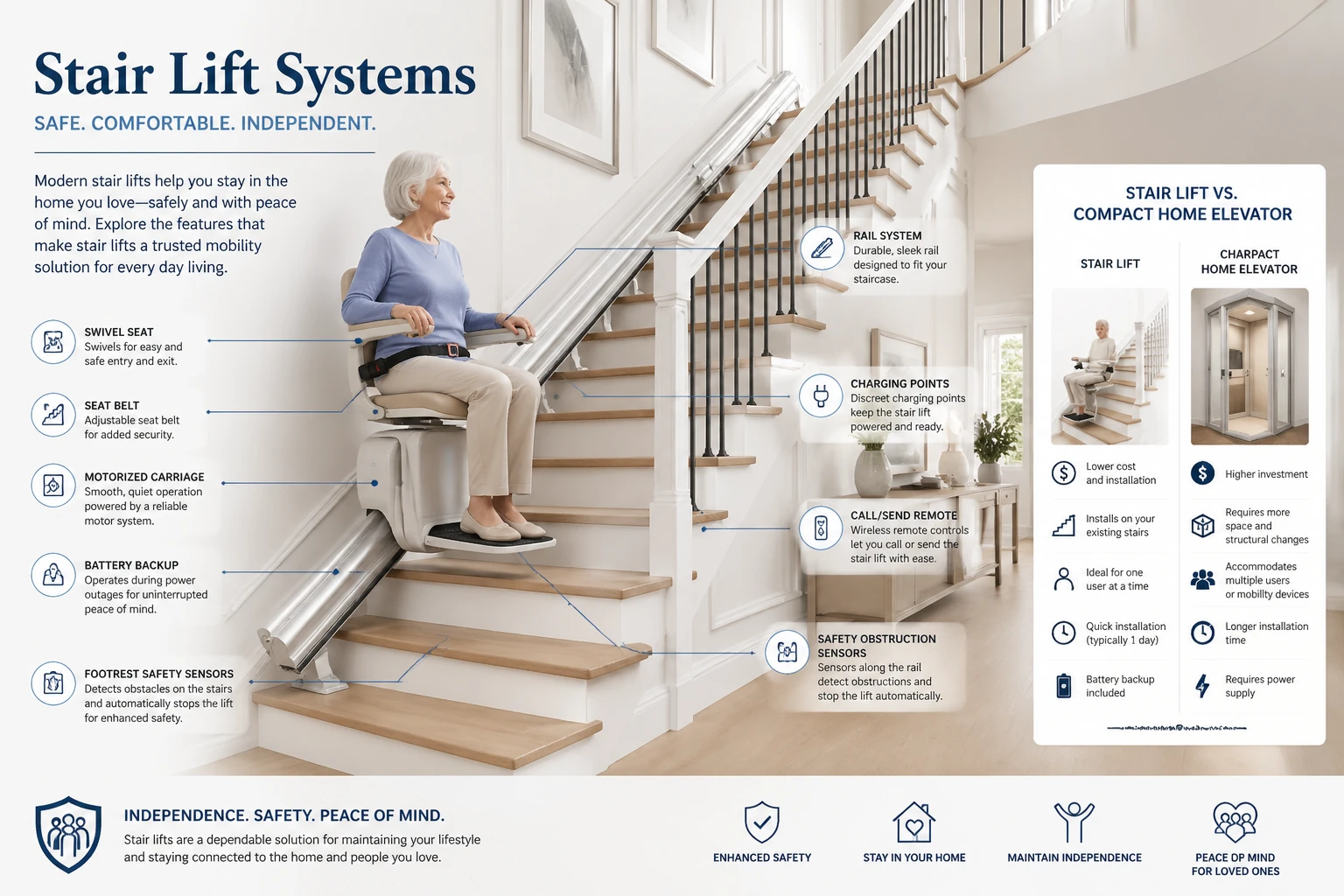
How a Stair Lift Differs From a Home Elevator
Many buyers compare a stair lift against residential elevators, yet they serve different budgets, layouts, and mobility situations.
| Accessibility Solution | Best For | Relative Cost | Installation Complexity |
|---|---|---|---|
| Stair Lift | Most residential homes | Lower | Moderate |
| Stair Lift Chair | Same as stair lift | Lower | Moderate |
| Home Elevator | Full multi-level access | Higher | High |
For many households, stair lifts deliver needed accessibility at a fraction of elevator costs while avoiding extensive construction. If pricing comparisons matter most, learn more in our stair lift cost guide for a detailed breakdown of ownership costs.
Who Uses Stair Lifts?
Many assume stair lifts only help very elderly users, but that assumption ignores several common situations where these systems provide real benefits.
Users often include:- Older adults aging in place
- People recovering after surgery
- Individuals with arthritis
- Users managing balance disorders
- People living with neurological conditions
- Homeowners wanting preventive fall protection
That broad use case explains why searches for stair lifts for seniors continue growing alongside broader aging-in-place planning.
Are Stair Lifts Safe?
Safety concerns often drive first-time research. Many buyers ask whether riding a powered chair over stairs introduces risk, yet modern systems are built around multiple protective mechanisms.
Common safety features include:
- Swivel seats for safer exits
- Footrest obstruction sensors
- Overspeed governors
- Locking seat belts
- Soft start and stop controls
- Battery operation during outages
These features reduce many risks associated with navigating stairs manually under reduced mobility. For some households, a stair lift serves less as convenience equipment and more as fall-prevention infrastructure.
Stair Lift or Stair Lift Chair: Is There a Difference?
In most searches, stair lift and stair lift chair mean essentially the same product.
These may include:
- Standing stair lifts
- Perch lifts
- Platform wheelchair lifts
Those belong to broader stair lift options, though they serve different user requirements.
When Is a Stair Lift Worth It?
A stair lift often becomes worthwhile when stairs limit safe access to bedrooms, bathrooms, laundry areas, or essential daily living spaces.
Instead of asking, “How much does a stair lift cost?” many homeowners begin asking, “What independence does a stair lift preserve?”
For model comparisons, compare manufacturers in our best stair lift brands guide. To understand setup requirements, see how stair lift installation works before requesting in-home estimates.
How Stair Lifts Work
A stair lift may look simple from the outside, yet several mechanical and electrical systems work together to deliver safe, controlled travel. Understanding how a stair lift works helps buyers compare models intelligently instead of choosing based only on price or appearance.
At its core, a stair lift uses a powered carriage moving along a rail mounted directly to the staircase. The user sits on the chair, engages controls, and the lift travels smoothly between floors at a controlled speed. Although different brands use proprietary engineering, most stair lift systems operate using the same functional principles.Rail System: The Foundation of Movement
The rail acts as the track guiding the stair lift chair along the staircase. It supports the carriage and directs movement during ascent and descent while maintaining balance and alignment.
Most systems use one of two rail designs:- Straight rail systems
- Custom curved rail systems
Straight rails fit staircases without bends or landings. Curved rails are custom built for stairs with turns, transitions, or complex layouts. Contrary to common assumptions, rails usually attach to stair treads, not walls. This reduces construction work and often makes stair lift installation faster than homeowners expect.
Some systems include hinged rail sections. These help prevent rails from blocking doorways or walkways at stair landings. That small feature can solve major layout concerns. See how stair lift installation works before selecting rail options for your home.Motor and Drive Mechanism
The motor powers movement along the rail.
Most stair lifts use compact electric motors connected to one of several drive systems.
Common drive technologies include:
- Rack and pinion drives
- Cable-driven systems
- Worm gear systems
Rack and pinion systems remain especially common because they balance durability, smooth travel, and reliable performance. Instead of moving quickly, stair lifts move deliberately. That slower speed is intentional. Controlled movement improves comfort while supporting safety.
Many first-time buyers mistakenly judge slower movement as weakness. In reality, controlled travel often reflects better engineering.Battery Power and Charging
Most modern stair lifts run primarily on rechargeable batteries.
Even though the unit connects to household power, electricity often charges onboard batteries rather than powering travel directly.
This design offers several advantages:
- Operation during power outages
- Smooth consistent movement
- Lower electrical demands
- Reduced interruption risks
Charging points often sit at rail ends or designated parking points. When parked, the lift recharges automatically. That means daily use usually requires little attention from the homeowner. Battery backup matters more than many buyers realize.
During storms or outages, continued access between floors may remain possible. That feature often becomes essential rather than optional.User Controls and Ride Operation
Operating a stair lift is intentionally simple. Most systems use intuitive controls designed for users with reduced dexterity.
Typical controls may include:- Armrest toggle switches
- Push-button controls
- Joystick controls
- Remote call/send controls
A standard ride often follows this sequence:
- Sit safely in chair
- Fasten seat belt
- Lower footrest if required
- Engage directional control
- Ride along staircase
- Exit using swivel seat
Swivel seats are especially important.
At the upper landing, many seats rotate away from stairs before exiting. This reduces fall risk near stair edges. Powered swivel models add convenience for users with limited strength. That feature can strongly affect comfort.
How Safety Sensors Work
Modern stair lifts include layered protection systems. These systems constantly monitor conditions during operation.
Common sensors may detect:- Obstacles on stairs
- Objects contacting footrest
- Improper seat position
- Excess speed
- Mechanical resistance
If something blocks the lift, sensors often stop movement automatically. That may include shoes, dropped items, pets, or objects on stairs. This safety design helps protect both users and others in the household. Many buyers focus heavily on comfort features.
Often safety systems deserve equal attention. When comparing stair lift options, always review sensor features carefully.Soft Start and Soft Stop Technology
Older stair lifts sometimes started abruptly. Modern systems often use soft start and soft stop technology. This means movement begins gradually.
It also slows gently when stopping.Benefits include:
- Smoother ride comfort
- Less user anxiety
- Reduced jarring motion
- Better support for fragile users
For stair lifts for seniors, this feature can improve confidence significantly. Comfort influences daily use more than many buyers expect.
Weight Capacity and Performance
Every stair lift has rated weight capacity.
Capacity varies by model.
Typical ranges often support:
- Standard users
- Heavy-duty applications
- Larger seat configurations
Weight capacity affects more than load support.
It may influence:
- Motor size
- Rail strength
- Seat dimensions
- Pricing
Ignoring capacity needs can cause expensive replacement mistakes later.
Future mobility changes should also factor into planning. Think beyond present requirements. That often leads to better long-term value.
How Stair Lifts Park When Not in Use
Most systems include parking positions. The lift can rest at one end of the staircase when unused.
Call/send remotes let users bring the lift when needed.This serves several practical purposes:
- Keeps chair out of main living space
- Supports shared household use
- Reduces visual impact
- Allows multiple users access
This feature matters particularly in multi-user homes.
It also improves aesthetics.
Do Stair Lifts Damage Stairs?
This remains one of the most common misconceptions. In most cases, stair lifts do not damage stairs significantly. Rails generally attach using mounting brackets secured to stair treads.
Most installations avoid major structural changes.In many homes:
- No wall reconstruction is needed
- Minimal drilling is required
- Systems may be removable later
That flexibility makes stair lifts appealing for long-term homeowners.
It also matters for resale concerns.
Common Buyer Mistakes About How Stair Lifts Work
Many buyers misunderstand performance because of marketing claims or limited product comparisons.
Common mistakes include assuming:
- All motors perform equally
- Battery systems are identical
- Safety sensors are standard across brands
- Rail systems differ only cosmetically
Those assumptions can cause poor buying decisions.
Compare manufacturers in our best stair lift brands guide before choosing based on brochures alone. If budget planning matters next, see our stair lift cost guide for pricing differences tied to features.
According to CDC fall prevention at home research, stair-related accidents remain one of the most common causes of injury among older adults in residential environments.
Quick Comparison of Key Components| Component | Purpose | Why It Matters |
|---|---|---|
| Rail System | Guides movement | Determines fit and installation |
| Motor Drive | Powers travel | Affects smoothness and reliability |
| Battery Backup | Supports outage operation | Improves safety access |
| Safety Sensors | Stops hazards | Protects users during travel |
| Swivel Seat | Safer exits | Reduces fall risk |
Types of Stair Lifts
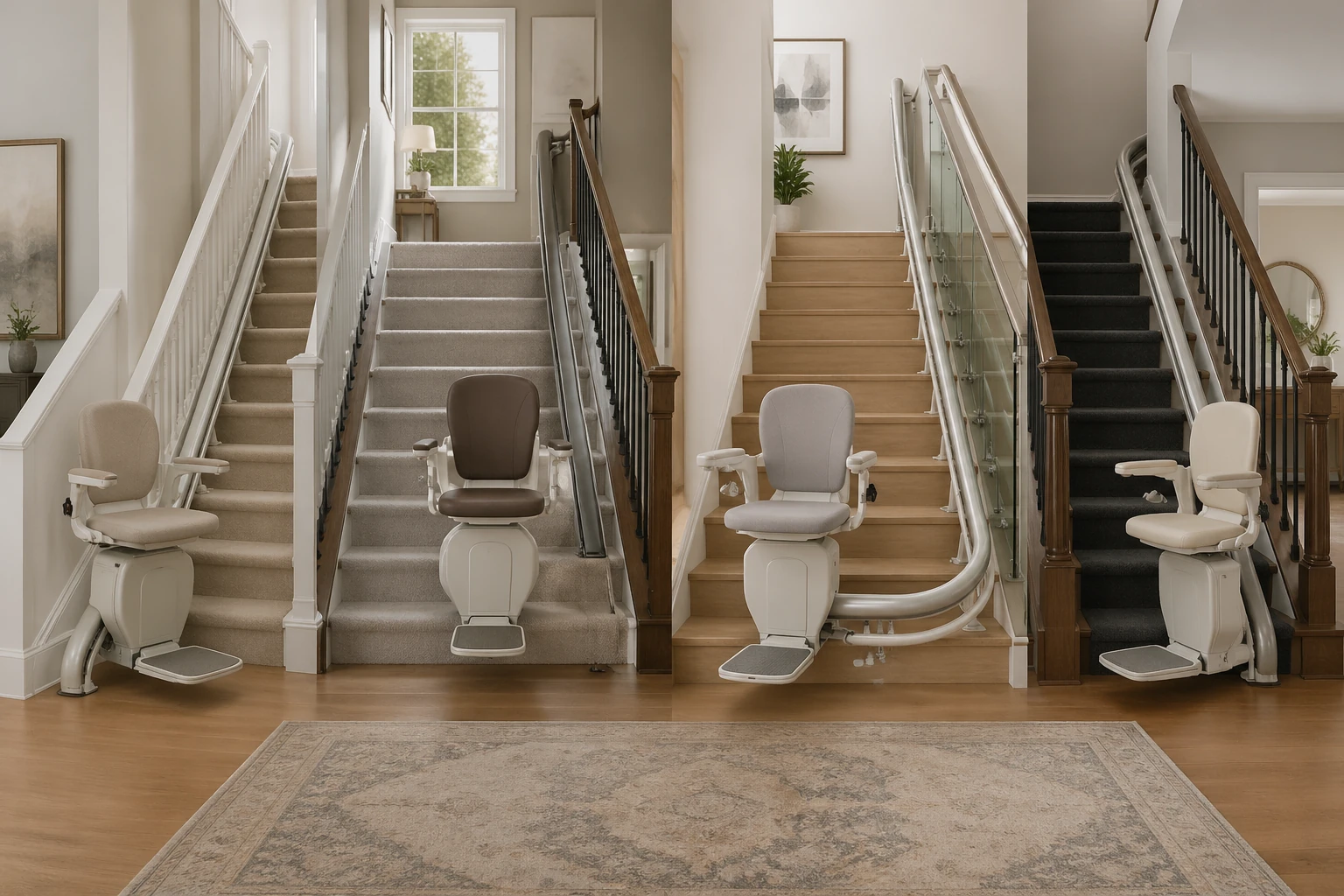
Stair lift types depend mainly on staircase shape, user mobility needs, and long-term usage expectations. Different stair lift options are designed to solve specific home accessibility challenges while maintaining safety and comfort.
A correct choice reduces installation issues and improves daily usability significantly. Many buyers make errors by selecting based only on price instead of staircase compatibility and user condition. Below are the four main stair lift categories used in residential homes today.
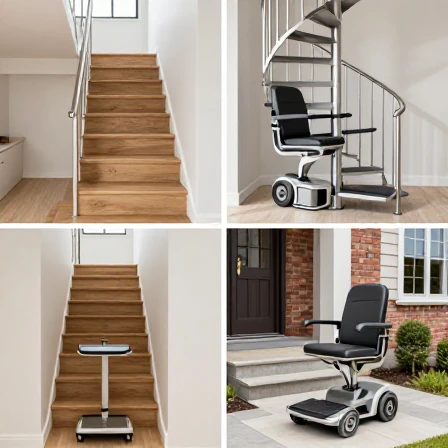
Straight Stair Lifts
Straight stair lifts are the most common and widely used option in residential properties.
They are designed for staircases without curves, landings, or directional changes.
A straight rail runs in a single continuous line from bottom to top of the staircase.
Key Features
- Simple rail design
- Faster installation process
- Lower manufacturing complexity
- Standardized seat and carriage systems
- Typically more affordable than custom models
Ideal Use Cases
- Standard residential staircases
- Small to medium homes
- Budget-conscious buyers
- Fast installation needs
Advantages
- Easier maintenance and servicing
- Shorter installation time
- Lower overall cost compared to curved systems
- Wide availability across brands
Limitations
- Cannot be used on curved or split staircases
- Limited customization for unusual layouts
For pricing comparisons, see our stair lift cost guide for detailed breakdowns.
Curved Stair Lifts
Curved stair lifts are designed for staircases with bends, turns, or intermediate landings. Unlike straight models, curved systems require custom engineering for each installation.
The rail is manufactured specifically to match the exact shape of the staircase.
Key Features
- Custom-built rail system
- Designed for complex stair layouts
- Precision measurement required
- Higher engineering complexity
- Longer production time
Ideal Use Cases
- Multi-level homes
- Spiral staircases
- L-shaped or U-shaped stairs
- Homes with intermediate landings
Advantages
- Perfect fit for complex architecture
- Smooth transition through curves
- High customization options
- Better integration into home design
Limitations
- Higher cost compared to straight lifts
- Longer manufacturing and installation time
- Less flexibility if the home layout changes
Compare manufacturers in our best stair lift brands guide before selecting a curved system.
Standing Stair Lifts
Standing stair lifts, also called perch lifts, allow users to ride in a semi-standing position instead of sitting.
They are designed for users who have difficulty bending knees or sitting comfortably.
Key Features
- Compact standing platform
- Minimal seating requirement
- Slim rail design for narrow stairs
- Adjustable support bars
- Safety restraint systems
Ideal Use Cases
- Users with limited knee flexibility
- Narrow staircases with space restrictions
- Situations where sitting is uncomfortable
- Partial mobility conditions
Advantages
- Requires less space than seated models
- Useful for tight stair layouts
- Easier entry and exit for some users
Limitations
- Not suitable for users with balance issues
- Less comfortable for long-term use
- Requires stability during ride
Standing models are often chosen when traditional stair lift chairs cannot fit properly or when physical conditions require a different posture.
Outdoor Stair Lifts
Outdoor stair lifts are designed for exterior environments such as porches, garden steps, or garage entrances.
They are built to withstand weather conditions while maintaining safe operation.
Key Features
- Weather-resistant materials
- Waterproof seat covers
- Rust-resistant rail systems
- Sealed electrical components
- UV-protected finishes
Ideal Use Cases
- Front porch access
- Backyard or garden stairs
- Garage entry steps
- Elevated outdoor pathways
Advantages
- Enables full home access from outside
- Built for durability in harsh weather
- Improves independence outdoors
Limitations
- Higher maintenance needs due to exposure
- Slightly higher cost than indoor straight models
- Requires protective covers in extreme climates
Outdoor systems are essential when mobility barriers exist outside the home, not just inside.
Comparison Table: Types of Stair Lifts
| Type | Best For | Cost Level | Complexity |
|---|---|---|---|
| Straight Stair Lift | Simple stairs | Lower | Low |
| Curved Stair Lift | Complex stairs | Higher | High |
| Standing Stair Lift | Narrow stairs | Medium | Moderate |
| Outdoor Stair Lift | Exterior access | Medium–High | Moderate |
Who Needs a Stair Lift
A stair lift is not only for one specific age group or medical condition. It is primarily used by people who face difficulty or risk when using stairs daily.
Understanding who needs a stair lift helps determine whether installation is a practical investment or a future planning decision. In most cases, users fall into mobility-related categories.
Older Adults and Aging in Place
One of the most common groups using a stair lift for seniors is older adults who want to remain in their homes safely.
Key reasons include:
- Reduced balance on stairs
- Joint pain or arthritis
- Fatigue during movement
- Fear of falling
Installing a stair lift at home helps maintain independence and safety.
People Recovering from Surgery or Injury
Temporary mobility issues often require a stair lift chair during recovery.
- Knee replacement
- Hip replacement
- Spinal surgery
- Fracture rehabilitation
A stair lift chair can provide short-term support and safety during healing.
Individuals with Chronic Conditions
Some medical conditions require ongoing use of stair lift options.
- Arthritis
- Multiple sclerosis
- Parkinson’s disease
- Muscular dystrophy
- Balance disorders
These conditions make a stair lift an essential mobility aid.
People with Balance or Fall Risk
Fall prevention is a major reason for installing a stair lift.
- People with dizziness issues
- Vision impairment users
- Unstable gait conditions
- Neurological recovery patients
A stair lift reduces risk by eliminating stair climbing.
Wheelchair Users (Indirect Use)
While a standard stair lift chair does not carry wheelchairs directly, it supports accessibility systems.
- Wheelchair ramps
- Transfer systems
- Platform lifts
Households Planning Ahead
Many families install a stair lift before mobility problems appear.
- Aging in place planning
- Multi-story homes
- Future safety preparation
- Avoiding emergency installation
Temporary vs Permanent Need
A stair lift can be used short-term or long-term.
- Post-surgery recovery
- Injury rehabilitation
- Long-term mobility decline
- Chronic conditions
Signs You May Need a Stair Lift
- Avoiding stairs frequently
- Pain or fear while climbing stairs
- Needing support on stairs
- Constant use of handrails
- Fatigue after stairs
Emotional and Lifestyle Impact
A stair lift chair improves independence and confidence.
- Restores independence
- Improves home access
- Reduces caregiver dependency
- Increases safety
Research on fall risk in older adults shows how important stair safety solutions are in homes.
Benefits of Stair Lifts
A stair lift is more than a mobility device.
It is a practical home accessibility solution that improves safety, independence, and quality of life.
For many households, installing a stair lift at home is about maintaining comfort and reducing long-term risk.
Improved Safety and Fall Prevention
One of the strongest benefits of a stair lift is reducing fall risk on stairs.
Key safety improvements include:
- Eliminating stair walking for high-risk users
- Reducing balance-related accidents
- Supporting controlled seated movement
- Preventing fatigue-related missteps
Independence and Aging in Place
A stair lift for seniors supports independent living at home.
Key independence benefits include:
- Access to upstairs rooms
- Reduced reliance on caregivers
- Freer movement between floors
- Increased confidence in daily routines
Comfort and Reduced Physical Strain
A stair lift chair reduces physical effort when using stairs.
- No joint stress during movement
- Reduced fatigue after travel
- Comfortable seated transport
- Smooth start and stop motion
Support for Medical Conditions
A stair lift is often used as a mobility aid for medical conditions.
- Arthritis
- Parkinson’s disease
- Multiple sclerosis
- Post-surgery recovery
- Balance disorders
Cost-Effective Alternative to Relocation
A stair lift is often more affordable than moving or renovation.
- Home relocation costs
- Assisted living fees
- Home elevator installation
Quick Installation
Stair lift installation is fast and non-invasive.
- Mounted on stair treads
- Minimal structural changes
- Fast installation time
- No major construction
Adaptability
Stair lift options work with many stair types.
- Straight stairs
- Curved stairs
- Narrow stairs
- Outdoor stairs
Increased Home Accessibility
A stair lift improves full home access.
- Multi-story homes
- Upstairs essential rooms
- Aging-in-place planning
Emotional Benefits
A stair lift chair improves confidence and reduces fear.
- Reduced fear of falling
- Increased independence
- Less dependence on others
- Better sense of control
Comparison Table: Key Benefits
| Benefit Area | Impact | Who Benefits |
|---|---|---|
| Safety | Reduces fall risk | Seniors |
| Independence | Aging in place support | Older adults |
| Comfort | Less physical strain | Mobility issues |
| Accessibility | Full home access | Families |
| Cost | Lower than relocation | Homeowners |
Installation Process
Installing a stair lift typically begins with a professional assessment of your staircase, home layout, and specific mobility requirements for safe customization planning. Technicians measure stair width, incline, and landing space to determine whether straight or curved stair lift systems are required for proper installation design.
Once measurements are complete, the appropriate stair lift chair model is selected based on user weight, comfort needs, and long-term mobility considerations. A stair lift installation usually requires minimal structural changes because rails are mounted directly onto stair treads rather than surrounding walls or structures. Most standard straight stair lift installations can be completed within a few hours, making it a convenient home accessibility upgrade for families.Curved stair lift installations take longer because custom rails must be manufactured specifically to match staircase turns, angles, and landing configurations precisely. During installation, technicians secure the rail system firmly, ensuring stability, proper alignment, and smooth movement across all stair lift types and models.
After mounting the rail, the motorized chair unit is attached and tested multiple times to confirm safe operation and consistent performance reliability. Installers then calibrate safety sensors, speed controls, and braking systems to ensure the stair lift at home operates safely under all conditions. Finally, users receive training on controls, seat operation, and safety procedures to confidently operate their stair lift without assistance or confusion.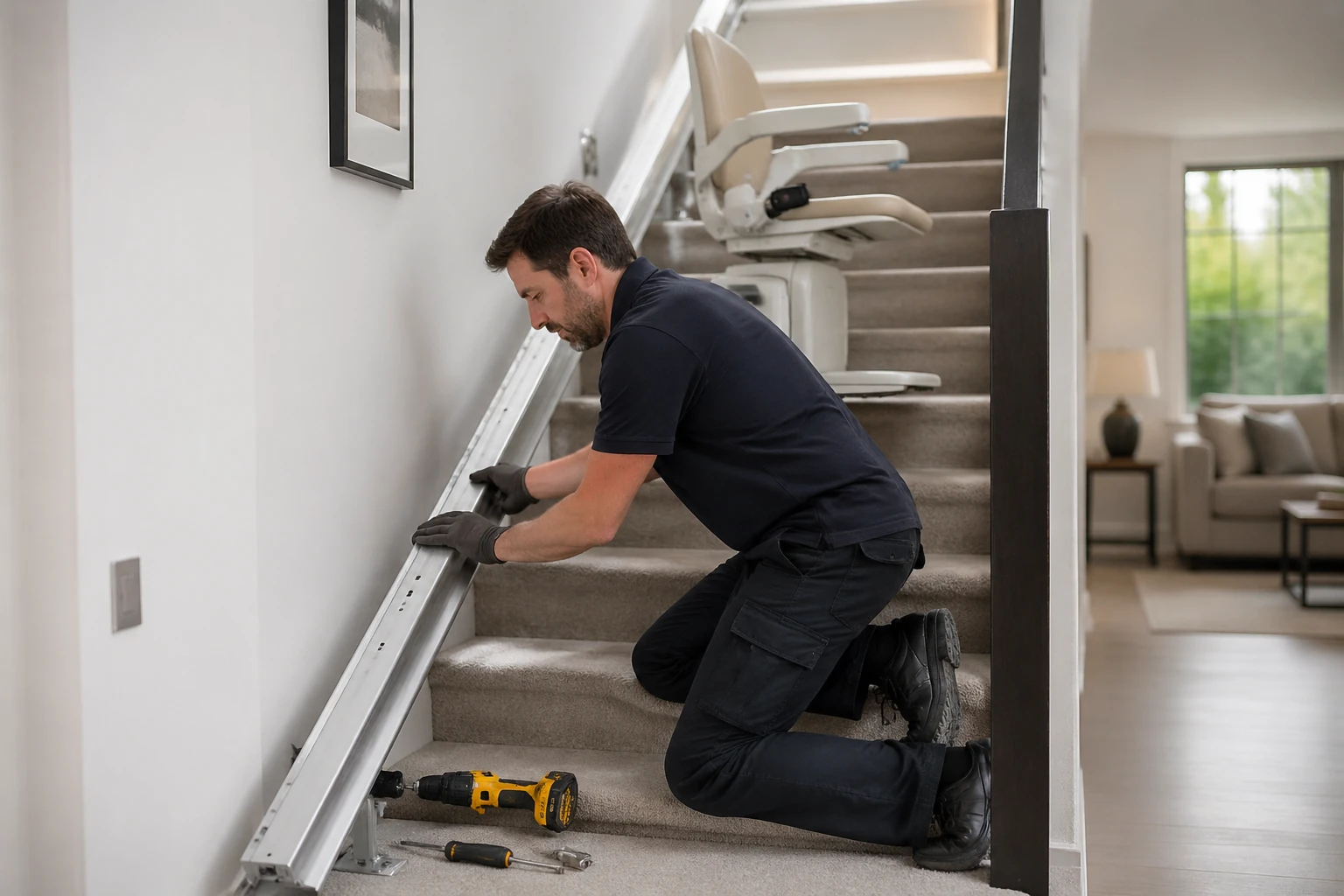
Safety Features
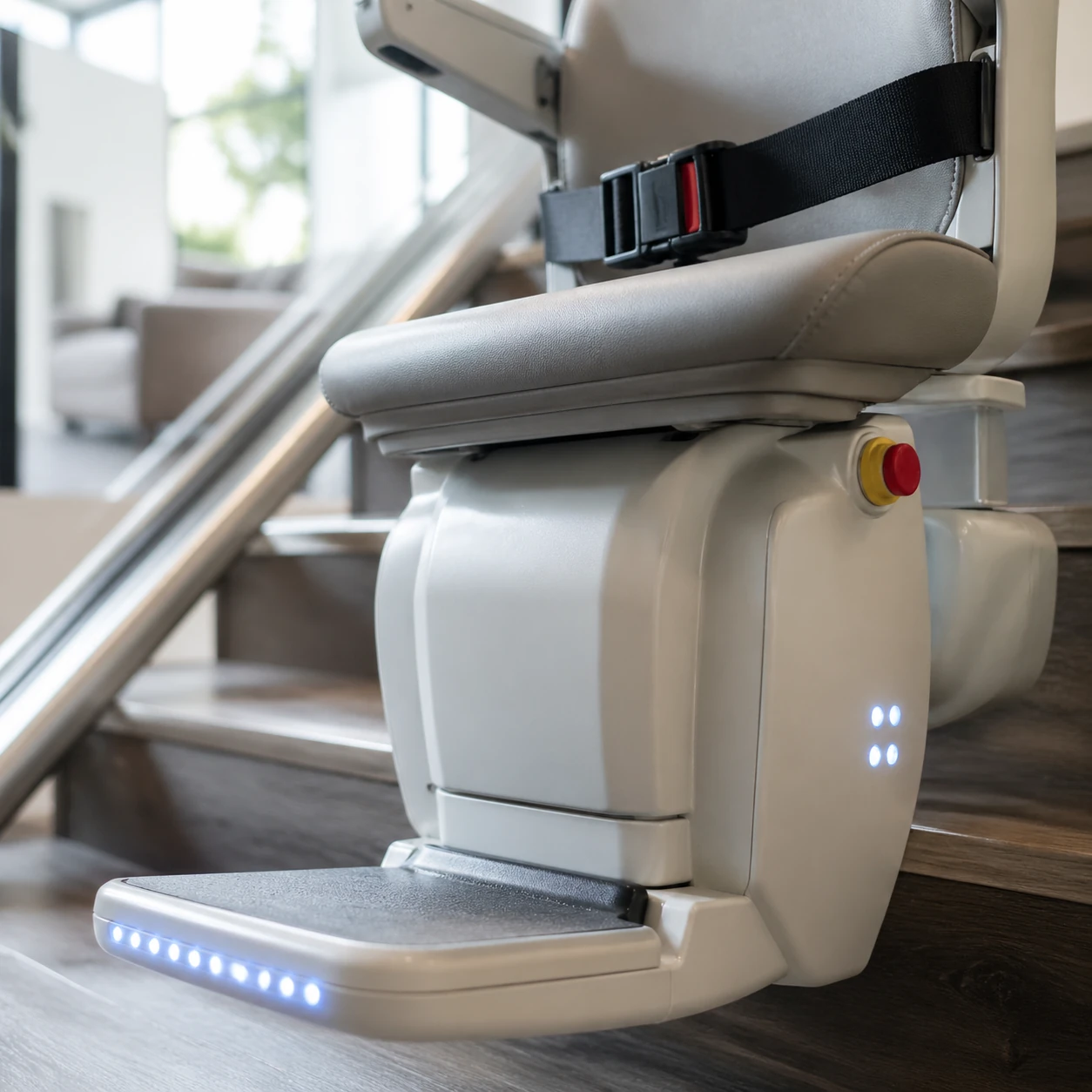
Modern stair lift systems include multiple safety features designed to reduce accident risks and ensure secure transport for users across all mobility levels. One essential feature is seat belts, which keep users safely positioned during movement and prevent slipping or instability while riding the stair lift.
Lift safety sensors detect obstacles on stairs, automatically stopping the stair lift chair to prevent collisions with objects, pets, or misplaced items.
Swivel seat mechanisms allow users to turn safely at the top landing, reducing fall risk when entering or exiting stair lift systems. Footrest sensors ensure the stair lift stops immediately if something blocks the platform, improving safety for homes with children or cluttered stairways.
Emergency stop buttons are installed on most stair lifts, allowing users or caregivers to instantly halt movement during unexpected or unsafe situations. Battery backup systems ensure stair lift at home continues working during power outages, maintaining mobility access without interruption in critical daily situations.
Smooth start and stop technology prevents sudden movements, reducing discomfort and improving stability for seniors using stair lifts for extended periods daily. Speed limit controls ensure stair lifts move at safe, consistent speeds regardless of stair length, incline, or user weight capacity requirements.
Wall and rail clearance designs prevent contact with surrounding structures, reducing mechanical damage risks and improving long-term operational safety reliability overall.
Proper stair lift setup should follow home installation accessibility standards to ensure safety, correct rail alignment, and long-term usability.
Best Stair Lift Brands
Choosing the best stair lift brands is essential because reliability, safety engineering, and long-term service support directly impact user experience and satisfaction.
Top manufacturers focus on durability, smooth operation, and advanced safety systems, making them preferred choices for stair lifts for seniors and accessibility needs.
Well-known brands typically offer strong warranties, professional installation networks, and customizable stair lift options designed for different home layouts and staircase configurations.
Below are some of the most trusted stair lift manufacturers used globally for residential mobility solutions and aging in place accessibility planning.
Acorn Stairlifts
Acorn is widely recognized for producing reliable straight stair lift systems designed for quick installation and user-friendly operation in residential homes.
Their stair lift chair models often include compact folding designs, making them suitable for narrow staircases and smaller home environments with limited space.
Acorn systems are popular for stair lift at home setups because they balance affordability, safety features, and straightforward installation processes for homeowners.
Stannah Stairlifts
Stannah is a premium stair lift manufacturer known for high-quality engineering, curved staircase solutions, and long-term reliability across global residential markets.
Their stair lift types include custom curved rails designed for complex staircases, making them suitable for multi-level homes with unique architectural layouts.
Stannah stair lifts are often chosen for users prioritizing comfort, smooth ride quality, and strong after-sales service support in accessibility planning.
Handicare Stairlifts
Handicare offers versatile stair lift options designed for both straight and curved staircases, with strong focus on safety and user customization features.
Their systems are widely used in stair lifts for seniors due to intuitive controls, ergonomic seating, and reliable performance in daily usage.
Handicare also provides outdoor stair lift models, making them suitable for homes requiring exterior accessibility solutions such as garden or porch stairs.
Bruno Stairlifts
Bruno is known for heavy-duty stair lift systems with high weight capacity, making them ideal for users requiring extra support and stability.
Their stair lift chair designs focus on comfort, durability, and smooth rail movement, especially for long-term residential accessibility applications in homes.
Bruno stair lifts are frequently recommended in mobility aid programs for users needing strong mechanical performance and dependable safety engineering features.
Choosing the right manufacturer can be just as important as selecting the right lift type. Features, warranties, service networks, and long-term reliability can vary significantly between providers. If you want a deeper breakdown of major manufacturers, see our best stair lift brands compared guide, where we review leading stair lift companies, compare Acorn vs Bruno vs Stannah, and explain which brands perform best for different mobility needs.
Common Problems to Avoid
Avoiding common mistakes is essential because most stair lift issues come from poor planning, incorrect choices, or lack of proper professional guidance early.
Poor Staircase Evaluation
Many buyers rush stair lift purchases without properly evaluating staircase design, user needs, and long-term mobility requirements, leading to costly installation mistakes later.
Wrong Stair Lift Type Selection
One common mistake is choosing the wrong stair lift types without considering whether the staircase is straight, curved, or includes intermediate landings.
Ignoring Weight Capacity
Ignoring weight capacity limits can reduce safety, especially for stair lifts for seniors who require stable support and long-term reliability during daily use.
Underestimating Installation Needs
Another issue is underestimating installation requirements, which may lead to delays, additional structural modifications, or incompatibility with certain stair lift chair models.
Skipping Product Comparison
Some homeowners fail to compare stair lift options properly, resulting in overpaying for features they do not actually need or use regularly.
No Professional Assessment
Skipping professional assessment often causes incorrect measurements, which affects rail fitting accuracy and reduces long-term performance of stair lift at home systems.
Choosing Uncertified Low-Cost Units
Low-cost units without certification may lack essential lift safety sensors, increasing risks of mechanical failure or unsafe operation during regular daily use.
Ignoring Maintenance Requirements
Many buyers overlook maintenance requirements, which can lead to breakdowns, reduced lifespan, and higher long-term repair costs for stair lift systems overall.
Not Planning Future Needs
Another mistake is not considering future mobility changes, which may require upgraded stair lift solutions sooner than expected due to health decline.
Ignoring Warranty Coverage
Finally, ignoring warranty and service coverage can create expensive repair situations, especially when relying on stair lift systems for essential home accessibility.
FAQs
What is a stair lift?
A stair lift is a motorized mobility device that safely transports users up and down stairs using a seated chair and rail system.
Who should use a stair lift?
Stair lifts for seniors and people with mobility challenges should use them when stairs become unsafe, painful, or difficult to climb independently.
How much does a stair lift cost?
Stair lift cost depends on staircase type, brand, and features, typically ranging from basic straight models to fully customized curved systems.
Are stair lifts safe?
Yes, modern stair lift systems include safety sensors, seat belts, and braking systems designed to prevent accidents and ensure secure daily operation.
Can a stair lift be installed on any stairs?
Most staircases can support stair lift installation, but curved, narrow, or complex designs may require customized stair lift types and measurements.
How long does installation take?
Straight stair lift installation usually takes a few hours, while curved systems require custom manufacturing and longer installation timelines depending on design.
Do stair lifts work during power cuts?
Most stair lift at home systems use battery backup, allowing continued operation during power outages without interrupting essential mobility access for users.
Can stair lifts be removed?
Yes, stair lifts can be professionally removed without major damage, making them a flexible solution for temporary or long-term accessibility needs.
Conclusion
Choosing a stair lift is a long-term decision that improves safety, independence, and quality of life for users with mobility challenges at home.
Understanding stair lift types, costs, and safety features helps buyers select the right stair lift chair for their specific staircase and needs.
Whether evaluating stair lifts for seniors or comparing stair lift options, proper research ensures better comfort, safety, and long-term value.
For deeper budgeting details, read our stair lift cost guide before making a final purchase decision for your home accessibility solution.
To compare trusted manufacturers, visit our best stair lift brands guide for expert analysis and reliable product recommendations.
If you are planning setup, see how stair lift installation works to understand requirements before scheduling professional fitting services.
A well-chosen stair lift at home can restore independence, reduce fall risks, and support safe aging in place for many years.