
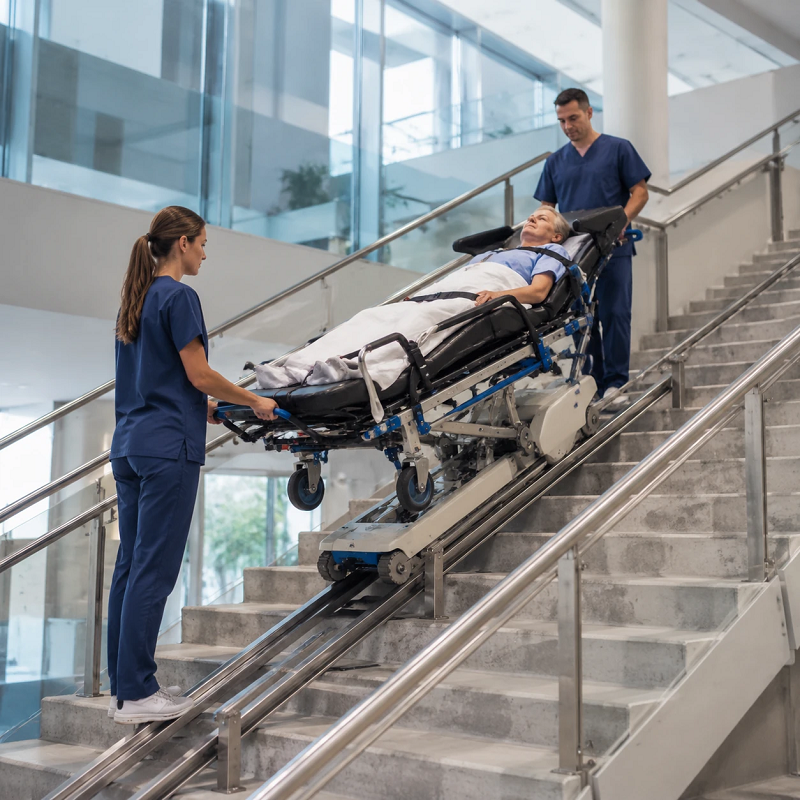
Stretcher Stair Lift Guide
A stretcher stair lift is a specialized medical accessibility system designed to transport patients safely on stairways using a stretcher platform. These systems are widely used in hospitals, healthcare centers, emergency facilities, and public buildings where elevator access may be limited.
Unlike traditional stair lifts, medical stretcher lifts are engineered for higher weight capacities, larger platforms, advanced safety systems, and smooth movement to ensure secure patient transportation.
Modern stretcher platform lifts help improve emergency response efficiency, reduce physical strain on medical staff, and increase accessibility in multi-story healthcare buildings.
Table of Contents
What Is a Stretcher Stair Lift?
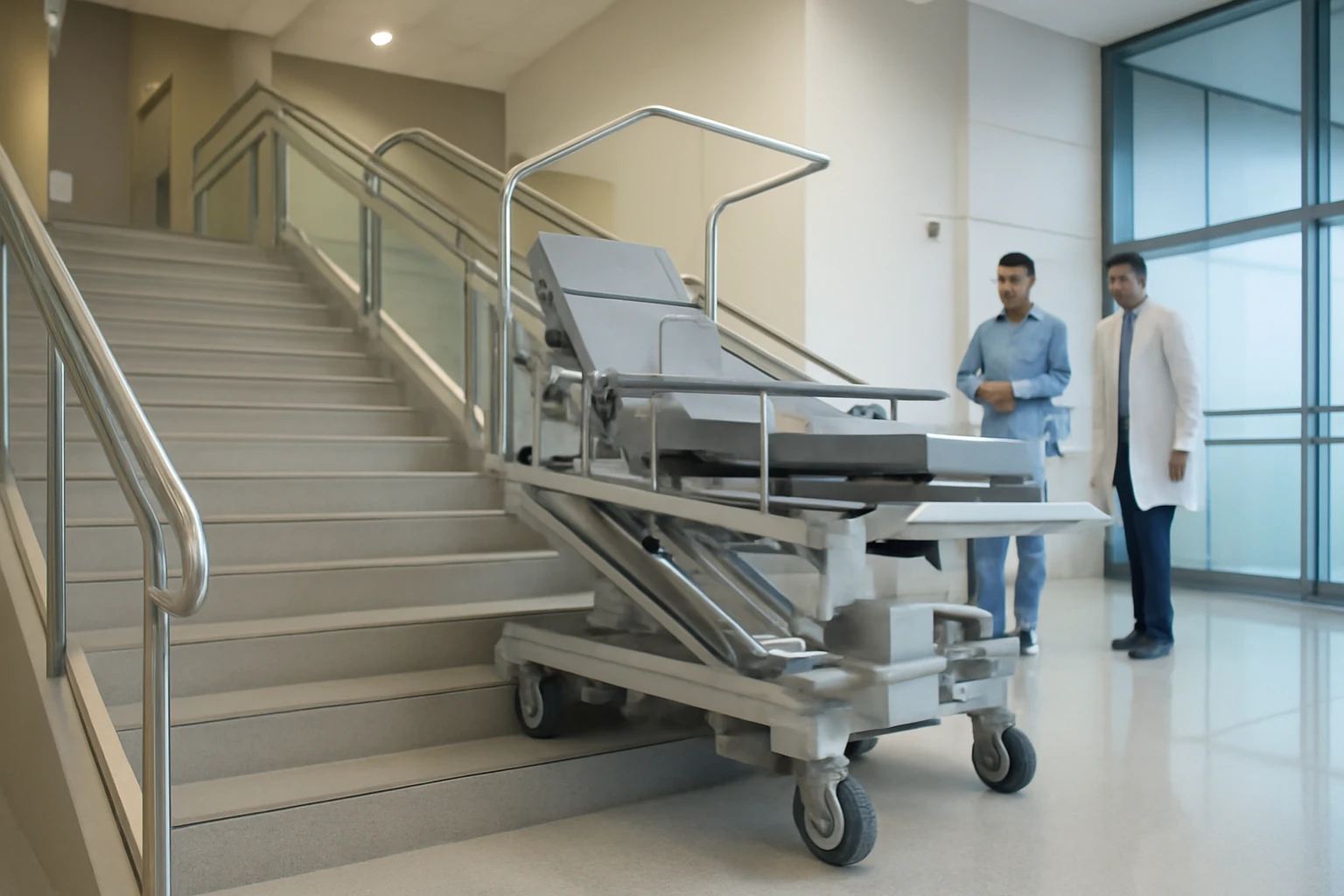
A stretcher stair lift is a specialized mobility system designed to transport patients safely on staircases while they remain on a medical stretcher.
These systems are commonly installed in hospitals, clinics, rehabilitation centers, and emergency facilities where safe patient transportation between floors is essential.
Unlike standard stair lifts or wheelchair platform lifts, stretcher platform lifts are built with reinforced platforms, heavy-duty rail systems, and advanced medical safety features to support patients, stretchers, and emergency equipment.
| Feature | Stretcher Stair Lift | Standard Stair Lift |
|---|---|---|
| Purpose | Patient transportation | Passenger mobility |
| Platform Size | Large medical platform | Compact seat or platform |
| Weight Capacity | High-capacity system | Standard capacity |
| Safety Features | Medical-grade safety systems | Basic accessibility safety |
In many healthcare buildings, medical stretcher lifts are considered an essential part of emergency accessibility infrastructure because they allow patients to be transported quickly and safely without manual carrying.
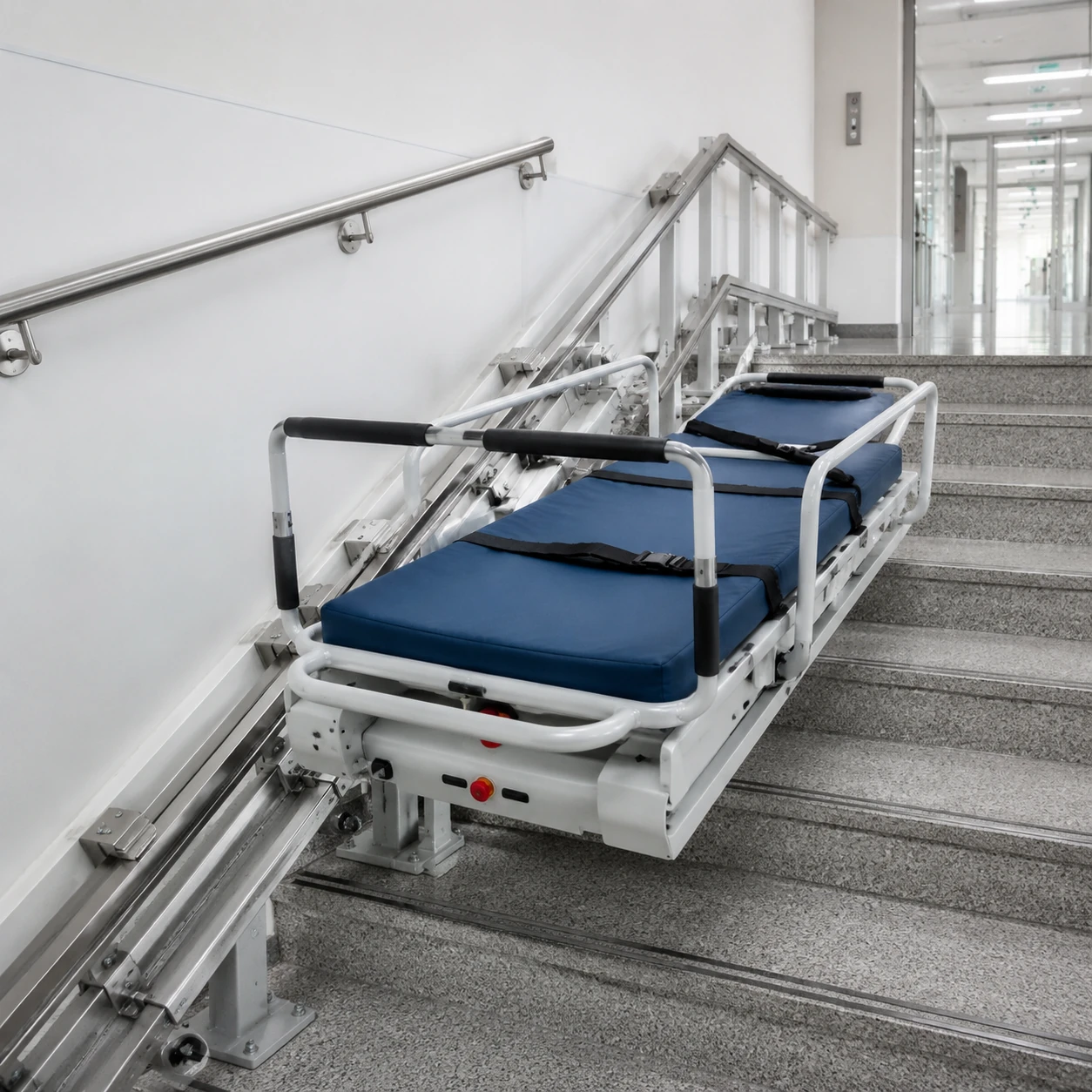
How Does a Stretcher Stair Lift Work?
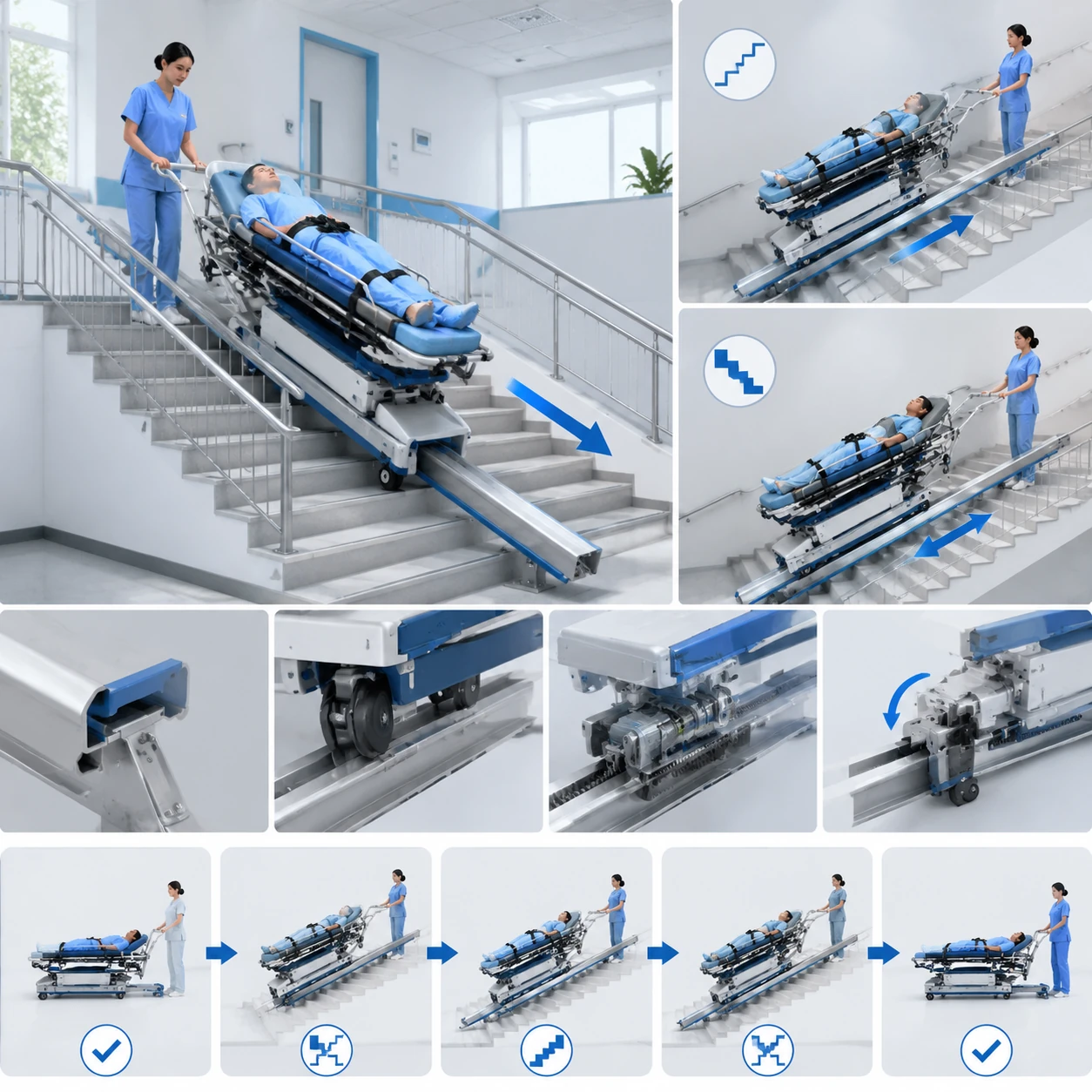
A stretcher stair lift operates using a motorized rail system installed alongside a staircase. The medical stretcher is secured onto a reinforced platform that travels smoothly along the rail while maintaining stability and patient safety.
These systems are specifically engineered for healthcare environments where transporting patients safely between floors is essential.
Main Components of a Stretcher Stair Lift
- Heavy-duty rail system
- Motorized drive mechanism
- Medical stretcher platform
- Emergency braking system
- Backup battery power
- Safety locking mechanisms
- Obstacle detection sensors
Each component is designed to ensure smooth movement and reduce vibration during patient transportation.
How the System Moves
The platform moves along the staircase using an electric motor connected to the rail system. Advanced medical stretcher lifts use soft-start and soft-stop technology to minimize sudden movement.
| System Function | Purpose |
|---|---|
| Soft Start | Reduces sudden movement |
| Soft Stop | Improves patient comfort |
| Emergency Brake | Prevents uncontrolled movement |
| Backup Battery | Operation during power outages |
Safety During Patient Transportation
Modern stretcher platform lifts include multiple medical-grade safety systems to protect both patients and healthcare staff.
- Automatic braking systems
- Anti-slip platform surfaces
- Stretcher locking systems
- Emergency stop controls
- Side safety barriers
These features allow medical staff to transport patients safely even in emergency situations.
Types of Stretcher Stair Lifts
Different stretcher stair lift systems are designed for different building layouts and medical transportation requirements.
The most common types include straight, curved, and vertical stretcher lifts.
Straight Stretcher Lift
A straight stretcher lift is designed for staircases without turns, curves, or intermediate landings.
This type of system uses a straight rail mounted along the staircase, making installation simpler and more cost-effective compared to curved systems.
- Suitable for straight staircases
- Simpler rail structure
- Faster installation process
- Lower installation cost
- Smooth patient transportation
Straight medical stretcher lifts are commonly used in clinics, rehabilitation centers, and smaller healthcare facilities with simple staircase layouts.
| Feature | Straight Stretcher Lift |
|---|---|
| Rail Design | Straight rail |
| Installation Complexity | Low |
| Cost | More affordable |
| Best Use | Simple staircases |
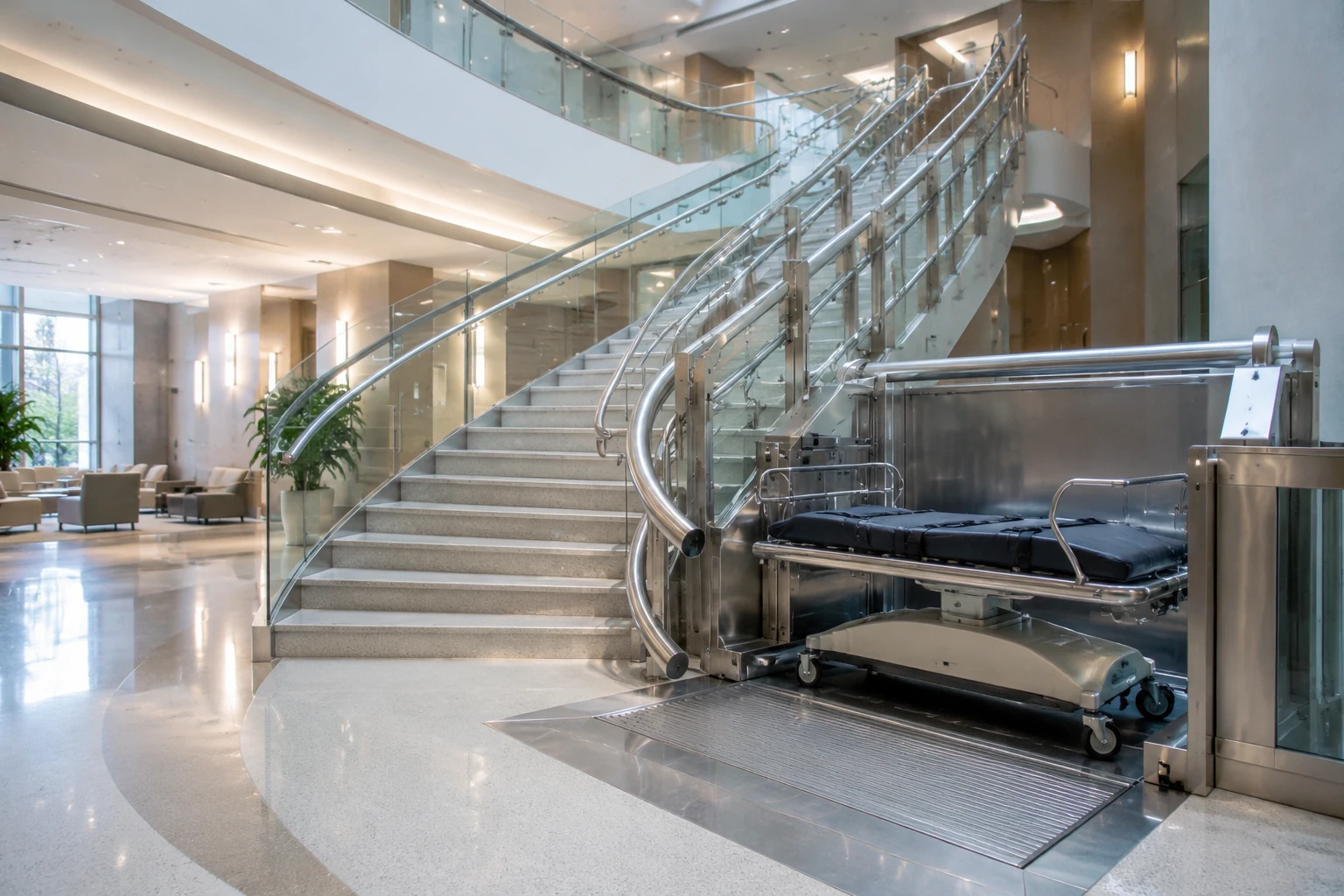
Curved Stretcher Lift
A curved stretcher lift is designed for staircases with bends, curves, intermediate landings, or complex architectural layouts.
Unlike straight systems, curved stretcher platform lifts require custom-engineered rail systems that follow the exact shape of the staircase.
- Custom rail engineering
- Suitable for curved staircases
- Smooth movement around turns
- Advanced stabilization systems
- Higher installation complexity
These systems are commonly used in large hospitals, older medical buildings, and public healthcare facilities with complex staircase designs.
| Feature | Curved Stretcher Lift |
|---|---|
| Rail Type | Custom curved rail |
| Installation | Complex |
| Cost | Higher than straight systems |
| Best Use | Curved staircases |
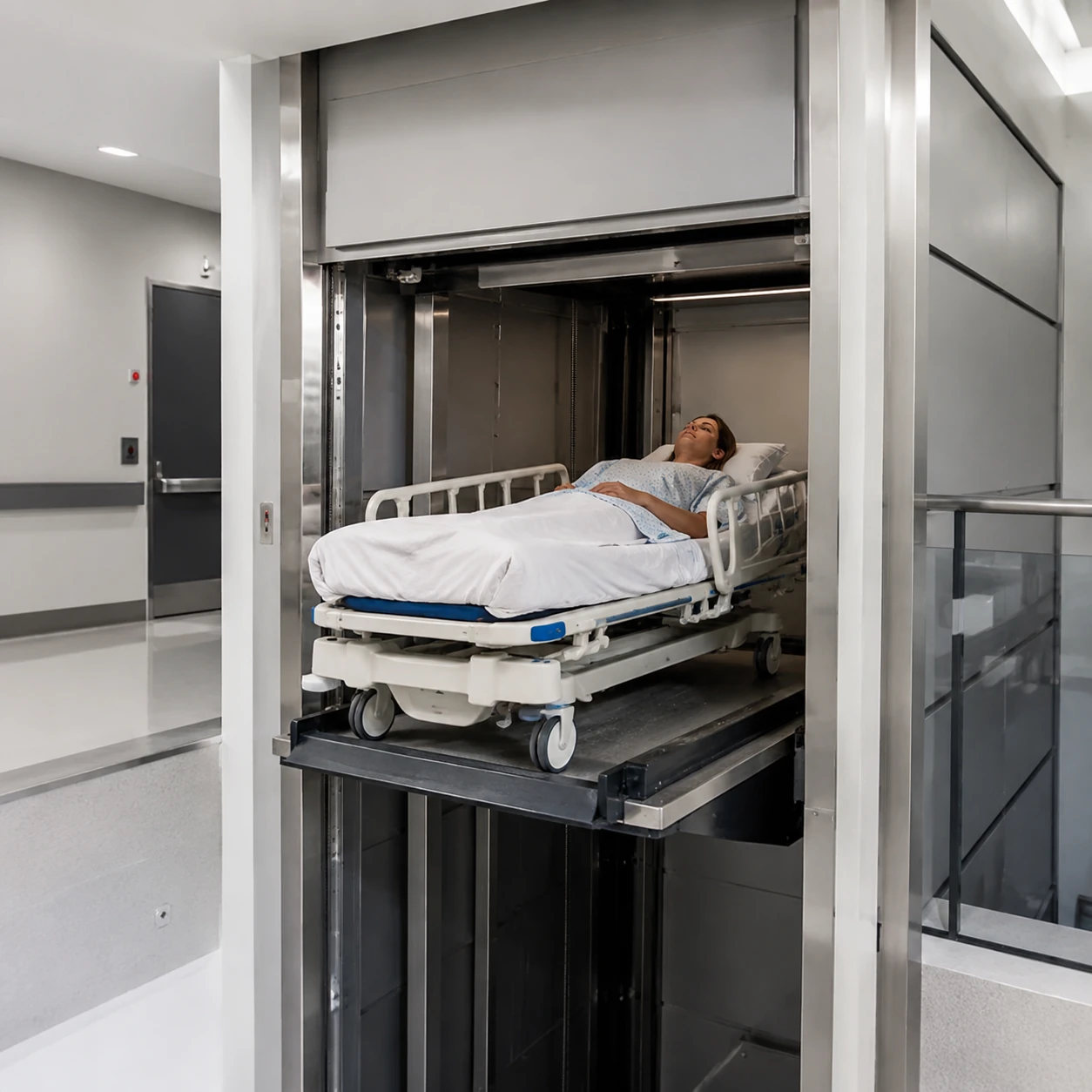
Vertical Stretcher Lift
A vertical stretcher lift transports patients directly between floors instead of following the staircase path.
These systems operate similarly to compact medical elevators and are commonly installed in hospitals, emergency centers, and multi-story healthcare facilities.
- Direct vertical movement
- High weight capacity
- Smooth patient transportation
- Suitable for emergency medical use
- Efficient multi-floor accessibility
Vertical medical stretcher lifts are often preferred in healthcare facilities with high patient traffic and strict accessibility requirements.
Applications of Stretcher Stair Lifts
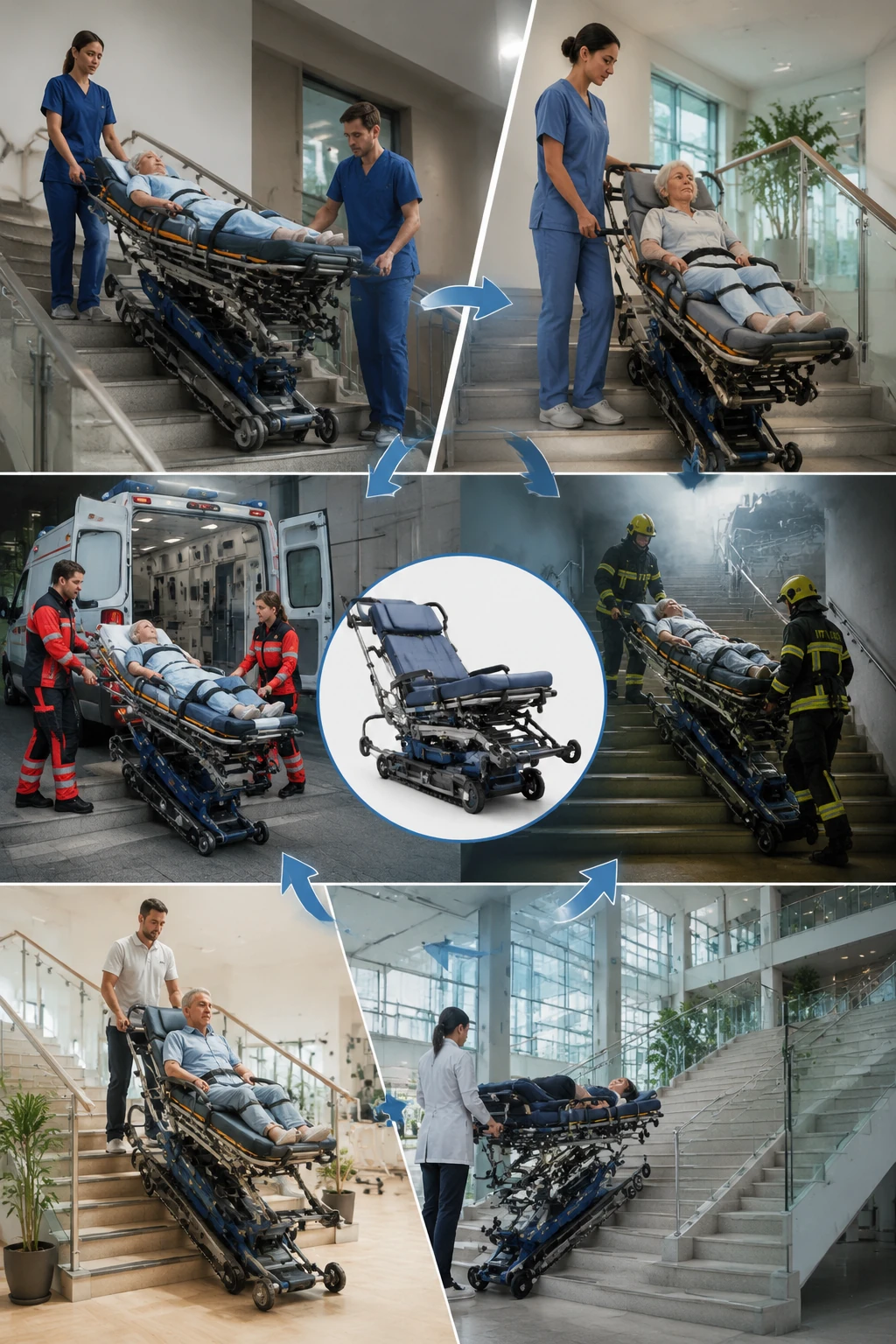
Stretcher stair lifts are widely used in healthcare and emergency environments where safe patient transportation is essential.
- Hospitals
- Emergency medical centers
- Rehabilitation facilities
- Nursing homes
- Public healthcare buildings
- Older buildings without elevators
These systems help reduce manual lifting, improve emergency response speed, and increase patient safety during transportation.
| Facility Type | Application |
|---|---|
| Hospitals | Patient transportation |
| Emergency Centers | Rapid emergency movement |
| Rehabilitation Facilities | Safe patient mobility |
| Nursing Homes | Accessibility support |
Standard Stretcher Lift Dimensions
Stretcher platform lifts require larger dimensions than wheelchair lifts because they must safely accommodate a patient stretcher and medical staff.
| Component | Standard Size |
|---|---|
| Platform Width | 90–120 cm |
| Platform Length | 200–240 cm |
| Turning Clearance | 150–180 cm |
| Safety Barrier Height | Minimum 10 cm |
Proper dimensional planning is essential to ensure safe patient movement and smooth operation inside healthcare buildings.
Weight Capacity and Safety Standards
Most stretcher stair lifts support weight capacities ranging from 250 kg to 600 kg depending on the system type and intended medical use.
Because patient safety is critical, these systems include advanced medical-grade safety technologies.
- Emergency stop systems
- Anti-fall protection
- Automatic braking systems
- Backup battery operation
- Obstacle detection sensors
- Medical stretcher locking mechanisms
| Safety Standard | Purpose |
|---|---|
| EN 81 | Lift safety regulations |
| ISO 9386 | Accessibility platform standards |
| Medical Safety Standards | Safe patient transportation |
Routine maintenance and regular safety inspections are essential to ensure reliable operation in emergency situations.
Difference Between Stretcher Lifts and Wheelchair Lifts
Although both systems are designed to improve accessibility, stretcher lifts and wheelchair lifts serve completely different purposes.
A stretcher stair lift is specifically engineered for transporting patients while lying on a medical stretcher, while a wheelchair lift is designed for seated wheelchair users.
Key Differences
| Feature | Stretcher Lift | Wheelchair Lift |
|---|---|---|
| Passenger Type | Patient on stretcher | Wheelchair user |
| Platform Size | Large medical platform | Smaller platform |
| Weight Capacity | Higher | Moderate |
| Safety Systems | Medical-grade protection | Accessibility safety features |
| Primary Use | Hospitals and emergency facilities | Public and residential buildings |
Why Stretcher Lifts Require More Advanced Engineering
Because medical stretcher lifts transport patients in critical conditions, they require stronger rail systems, smoother movement, and more advanced safety technologies.
- Higher load-bearing capacity
- Advanced stabilization systems
- Reduced vibration during movement
- Emergency medical safety integration
- Wider transportation platforms
Wheelchair lifts, on the other hand, are primarily focused on accessibility and independent mobility.
Stretcher Stair Lift Cost
The cost of a stretcher stair lift depends on several technical and structural factors.
- Lift type
- Rail complexity
- Building layout
- Weight capacity
- Safety systems
- Installation requirements
- Custom engineering needs
Estimated Cost by System Type
| Lift Type | Relative Cost |
|---|---|
| Straight Stretcher Lift | Lower cost |
| Curved Stretcher Lift | Highest cost |
| Vertical Stretcher Lift | Medium to high cost |
Curved systems are usually the most expensive because they require custom-designed rail systems and more complex installation work.
Additional Installation Costs
- Structural reinforcement
- Electrical upgrades
- Custom rail manufacturing
- Safety certification
- Routine maintenance
Healthcare facilities often prioritize advanced safety and reliability over lower installation costs due to the critical nature of patient transportation.
Frequently Asked Questions
What is a stretcher stair lift used for?
A stretcher stair lift is used to transport patients safely between floors while they remain on a medical stretcher.
Can stretcher lifts be installed in older buildings?
Yes. Many stretcher lift systems are specifically designed for older healthcare buildings without elevators.
What is the difference between a stretcher lift and a wheelchair lift?
Stretcher lifts are designed for transporting patients on medical stretchers, while wheelchair lifts are designed for seated wheelchair users.
How much weight can a stretcher stair lift support?
Depending on the model, most systems support between 250 kg and 600 kg.
Are stretcher stair lifts safe during emergencies?
Yes. Modern systems include emergency brakes, backup batteries, anti-fall systems, and obstacle detection sensors.
Conclusion
A stretcher stair lift is an essential accessibility solution for hospitals, healthcare facilities, and emergency buildings that require safe and reliable patient transportation.
With advanced safety systems, heavy-duty engineering, and specialized medical functionality, these lifts help improve emergency response efficiency while reducing physical strain on healthcare staff.
Whether installed in modern hospitals or older buildings without elevators, medical stretcher lifts play a critical role in creating safer and more accessible healthcare environments.