
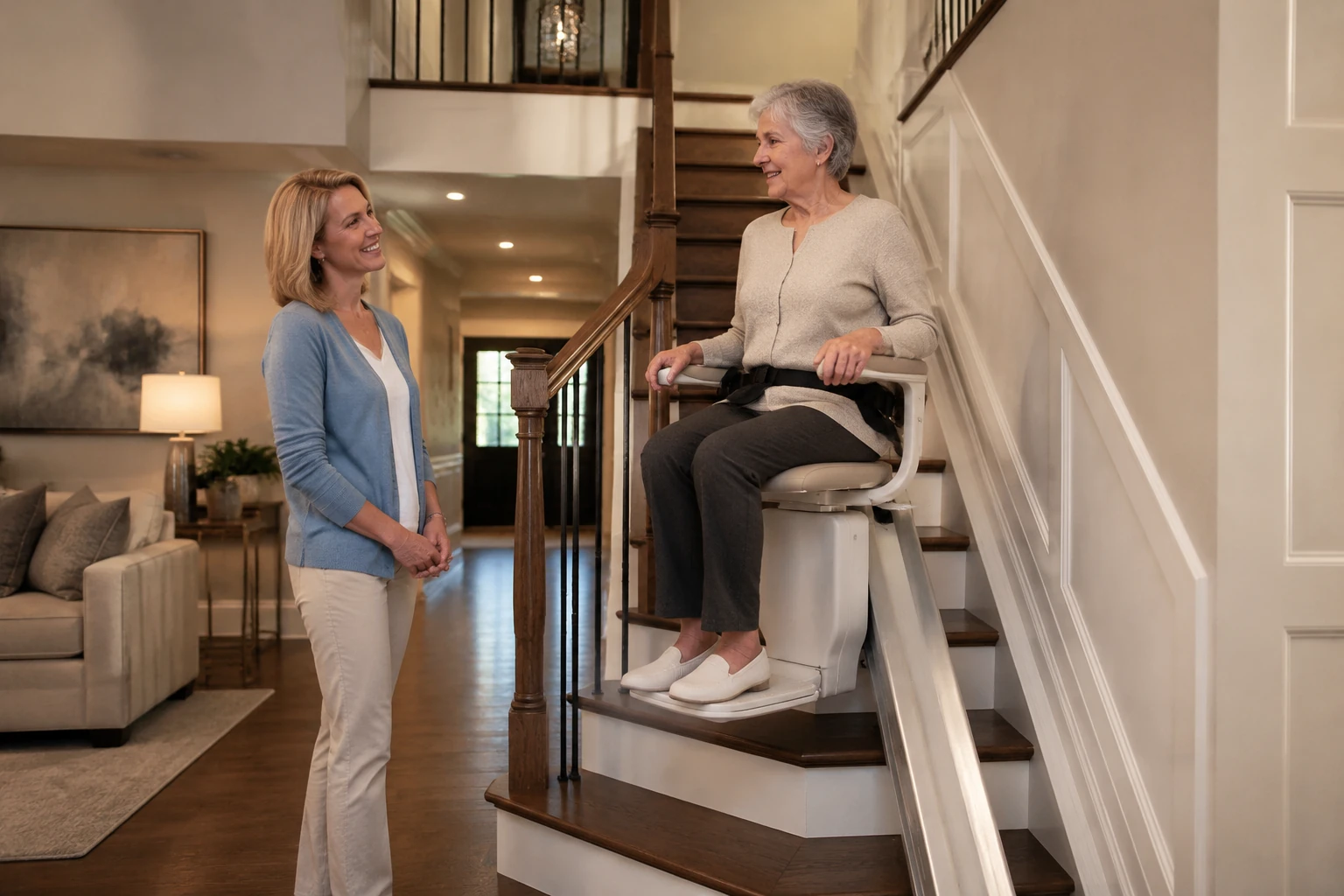
As accessibility needs continue to grow in modern homes, Straight Stair Lifts have become one of the most practical mobility solutions for residential staircases.
Designed specifically for stairways with a straight and uninterrupted path, these systems help elderly users and individuals with limited mobility move safely between floors without major structural modifications.
Compared to curved models, a Straight Stair Lift offers easier installation, lower costs, and a simpler rail design.
In this guide, you will learn how straight stair lifts work, their types, dimensions, safety standards, applications, and pricing considerations.
Table of Contents
- What Is a Straight Stair Lift?
- How Does a Straight Stair Lift Work?
- Types of Straight Stair Lifts
- Benefits of Straight Stair Lifts
- Applications of Straight Stair Lifts
- Standard Stair Lift Dimensions
- Weight Capacity and Safety Standards
- Straight vs Curved Stair Lift
- Straight Stair Lift Cost
- FAQs
- Conclusion
What Is a Straight Stair Lift?
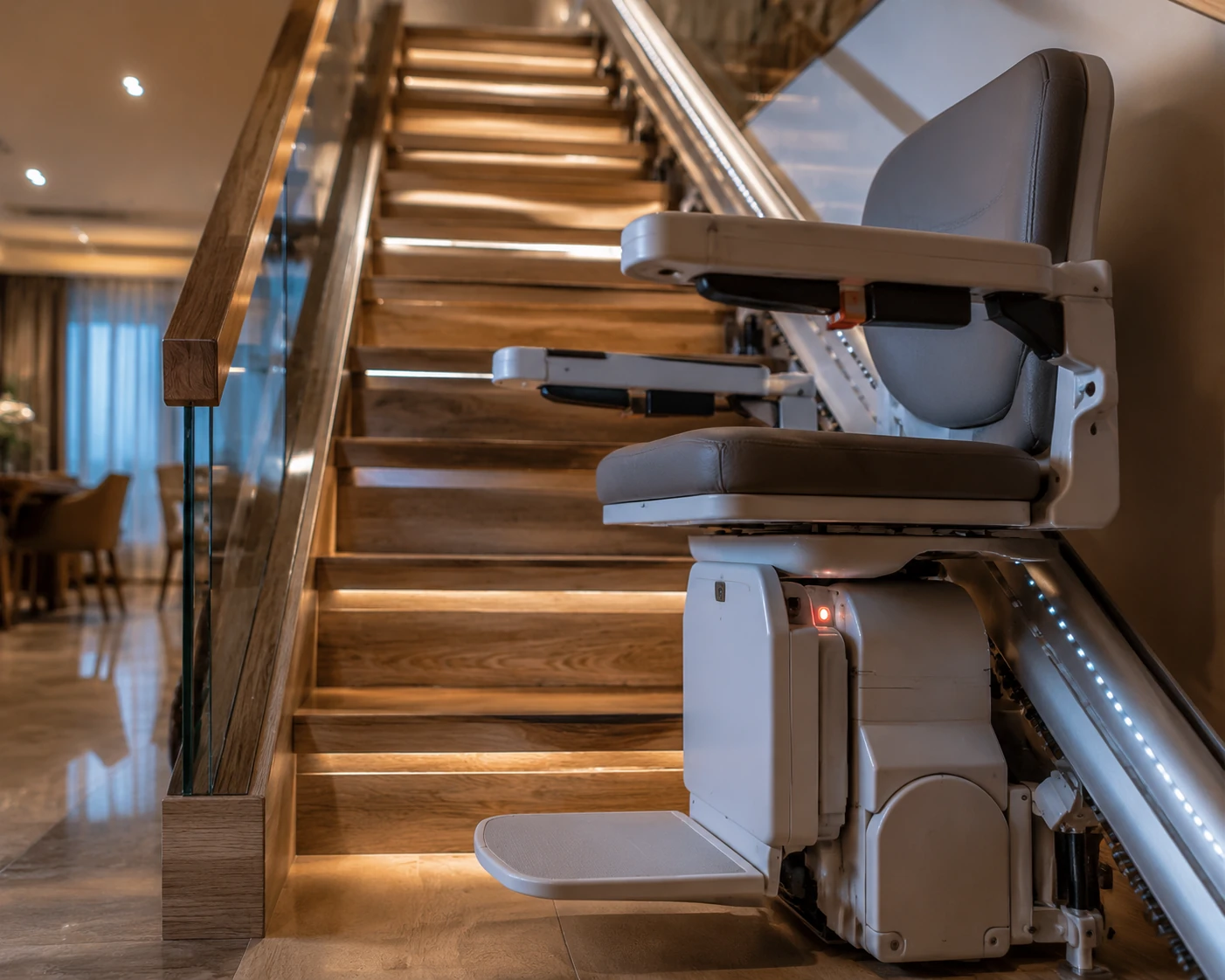
A Straight Stair Lift is a mobility system designed specifically for staircases with a straight path and no turns or intermediate landings.
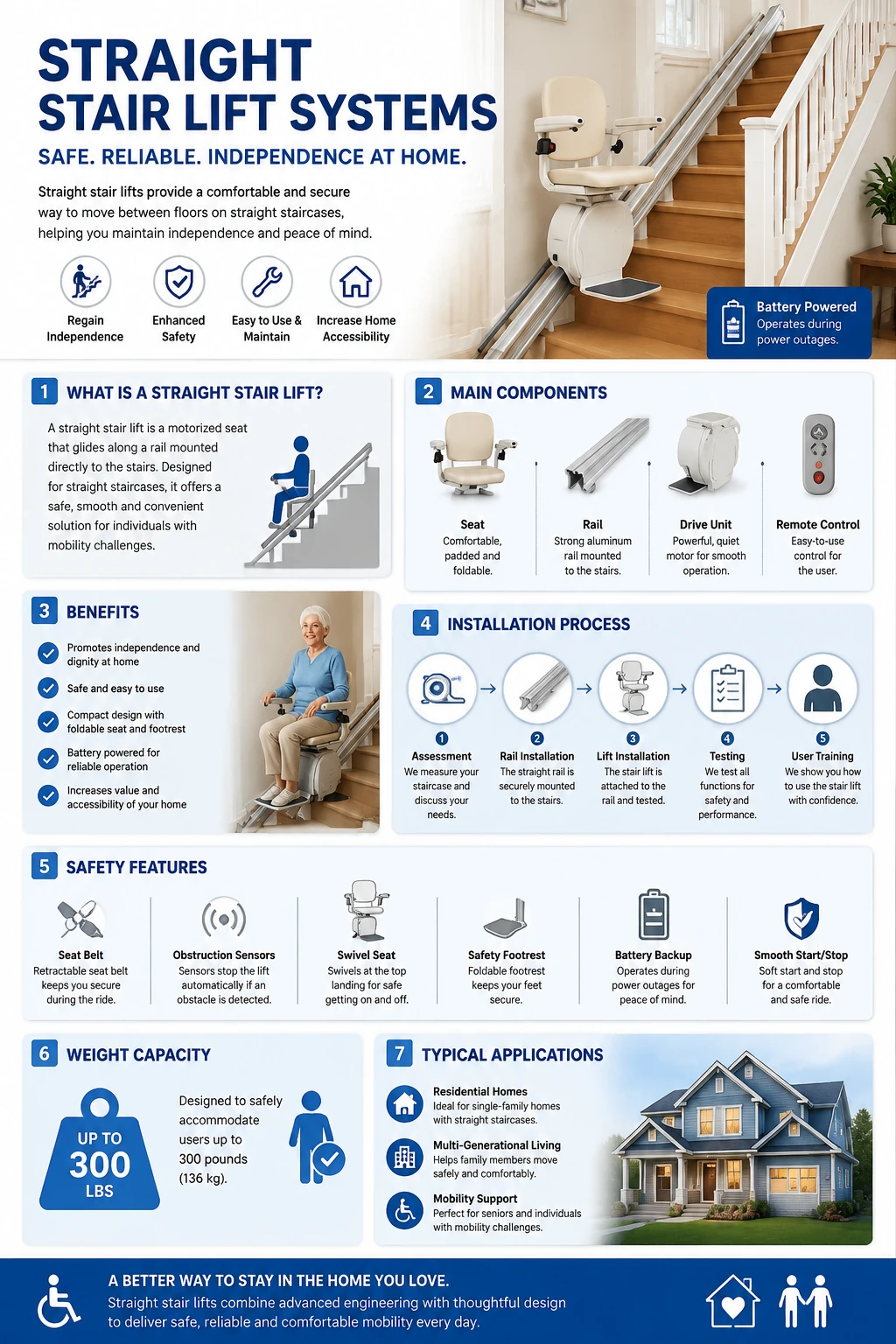
The system typically consists of a straight rail, powered chair, motor unit, safety sensors, and backup battery components installed directly on the staircase.
Unlike curved systems that require custom rails, straight stair lifts use standardized rail designs, making installation faster and more cost-effective.
Main Components of a Straight Stair Lift
- Straight aluminum or steel rail
- Foldable seat system
- Electric motor and gearbox
- Backup battery unit
- Safety sensors
- Remote control system
What Is a Straight Stair Lift?
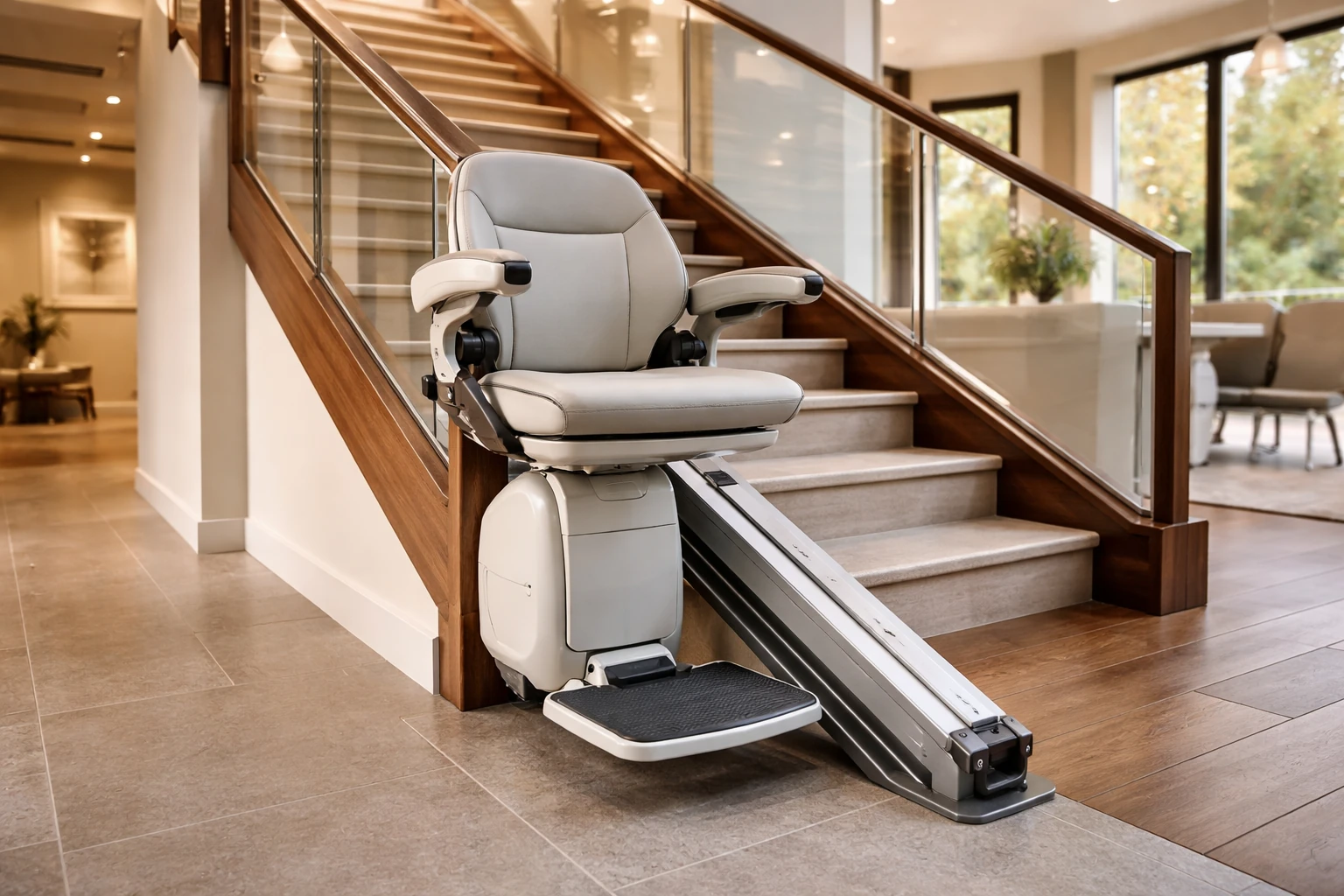
A Stair Lift with a straight rail configuration is a mobility solution designed for staircases that have no turns, curves, or intermediate landings.
A Straight Stair Lift moves users safely between floors using a powered seat system installed directly on the staircase rather than the wall.
Compared with curved systems, straight models use standardized rails and simpler engineering, resulting in faster installation and lower overall costs.
Main Components of a Straight Stair Lift
Most Straight Stair Lift systems include the following components:
- Straight aluminum or steel rail
- Foldable seat mechanism
- Electric drive motor
- Transmission and gearbox system
- Backup battery
- Safety sensors
- Remote call and send controls
Where Are Straight Stair Lifts Commonly Used?
Straight stair lift systems are commonly installed in residential buildings with uninterrupted stairways.
| Building Type | Suitability |
|---|---|
| Duplex homes | Excellent |
| Private villas | High |
| Older buildings | Good for renovation |
| Curved staircases | Requires curved model |
To explore complete accessibility systems, see our Stair Lift Guide .
How Does a Straight Stair Lift Work?
A Straight Stair Lift operates using an electric motor that drives the chair unit along a straight rail installed on the staircase.
The rail is mounted directly onto stair treads, allowing installation without significant structural modifications.
Drive and Rail System
Most straight stair lifts use a geared drive system that converts motor power into smooth controlled movement.
- Low-noise motor operation
- Controlled acceleration
- Smooth start and stop function
- Reduced vibration during travel
Battery Backup System
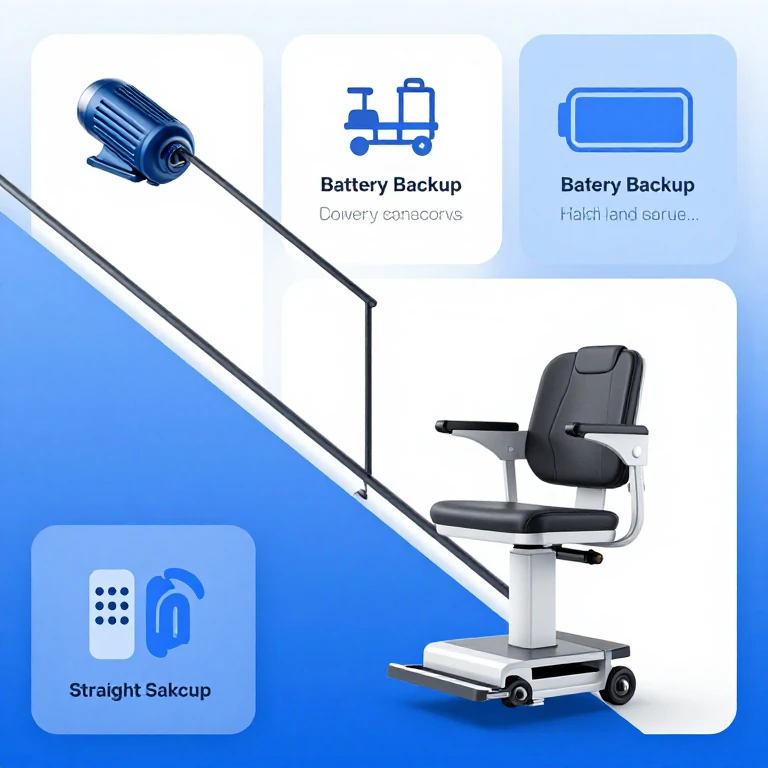
Modern Straight Stair Lift units commonly include rechargeable batteries for uninterrupted operation.
This allows users to continue using the lift during power outages.
| Feature | Function |
|---|---|
| Backup Battery | Emergency movement during power loss |
| Automatic Charging | Charges while parked |
| Power Consumption | Low energy use |
Safety Mechanisms
Modern systems integrate multiple safety components to protect users during operation.
- Obstacle detection sensors
- Seat belt system
- Emergency stop button
- Seat locking mechanism
- Overspeed protection
These features are especially important for elderly users and individuals with limited mobility.
What Is a Straight Stair Lift?
A Stair Lift with a straight rail configuration is a mobility solution designed for staircases that have no turns, curves, or intermediate landings.
A Straight Stair Lift moves users safely between floors using a powered seat system installed directly on the staircase rather than the wall.
Compared with curved systems, straight models use standardized rails and simpler engineering, resulting in faster installation and lower overall costs.
Main Components of a Straight Stair Lift
Most Straight Stair Lift systems include the following components:
- Straight aluminum or steel rail
- Foldable seat mechanism
- Electric drive motor
- Transmission and gearbox system
- Backup battery
- Safety sensors
- Remote call and send controls
Where Are Straight Stair Lifts Commonly Used?
Straight stair lift systems are commonly installed in residential buildings with uninterrupted stairways.
| Building Type | Suitability |
|---|---|
| Duplex homes | Excellent |
| Private villas | High |
| Older buildings | Good for renovation |
| Curved staircases | Requires curved model |
How Does a Straight Stair Lift Work?
A Straight Stair Lift operates using an electric motor that drives the chair unit along a straight rail installed on the staircase.
The rail is mounted directly onto stair treads, allowing installation without significant structural modifications.
Drive and Rail System
Most straight stair lifts use a geared drive system that converts motor power into smooth controlled movement.
- Low-noise motor operation
- Controlled acceleration
- Smooth start and stop function
- Reduced vibration during travel
Battery Backup System
Modern Straight Stair Lift units commonly include rechargeable batteries for uninterrupted operation.
This allows users to continue using the lift during power outages.
| Feature | Function |
|---|---|
| Backup Battery | Emergency movement during power loss |
| Automatic Charging | Charges while parked |
| Power Consumption | Low energy use |
Safety Mechanisms
Modern systems integrate multiple safety components to protect users during operation.
- Obstacle detection sensors
- Seat belt system
- Emergency stop button
- Seat locking mechanism
- Overspeed protection
These features are especially important for elderly users and individuals with limited mobility.
Types of Straight Stair Lifts
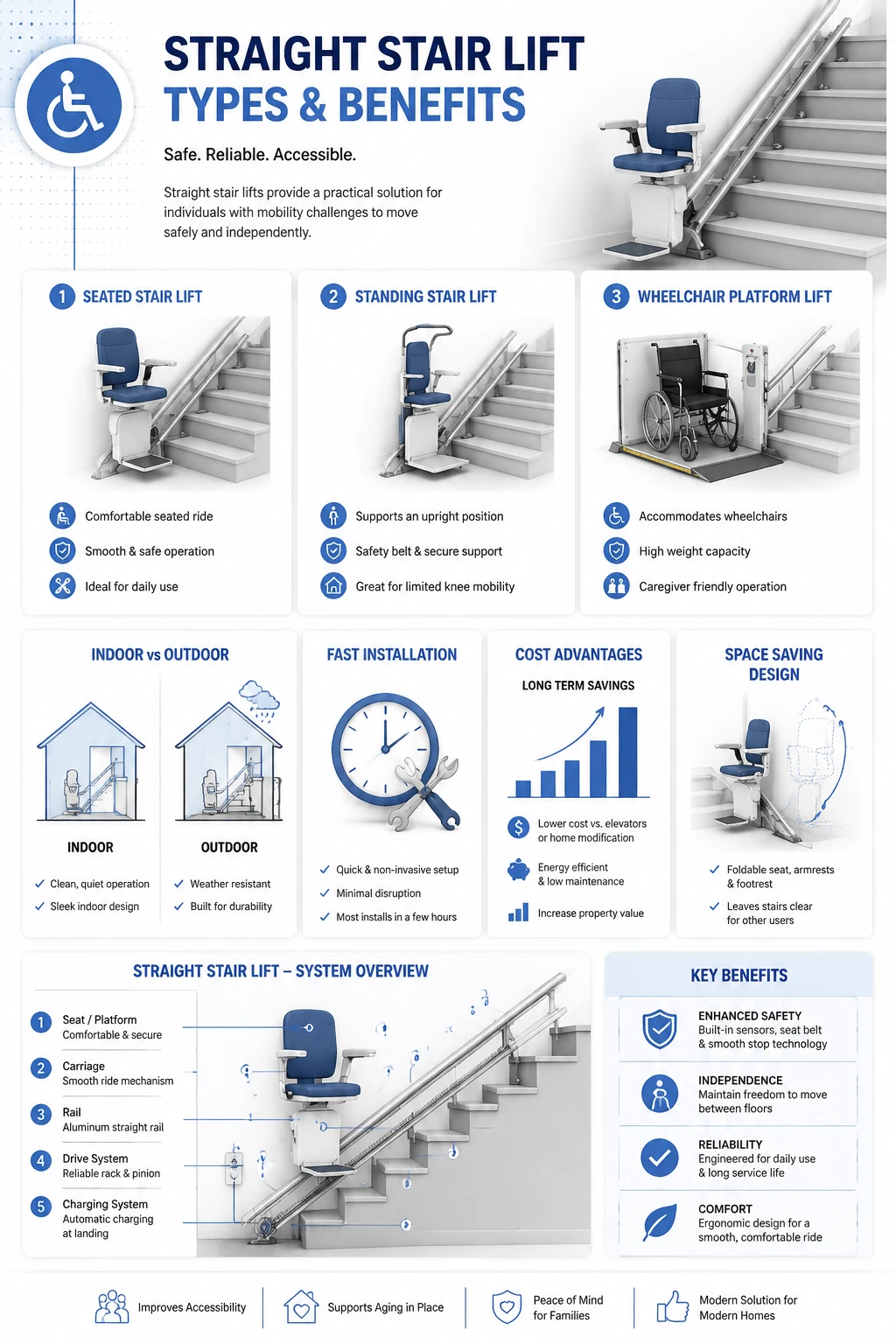
Although all Straight Stair Lift systems operate on a linear rail, they are available in several configurations designed for different mobility requirements and building conditions.
Selecting the appropriate model depends on user needs, available staircase width, physical condition, and installation environment.
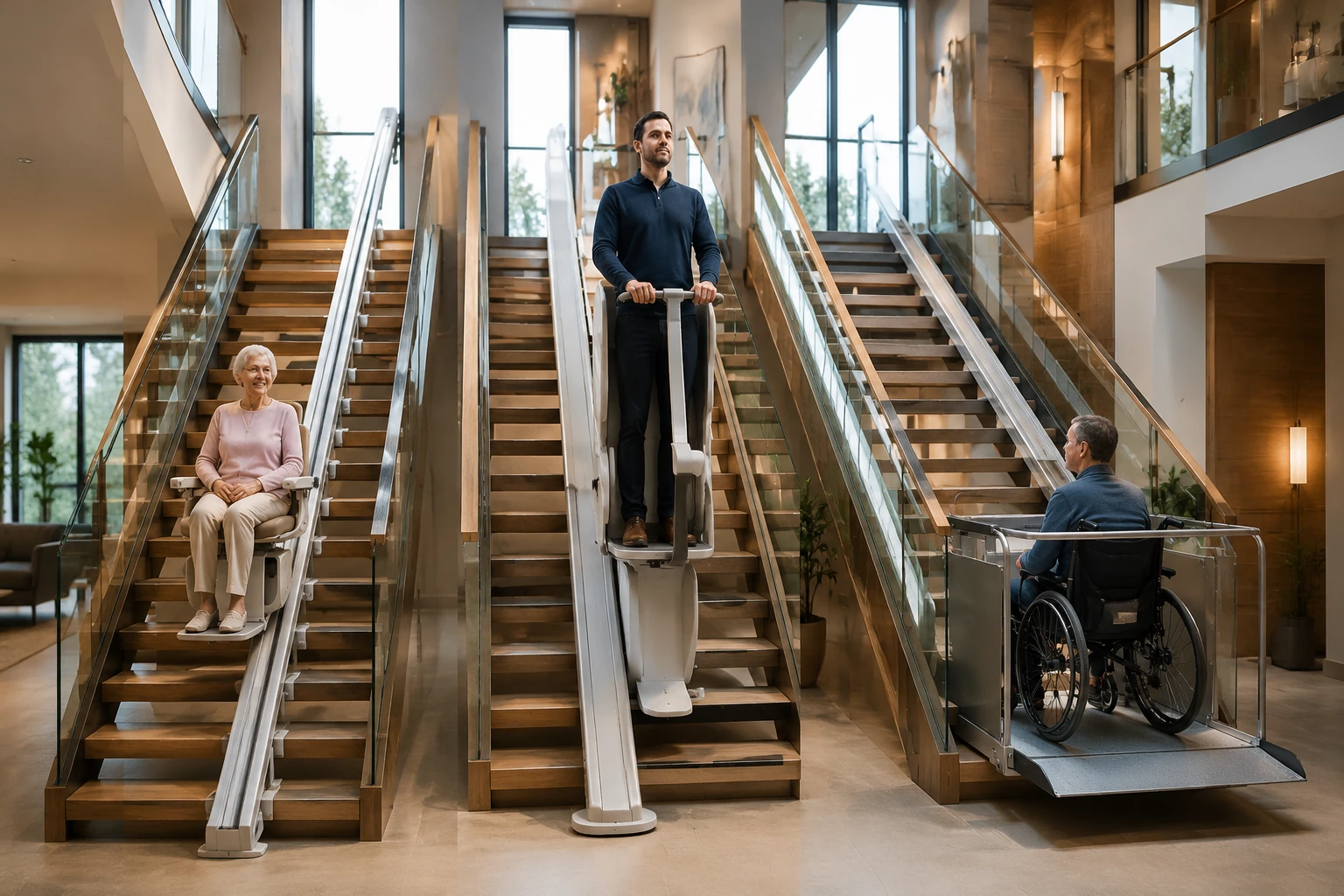
Seated Straight Stair Lift
The seated model is the most common type of Straight Stair Lift.
Users sit comfortably on a powered chair while the system moves along the rail between floors.
- Designed for elderly users
- Foldable seat and footrest
- Compact design
- Suitable for daily home use
Standing Straight Stair Lift
Standing stair lifts allow users to travel while remaining in a standing position.
These systems are commonly selected for narrow staircases or users who experience difficulty sitting.
Straight Wheelchair Platform Lift
Some straight systems use a platform instead of a seat, allowing wheelchair users to travel without transferring from their chair.
To explore accessibility systems for wheelchair users, read: What Is a Wheelchair Platform Lift?
| Lift Type | Primary Use |
|---|---|
| Seated Lift | Daily residential use |
| Standing Lift | Narrow stairways |
| Wheelchair Platform Lift | Wheelchair accessibility |
Indoor and Outdoor Models
Straight stair lifts are also available for both indoor and outdoor environments.
Outdoor versions use weather-resistant materials and protective covers to withstand environmental exposure.
Benefits of Straight Stair Lifts
A Straight Stair Lift offers practical accessibility improvements while remaining one of the most cost-effective mobility systems available for homes.
Fast Installation
Straight rail systems are pre-engineered and require significantly less customization compared with curved designs.
- Short installation time
- Minimal structural modifications
- Simpler engineering process
- Faster project completion
Lower Overall Cost
Because standardized rails are used, straight stair lifts generally cost less than curved alternatives.
| System | Relative Cost |
|---|---|
| Straight Stair Lift | Lower |
| Curved Stair Lift | Higher |
| Home Lift | Highest |
Space-Saving Design
Foldable seats and compact rails preserve staircase clearance and minimize obstruction.
- Suitable for compact homes
- Maintains stair access
- Modern appearance
- Efficient use of space
Applications of Straight Stair Lifts
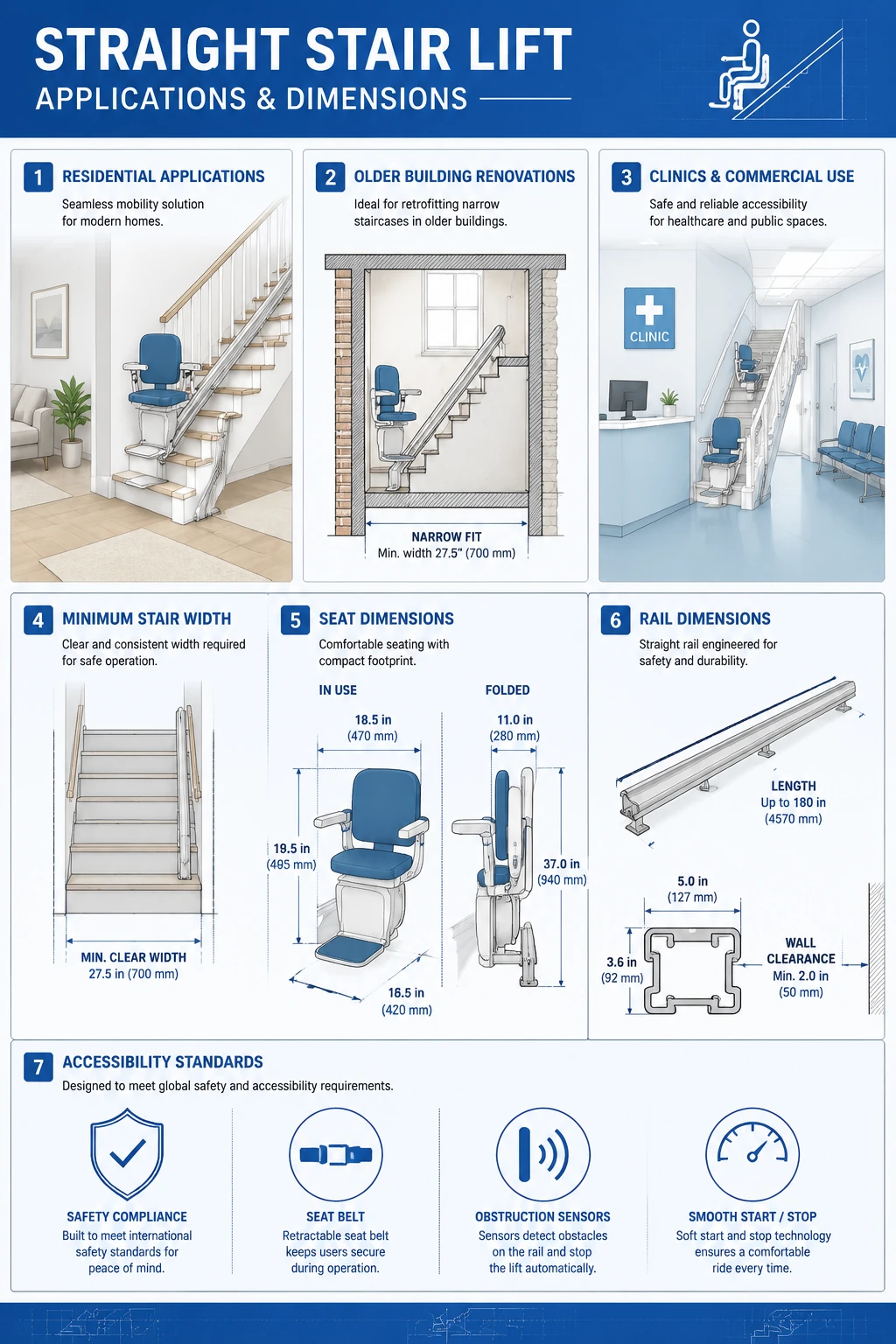
A Straight Stair Lift can be installed in a wide range of residential and light commercial environments where staircases follow a continuous straight path.
Its flexible installation process and compact design make it one of the most practical accessibility systems for existing buildings.
Duplex Homes and Private Residences
The most common application of a Straight Stair Lift is inside duplex houses and multi-level homes.
These systems help elderly users and individuals with mobility limitations move safely between floors without needing major building modifications.
- Ideal for residential accessibility
- Safe daily operation
- Minimal installation work
- Improved user independence
Older Buildings and Renovation Projects
Many older properties do not have sufficient space for traditional elevators.
Straight stair lifts provide an efficient retrofit accessibility option without requiring a shaft or large construction work.
| Building Type | Primary Benefit |
|---|---|
| Older residential buildings | No elevator shaft required |
| Duplex homes | Improved accessibility |
| Small clinics | Patient mobility support |
Clinics and Small Commercial Spaces
Some healthcare facilities and commercial buildings use stair lifts to improve accessibility where installing elevators is not practical.
For alternative residential lift systems, read: What Is a Pitless Lift?
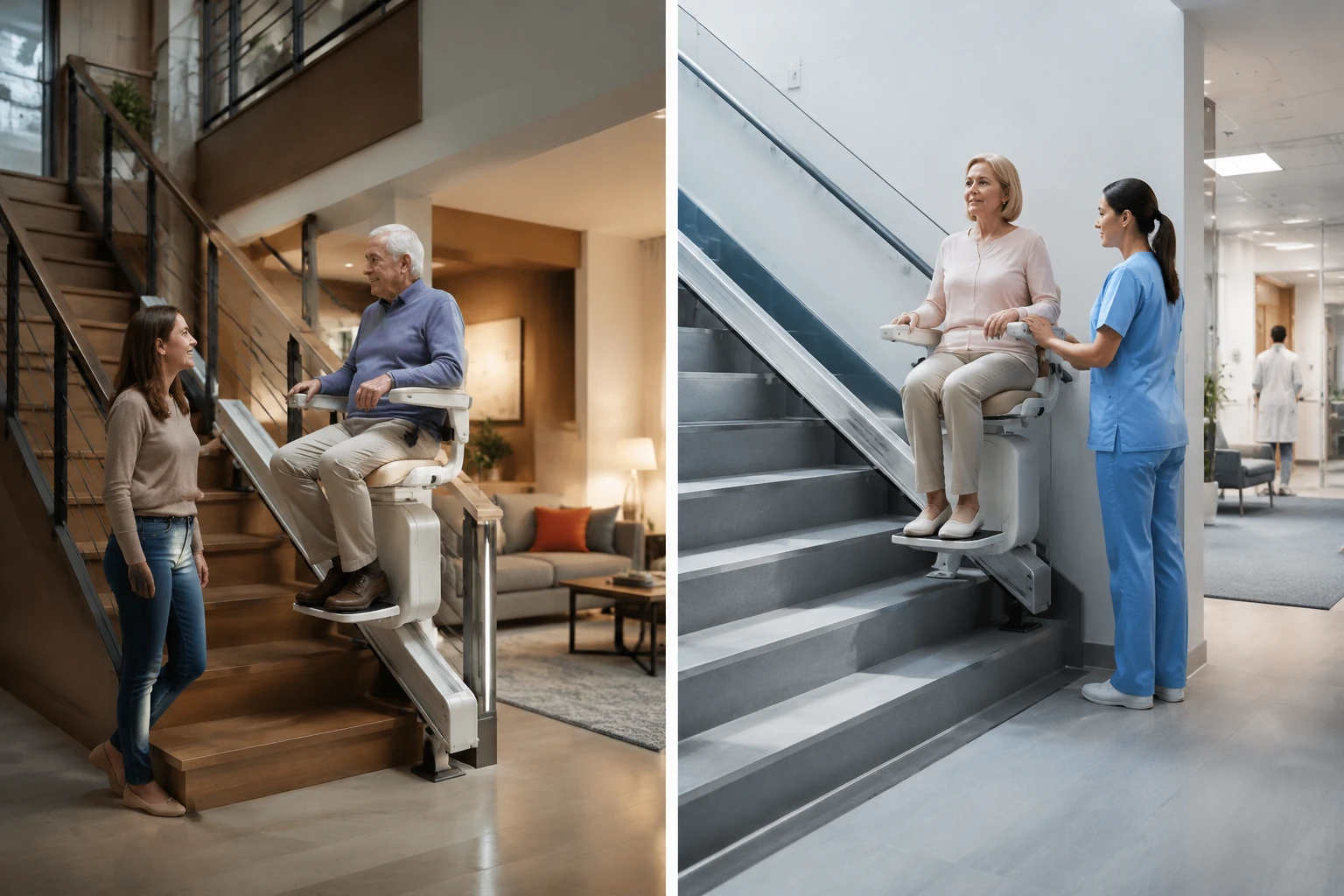
Standard Straight Stair Lift Dimensions
Proper dimensions are essential when selecting a Straight Stair Lift because they directly affect user safety, comfort, and staircase accessibility.
Measurements vary based on lift configuration, staircase width, and user requirements.
Minimum Staircase Width
Most seated straight stair lift systems require a staircase width of approximately 28–30 inches (70–75 cm).
Wheelchair platform systems generally require wider stairways.
| Lift Type | Minimum Width |
|---|---|
| Seated Lift | 70–75 cm |
| Standing Lift | 65–70 cm |
| Wheelchair Platform Lift | 90+ cm |
Seat and Rail Dimensions
- Seat width: 45–55 cm
- Seat depth: 40–50 cm
- Seat height: 45–60 cm
- Rail width: 15–25 cm
- Wall clearance: 10–20 cm
Most models include foldable components to preserve staircase space when not in use.
Weight Capacity and Safety Standards
Safety is one of the most critical design considerations in any Straight Stair Lift system.
Because these mobility solutions are primarily used by elderly individuals and users with physical limitations, manufacturers integrate multiple safety technologies and international compliance standards.
Typical Weight Capacity
Weight limits vary depending on stair lift design and intended use.
| Lift Type | Approximate Capacity |
|---|---|
| Seated Straight Lift | 120–160 kg |
| Standing Lift | 100–140 kg |
| Wheelchair Platform Lift | 250–350 kg |
Selecting the correct load rating improves both operational reliability and long-term equipment durability.
Integrated Safety Features
Modern Straight Stair Lift systems include several built-in protective mechanisms.
- Obstacle detection sensors
- Seat belt systems
- Emergency stop controls
- Seat locking mechanisms
- Overspeed protection
- Soft start and soft stop technology
Operation During Power Failure
Most current stair lifts include battery backup systems to ensure continued operation during electrical outages.
| Feature | Purpose |
|---|---|
| Backup Battery | Emergency movement capability |
| Automatic Charging | Continuous battery charging |
| Safety Brake | Controlled emergency stopping |
International Safety Standards
- CE Certification
- EN 81 accessibility standards
- Overload protection systems
- Speed control mechanisms
Straight Stair Lift vs Curved Stair Lift
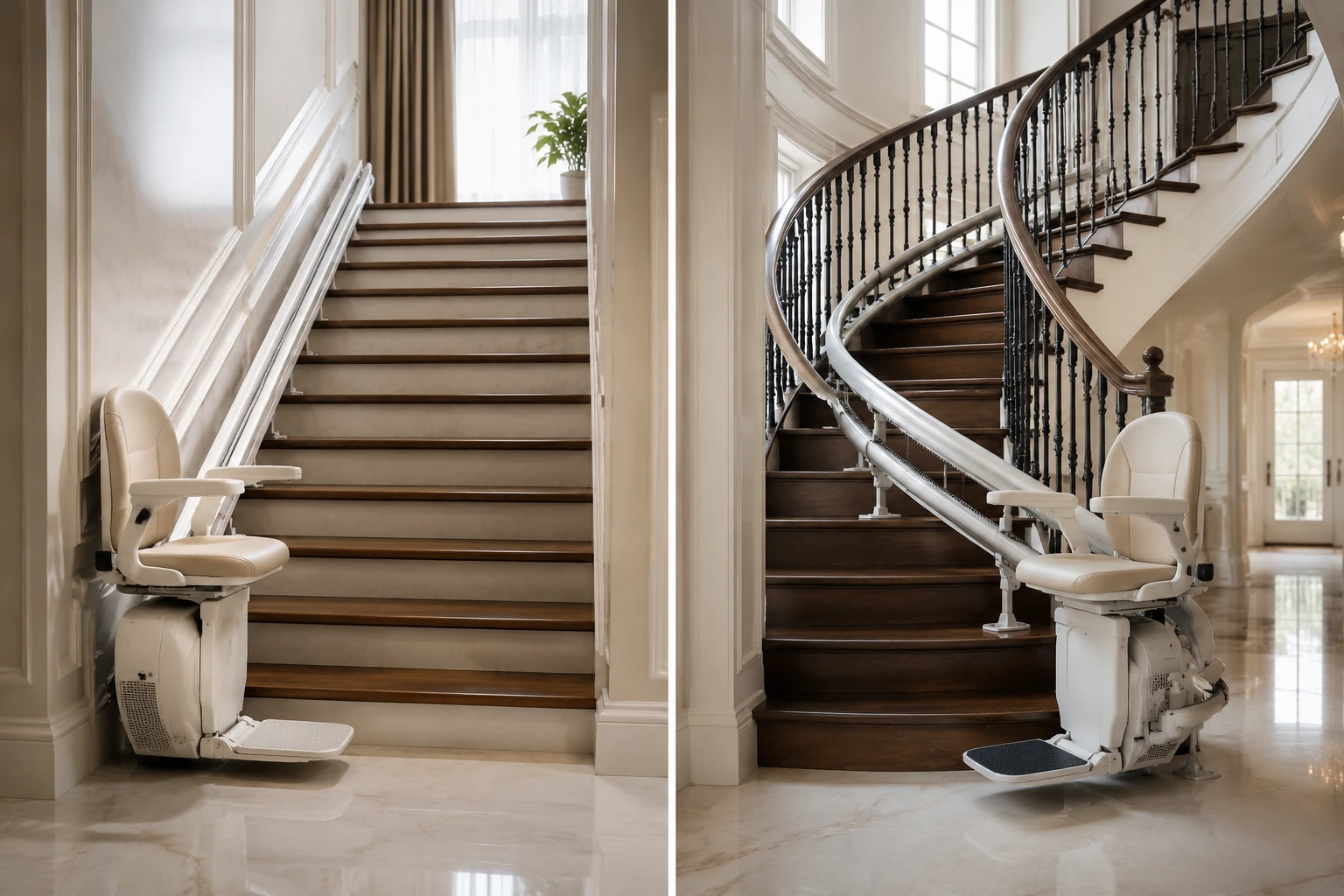
Choosing between a Straight Stair Lift and a curved stair lift depends entirely on staircase configuration and installation requirements.
Although both systems serve similar mobility purposes, their engineering and cost structures differ significantly.
Rail Design Differences
Straight stair lifts use standardized linear rails, while curved models require custom-designed tracks built around turns and landings.
| Feature | Straight Lift | Curved Lift |
|---|---|---|
| Rail Type | Standard rail | Custom rail |
| Installation Complexity | Lower | Higher |
| Project Duration | Shorter | Longer |
Cost Comparison
Curved stair lifts typically cost more due to custom manufacturing and advanced installation requirements.
- Lower equipment cost
- Faster installation
- Less customization required
- Reduced maintenance complexity
Straight Stair Lift Cost
The cost of a Straight Stair Lift depends on multiple technical and installation-related factors.
Although straight models are generally more affordable than curved systems, final pricing varies according to lift type, rail length, features, and installation requirements.
Factors Affecting Straight Stair Lift Pricing
- Rail length and staircase dimensions
- Seat or platform configuration
- Weight capacity requirements
- Safety technology package
- Brand and country of manufacture
- Indoor or outdoor installation
- Installation and maintenance costs
General Cost Comparison
| Lift System | Relative Cost |
|---|---|
| Seated Straight Stair Lift | Lower |
| Standing Stair Lift | Moderate |
| Wheelchair Platform Lift | Higher |
| Curved Stair Lift | Highest |
Long-Term Ownership Costs
The purchase price is not the only financial consideration.
Owners should also account for maintenance and lifecycle expenses.
- Battery replacement
- Routine inspections
- Safety checks
- Periodic servicing
Frequently Asked Questions
A straight stair lift is a mobility device designed for staircases with a continuous straight path and no curves or intermediate landings.
These systems are commonly used by elderly individuals and users with mobility limitations who need safer access between floors.
Yes. Most modern units include rechargeable backup batteries that allow continued operation during power failures.
Typical seated models support approximately 120–160 kg, while platform systems can carry substantially more.
No. Most systems are installed directly onto stair treads without extensive structural modifications.
Conclusion
A Straight Stair Lift is one of the most effective accessibility solutions for homes with uninterrupted staircases.
Its standardized rail design, simplified installation process, and lower overall cost make it a practical alternative to larger residential lift systems.
For elderly users and individuals with mobility limitations, these systems can significantly improve safety, independence, and day-to-day comfort without requiring extensive structural changes.
- Fast installation process
- Cost-efficient accessibility solution
- Compact space-saving design
- Advanced safety technology
- Suitable for residential applications
Selecting the right model should always consider staircase dimensions, user requirements, weight capacity, and future accessibility needs.