
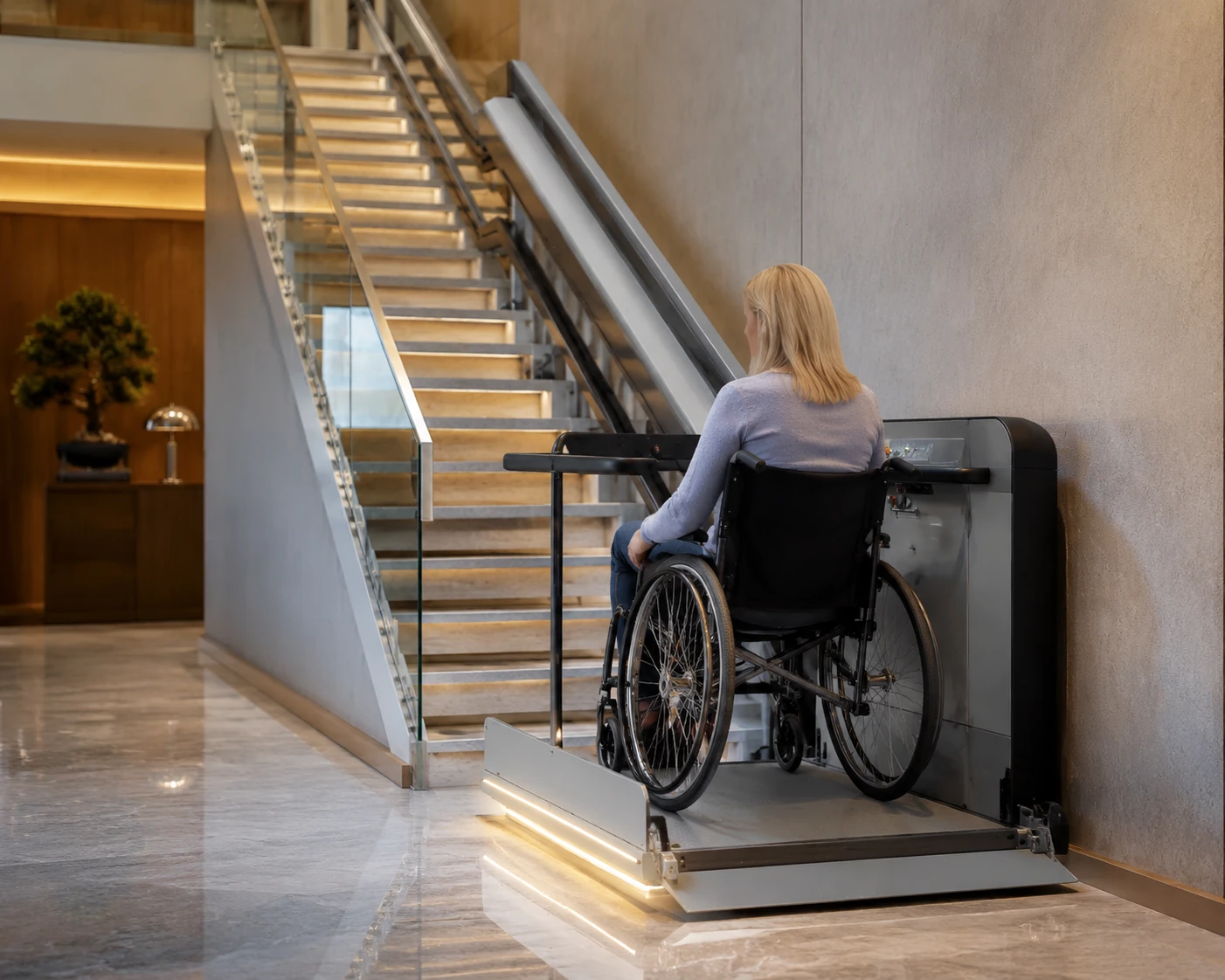
What Is a Wheelchair Platform Stair Lift?
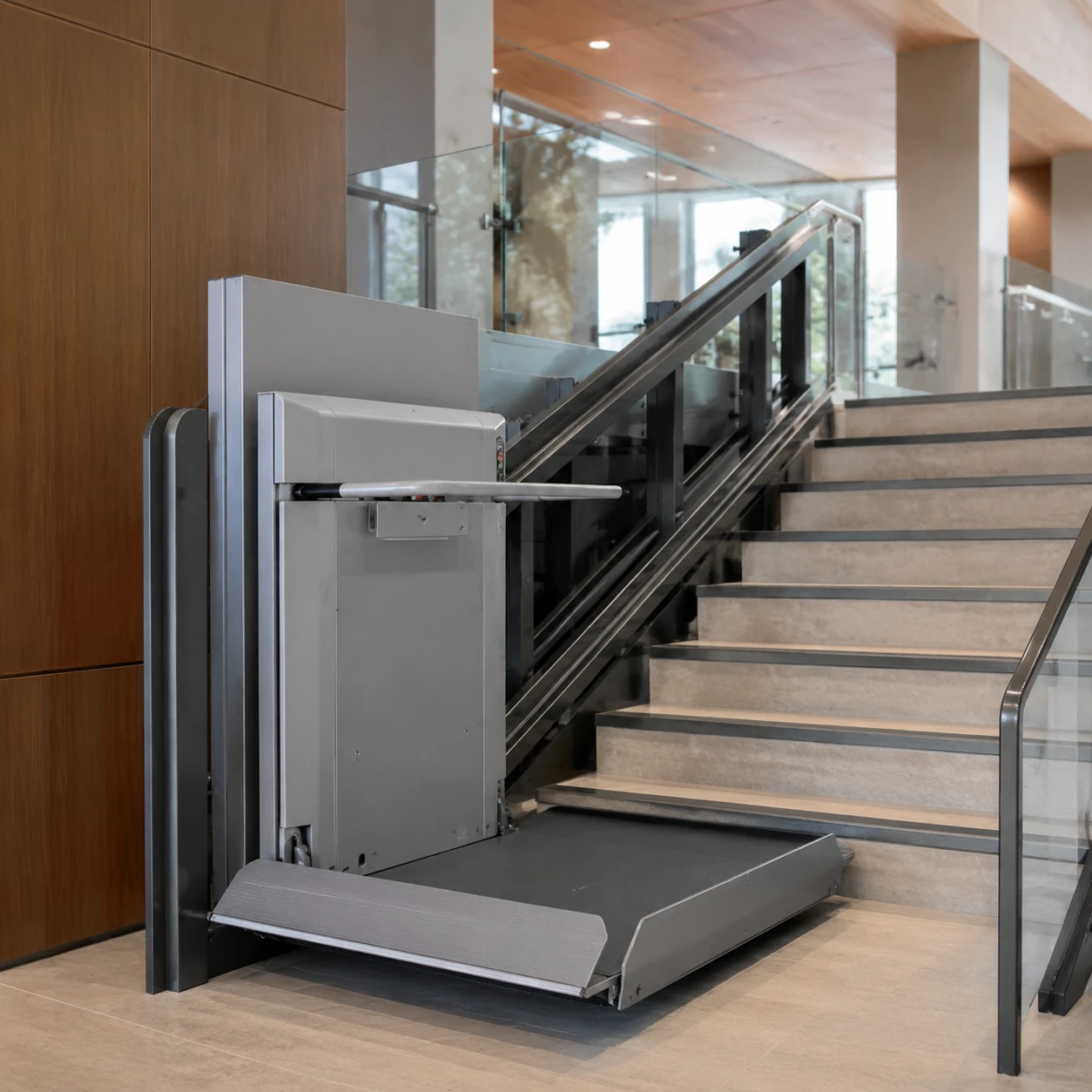
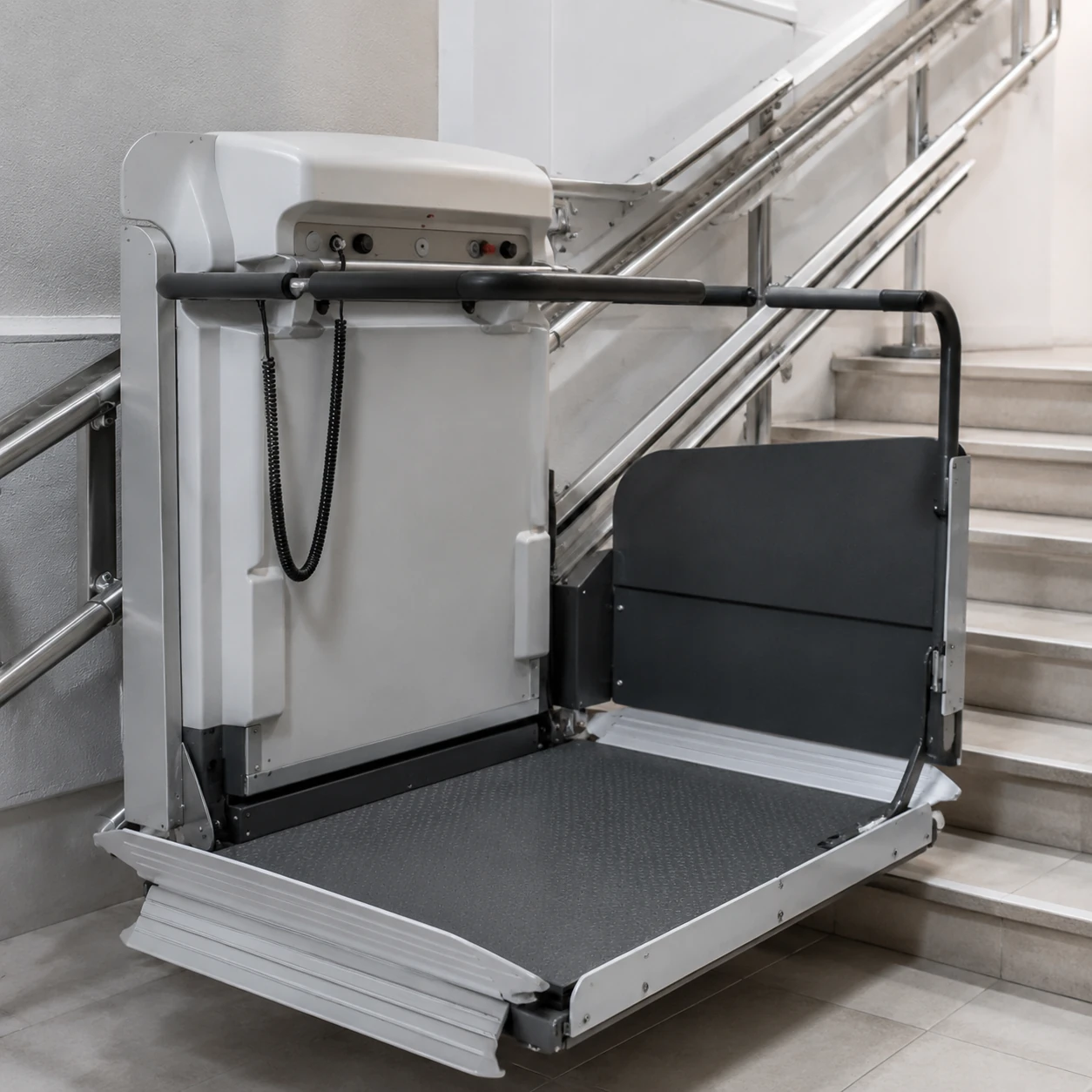
A wheelchair platform stair lift is a specialized accessibility system designed to transport wheelchair users safely along a staircase without requiring them to leave their wheelchair. Unlike traditional stair lifts with seats, these systems use a secure platform specifically engineered for wheelchairs.
Wheelchair platform lifts are widely used in residential buildings, hospitals, public facilities, metro stations, commercial centers, and office buildings where elevators may not be practical or cost-effective.
Modern platform wheelchair lifts are equipped with advanced safety systems, heavy-duty motors, anti-slip platforms, and emergency stop mechanisms to ensure safe and reliable transportation for users with mobility limitations.
Because these systems focus entirely on wheelchair accessibility, they differ significantly from standard stair lifts designed for seated passengers. Their larger platforms, higher weight capacities, and specialized accessibility standards make them an essential mobility solution for barrier-free buildings.
Table of Contents
- How Wheelchair Platform Stair Lifts Work
- Types of Wheelchair Platform Stair Lifts
- Straight Wheelchair Platform Lifts
- Curved Wheelchair Platform Lifts
- Vertical Wheelchair Platform Lifts
- Benefits of Wheelchair Platform Stair Lifts for Disabled Users
- Standard Wheelchair Platform Lift Dimensions
- Weight Capacity and Safety Standards
- Applications in Public Buildings
- Wheelchair Platform Lift vs Stair Chair Lift
- Wheelchair Platform Lift Costs
- Frequently Asked Questions
How Wheelchair Platform Stair Lifts Work
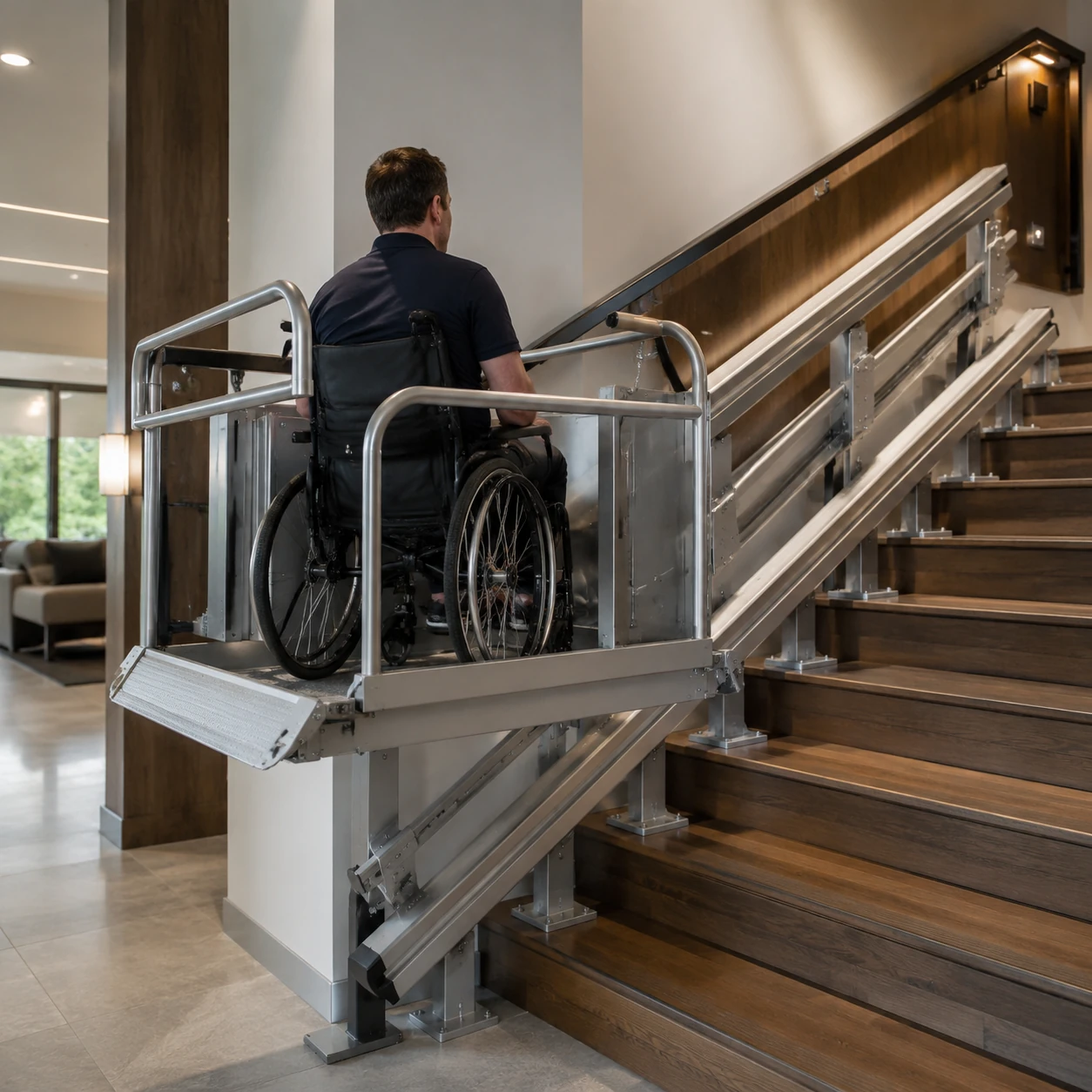
A wheelchair platform stair lift operates using a powered platform that travels along a rail system installed beside or directly on a staircase. The system is specifically designed to transport wheelchair users safely between different floor levels without requiring them to transfer out of their wheelchair.
Unlike standard stair chair lifts, platform wheelchair lifts use a larger heavy-duty platform capable of supporting both the wheelchair and the user simultaneously.
Platform Lift Movement System
The core operating mechanism of a platform wheelchair lift includes a motorized drive unit, guide rails, safety sensors, and a foldable wheelchair platform.
- Rail system mounted along the staircase
- Motor-driven platform movement
- Smooth start and stop control
- Automatic braking systems
When activated, the platform moves steadily along the rail while maintaining balance and stability throughout the travel path.
How Users Operate the Lift
| Step | Description |
|---|---|
| 1 | Wheelchair enters the platform |
| 2 | Safety barriers and locks activate |
| 3 | The lift travels along the staircase |
| 4 | Platform safely stops at destination |
Key Safety Components
Modern wheelchair platform stair lifts include advanced safety systems designed specifically for wheelchair transportation.
- Obstacle detection sensors
- Emergency stop buttons
- Anti-slip platform surfaces
- Wheelchair safety barriers
- Battery backup systems
If an obstacle is detected on the staircase, the lift automatically stops to prevent accidents or mechanical damage.
Power Supply and Backup Operation
Most platform wheelchair lifts operate using standard electrical power combined with integrated battery backup systems.
- Continued operation during power outages
- Improved emergency accessibility
- Reliable performance for public buildings
This combination of heavy-duty engineering and accessibility-focused safety technology makes wheelchair platform stair lifts one of the most effective mobility solutions for disabled users.
Types of Wheelchair Platform Stair Lifts
Wheelchair platform stair lifts are available in several specialized designs to accommodate different staircase layouts, accessibility requirements, and building structures.
Unlike traditional stair chair lifts, all wheelchair platform lift systems are designed specifically for transporting wheelchairs safely using reinforced platforms and heavy-duty rail systems.
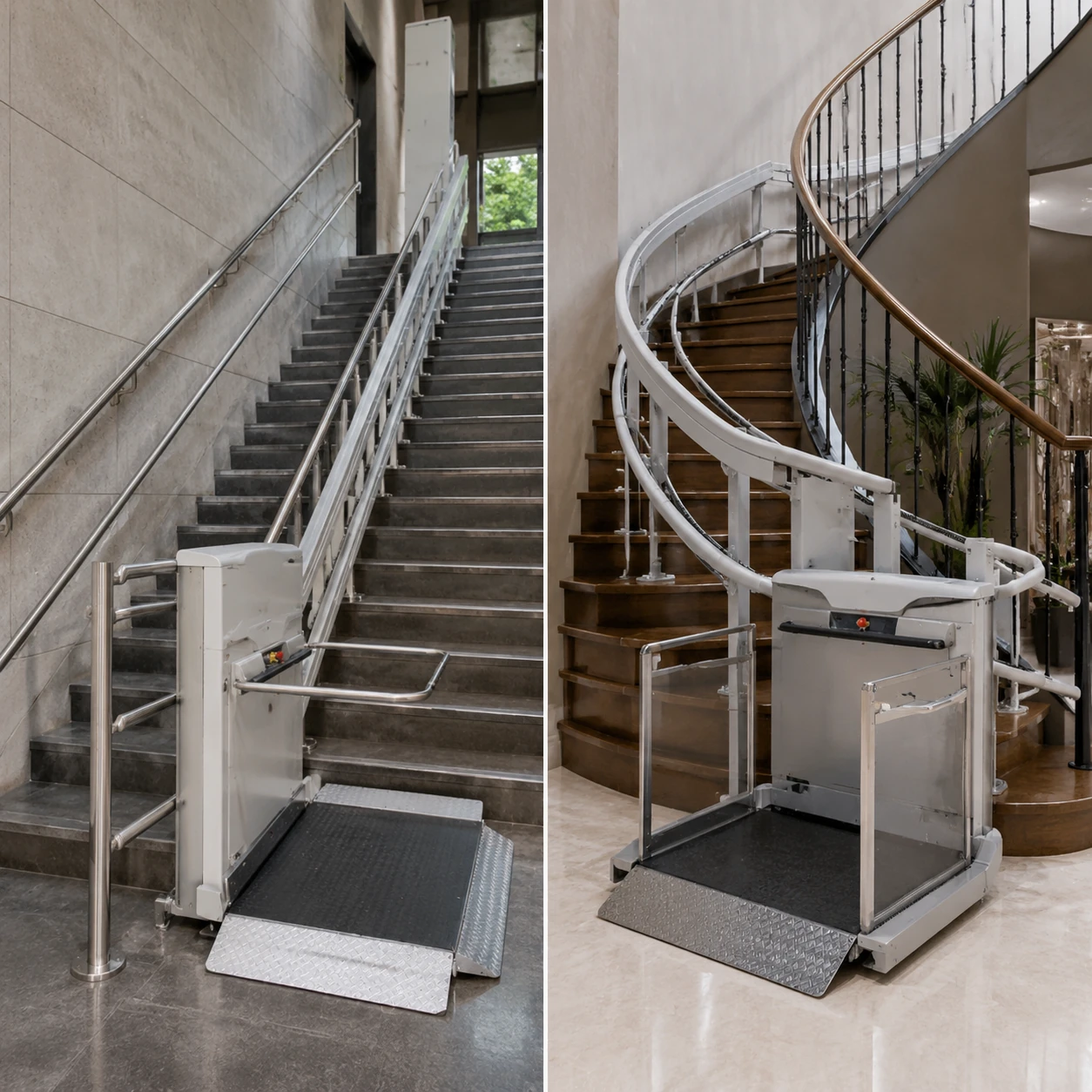
Straight Wheelchair Platform Lifts
Straight wheelchair platform lifts are designed for staircases with a direct path and no turns or landings.
- Installed on straight staircases
- Simpler rail system design
- Faster installation process
- Lower cost compared to curved systems
These systems are commonly used in residential buildings, clinics, and small commercial properties where accessibility upgrades are needed without major construction work.
Curved Wheelchair Platform Lifts
Curved wheelchair platform lifts are engineered for staircases with turns, intermediate landings, or spiral configurations.
| Feature | Curved Platform Lift |
|---|---|
| Rail Design | Custom curved rail |
| Installation Complexity | High |
| Best Application | Complex staircases |
| Cost Range | Higher than straight lifts |
These systems require precise custom engineering to maintain safe wheelchair movement throughout curved travel paths.
- Suitable for older buildings
- Works with multi-level staircases
- Optimized for limited architectural space
Vertical Wheelchair Platform Lifts
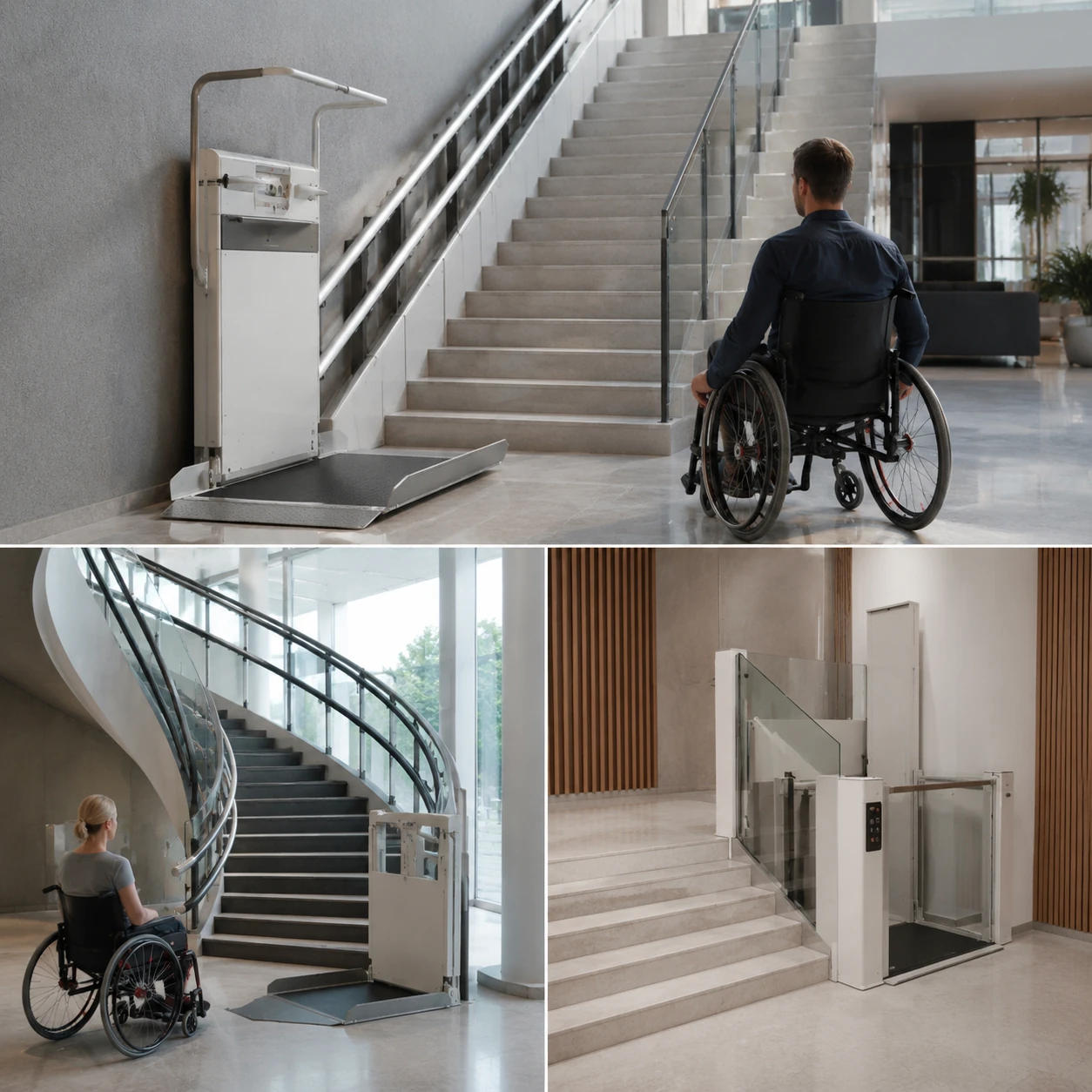
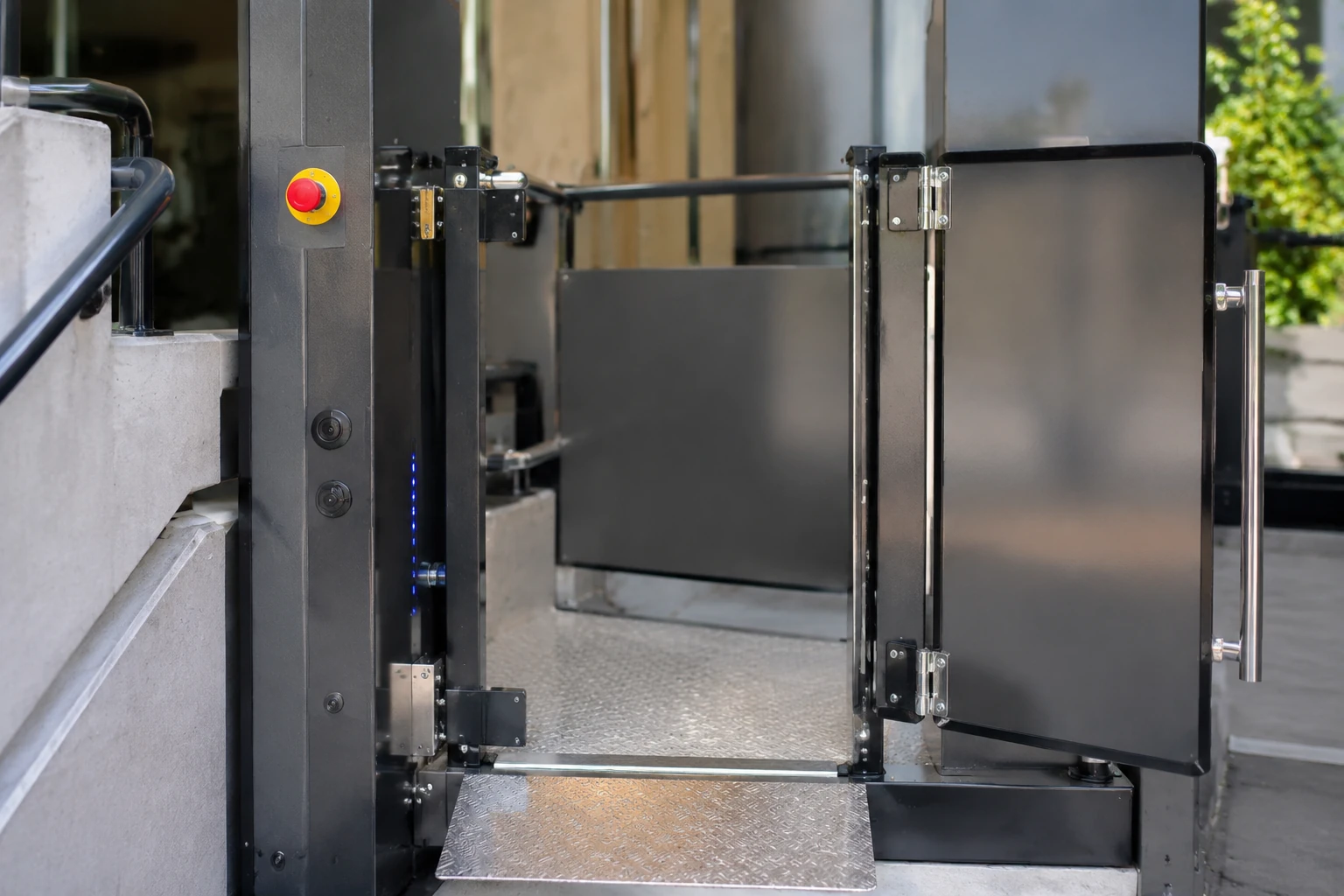
Vertical wheelchair platform lifts move users vertically instead of traveling along staircases. These systems are commonly used for short vertical distances where installing a full elevator is not practical.
- Direct vertical lifting system
- Suitable for indoor and outdoor use
- Higher wheelchair weight capacity
- Commonly used in public accessibility projects
Vertical platform lifts are frequently installed in hospitals, metro stations, office buildings, schools, and commercial centers to improve wheelchair accessibility.
Comparison of Wheelchair Platform Lift Types
| Lift Type | Best For | Space Requirement | Cost Level |
|---|---|---|---|
| Straight Platform Lift | Straight staircases | Low | Moderate |
| Curved Platform Lift | Curved staircases | Medium | High |
| Vertical Platform Lift | Short vertical travel | Higher | Medium to High |
Choosing the correct wheelchair platform stair lift depends on staircase design, wheelchair size, daily usage needs, and building accessibility requirements.
Benefits of Wheelchair Platform Stair Lifts for Disabled Users
Wheelchair platform stair lifts provide safe and independent mobility for wheelchair users in buildings where elevators are unavailable or impractical.
Unlike traditional stair lifts designed for seated passengers, these systems are engineered specifically for wheelchair transportation, making them one of the most important accessibility solutions for disabled individuals.
Improved Independence
- Allows wheelchair users to move between floors independently
- Reduces reliance on caregivers or assistance
- Simple control systems for daily operation
Enhanced Safety
Modern platform wheelchair lifts include advanced safety systems that significantly reduce the risk of accidents on stairways.
- Anti-slip wheelchair platforms
- Automatic safety barriers
- Emergency stop controls
- Obstacle detection sensors
Better Accessibility in Buildings
| Building Type | Accessibility Benefit |
|---|---|
| Residential Buildings | Improved floor-to-floor wheelchair access |
| Healthcare Facilities | Safe patient transportation |
| Public Buildings | Compliance with accessibility standards |
For a broader overview of mobility solutions, see our complete stair lift guide .
Ideal for Limited Spaces
- No elevator shaft required
- Installed directly along staircases
- Minimal structural modification
Because of their accessibility-focused design, wheelchair platform stair lifts are widely used in both residential and commercial accessibility projects.
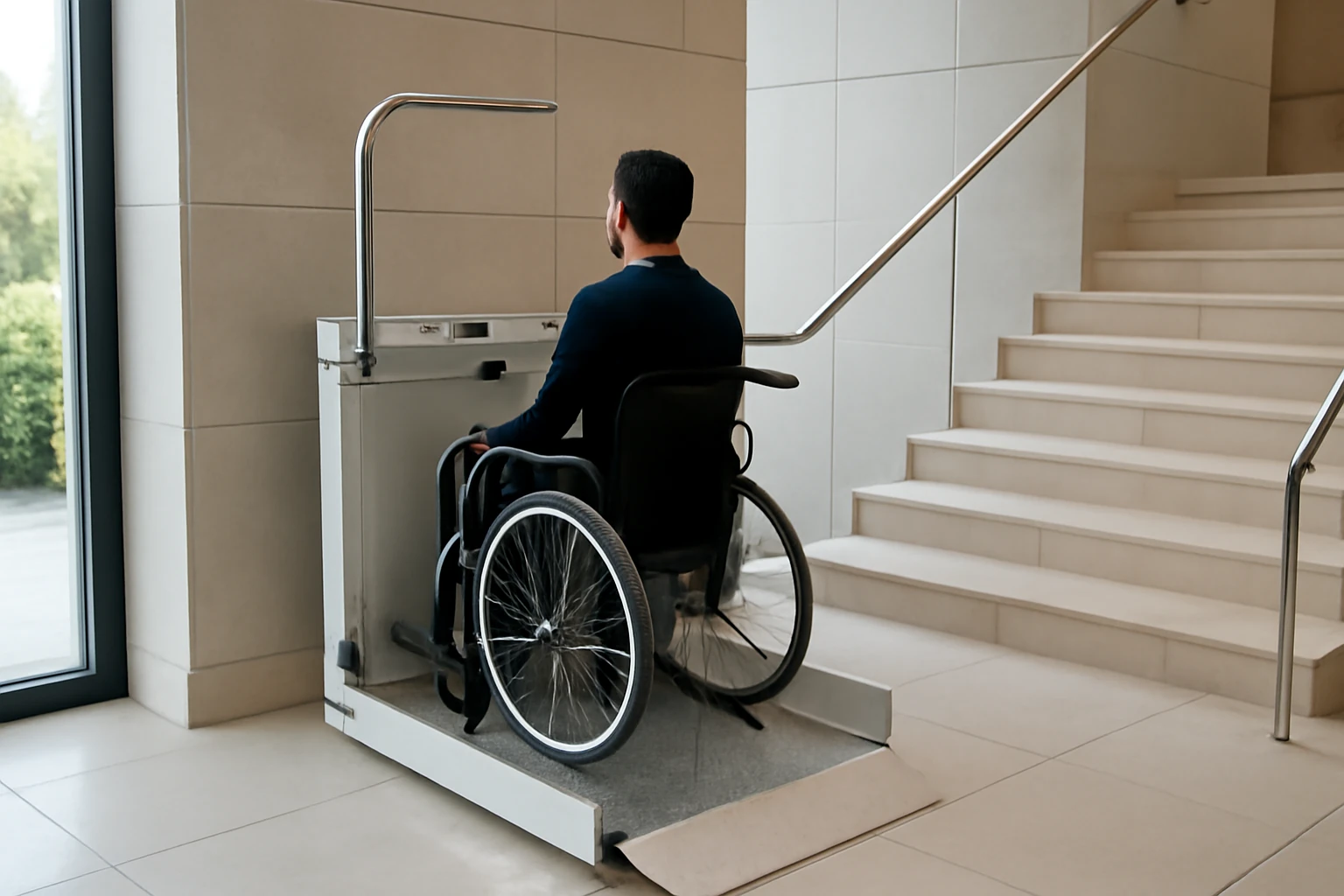
Standard Wheelchair Platform Lift Dimensions
The dimensions of a wheelchair platform stair lift are critical for ensuring safe wheelchair transportation, proper maneuverability, and compliance with accessibility standards.
Unlike standard stair chair lifts, platform wheelchair lifts require larger operating space to accommodate both manual and powered wheelchairs safely.
Standard Platform Size
Most platform wheelchair lifts are designed with reinforced platforms large enough to support wheelchair movement and safe positioning during travel.
| Component | Typical Dimensions |
|---|---|
| Platform Width | 31–39 inches (80–100 cm) |
| Platform Length | 39–49 inches (100–125 cm) |
| Safety Barrier Height | Minimum 4 inches (10 cm) |
| Weight Capacity | 550–880 lbs (250–400 kg) |
Minimum Staircase Width Requirements
Installing a wheelchair platform lift requires sufficient staircase clearance to maintain safe wheelchair movement and emergency access.
- Narrow staircases may require folding platforms
- Wider stairs allow larger wheelchair platforms
- Landing areas must provide safe wheelchair turning space
Most accessibility projects require a minimum staircase width between 35 and 43 inches (90–110 cm) depending on platform configuration.
Wheelchair Turning Space
One of the most important technical considerations for platform wheelchair lifts is adequate maneuvering space at entry and exit points.
- Safe wheelchair entry positioning
- Clear turning radius
- Obstacle-free landing zones
Most accessibility standards recommend a wheelchair turning radius of at least 60 inches (150 cm).
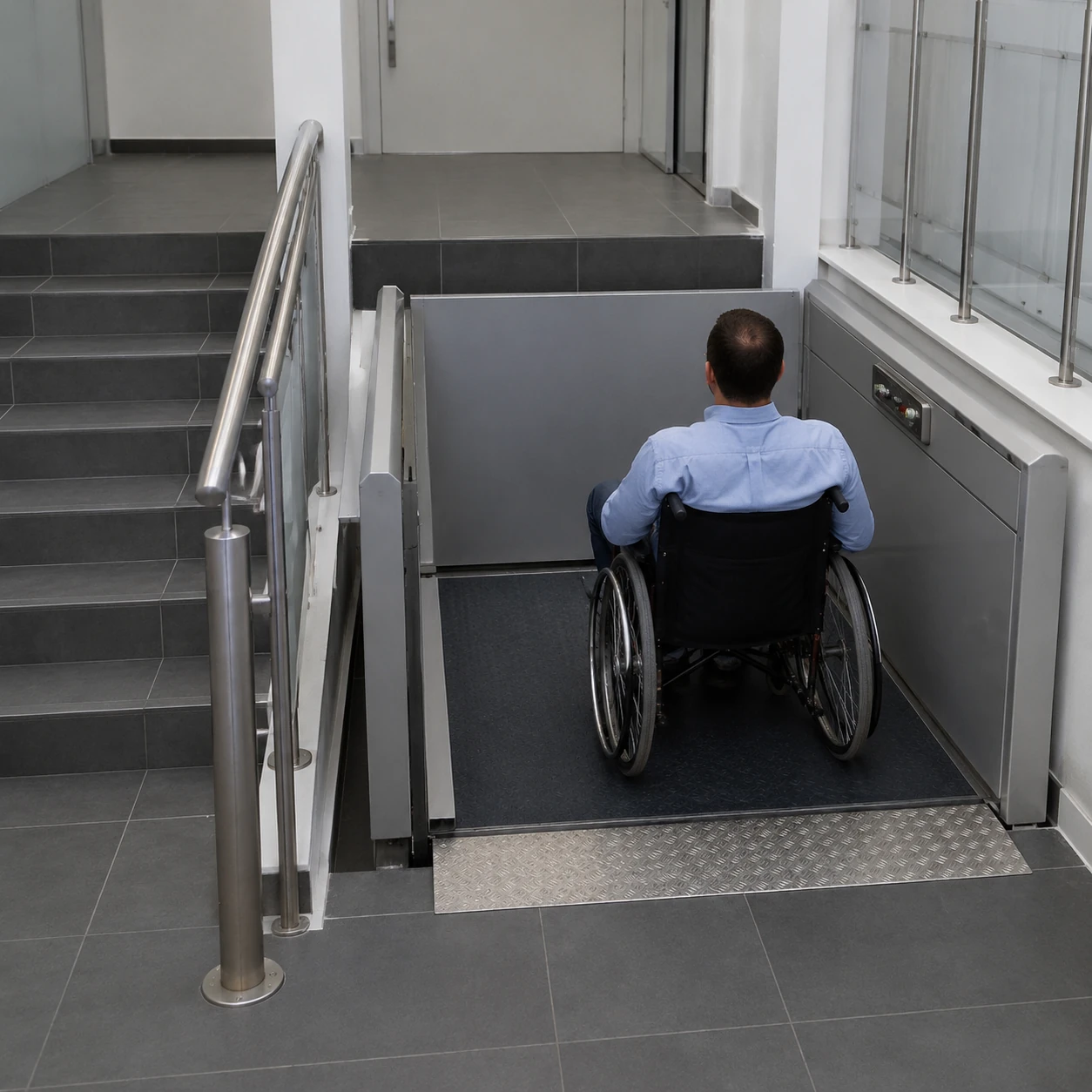
Dimensions for Powered Wheelchairs
Powered wheelchairs are typically larger and heavier than manual wheelchairs, requiring larger platform sizes and higher load capacities.
| Wheelchair Type | Recommended Platform Size |
|---|---|
| Manual Wheelchair | 31 × 39 inches (80 × 100 cm) |
| Powered Wheelchair | 35 × 49 inches (90 × 125 cm) |
To better understand overall mobility system layouts, read our complete stair lift guide .
Why Proper Dimensions Matter
- Improves wheelchair stability during travel
- Enhances user safety
- Prevents collisions with walls or railings
- Supports accessibility compliance
Accurate measurements and proper platform sizing are essential for building a safe and reliable wheelchair platform stair lift system.
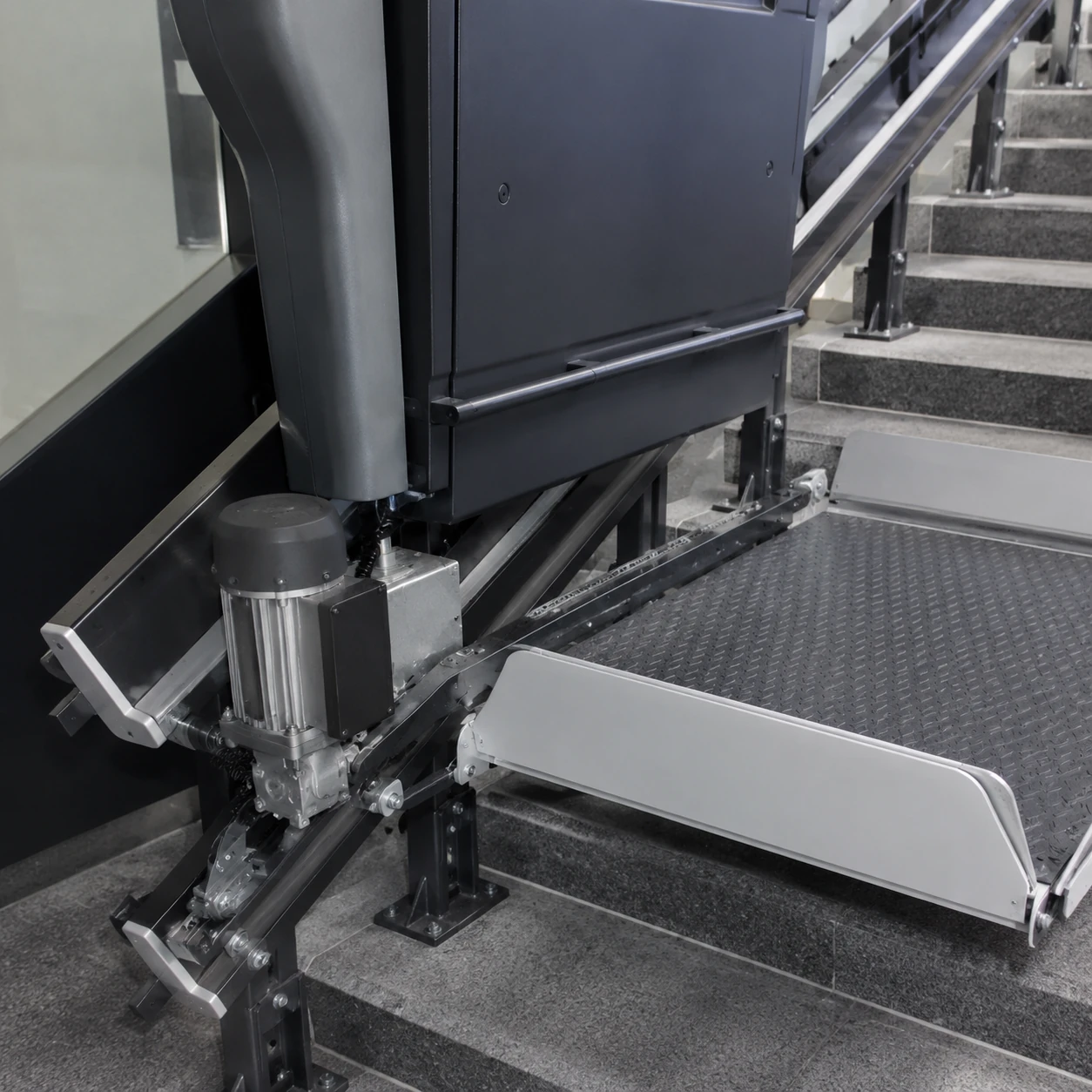
Weight Capacity and Safety Standards
The weight capacity of a wheelchair platform stair lift is one of the most important factors affecting performance, durability, and user safety.
Because these systems transport both the wheelchair and the user together, they require reinforced platforms, heavy-duty motors, and advanced stabilization systems.
Typical Weight Capacity
| Platform Lift Type | Average Capacity |
|---|---|
| Residential Platform Lift | 550–660 lbs (250–300 kg) |
| Commercial Platform Lift | 660–880 lbs (300–400 kg) |
Higher-capacity systems are commonly used in hospitals, metro stations, and commercial buildings where powered wheelchairs and heavy daily usage are expected.
Key Safety Features
- Obstacle detection sensors
- Automatic emergency braking
- Anti-slip platform surfaces
- Wheelchair protection barriers
- Battery backup operation
- Emergency stop controls
Modern platform wheelchair lifts automatically stop if obstacles are detected along the rail path or staircase.
Accessibility and Safety Compliance
Many public-access wheelchair platform lifts are designed to meet accessibility and mobility safety standards for disabled users.
- Smooth low-vibration movement
- Secure wheelchair positioning
- Safe entry and exit access
Choosing a properly rated wheelchair platform stair lift ensures long-term safety, stable performance, and reliable accessibility for wheelchair users.
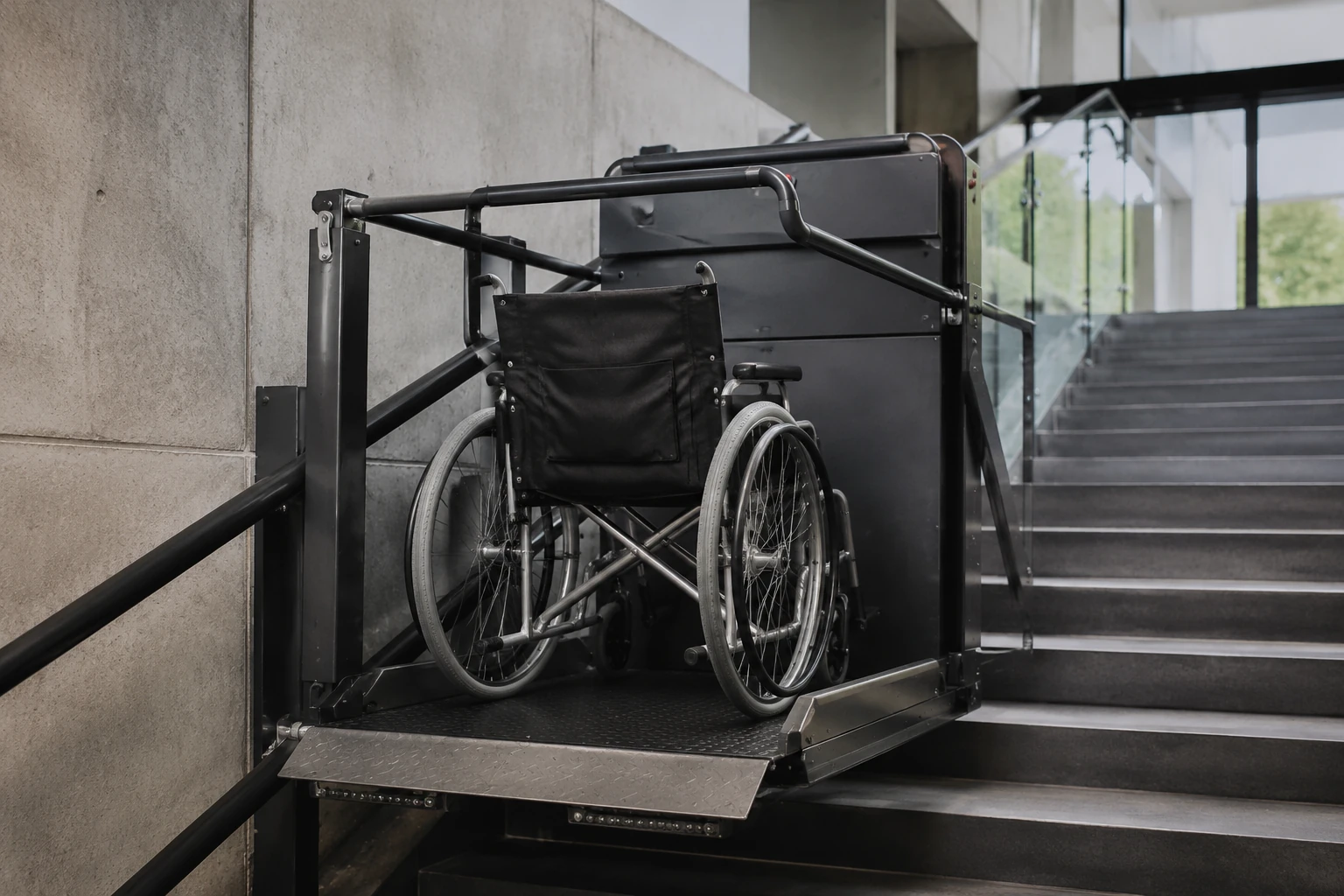
Applications of Wheelchair Platform Stair Lifts in Public Buildings
Wheelchair platform stair lifts are widely used in public buildings to improve accessibility for wheelchair users and individuals with mobility limitations.
These systems are especially valuable in buildings where elevator installation is difficult, expensive, or architecturally impractical.
Hospitals and Healthcare Facilities
Hospitals frequently use platform wheelchair lifts to transport patients safely between levels and improve accessibility throughout medical facilities.
- Safe patient transportation
- Reliable wheelchair accessibility
- Improved emergency mobility
Metro Stations and Public Transit
Many metro stations and transportation hubs install wheelchair platform lifts to provide barrier-free access to platforms and public transportation systems.
| Location | Accessibility Purpose |
|---|---|
| Metro Stations | Wheelchair access to train platforms |
| Bus Terminals | Safe movement between levels |
| Railway Stations | Barrier-free transportation access |
Commercial Centers
Shopping malls and commercial centers use wheelchair platform stair lifts to improve accessibility for customers and visitors with disabilities.
- Enhanced customer accessibility
- Compliance with accessibility standards
- Improved visitor mobility experience
Office Buildings
Office buildings often install platform wheelchair lifts to create accessible work environments for employees and visitors with mobility challenges.
- Accessible workplace mobility
- Safer wheelchair transportation
- Support for inclusive building design
Because of their flexibility and accessibility-focused engineering, wheelchair platform stair lifts have become essential systems in modern public infrastructure.
Wheelchair Platform Lift vs Stair Chair Lift
Although both systems are designed to improve stair accessibility, a wheelchair platform stair lift is fundamentally different from a traditional stair chair lift.
This distinction is important because many users confuse standard seated stair lifts with wheelchair platform lifts, even though their design, functionality, and target users are completely different.
Main Functional Difference
| Feature | Wheelchair Platform Lift | Stair Chair Lift |
|---|---|---|
| User Position | User stays in wheelchair | User transfers to seat |
| Platform Type | Large wheelchair platform | Single passenger chair |
| Weight Capacity | Higher capacity | Lower capacity |
| Accessibility Purpose | Wheelchair transportation | Seated mobility support |
Who Uses Platform Wheelchair Lifts?
- Wheelchair users
- People with severe mobility limitations
- Users unable to transfer independently
- Public accessibility projects
In contrast, stair chair lifts are generally intended for users who can sit independently but have difficulty climbing stairs.
Structural and Technical Differences
Platform wheelchair lifts require stronger motors, reinforced rails, larger safety systems, and wider staircase clearance compared to chair lifts.
- Heavier-duty rail systems
- Larger installation space
- Advanced wheelchair safety barriers
- Higher load capacity
For a broader overview of seated stair lift systems, read our complete stair lift guide .
Understanding the difference between these two systems is essential when selecting the correct accessibility solution for residential or public buildings.
Wheelchair Platform Lift Cost
The cost of a wheelchair platform stair lift depends on several technical factors including platform size, staircase design, travel distance, installation complexity, and safety features.
Because these systems are specifically engineered for wheelchair transportation, they typically cost more than standard stair chair lifts. Larger platforms, reinforced rail systems, and higher weight capacities significantly increase manufacturing and installation costs.
Most professionally installed wheelchair platform lifts range between $12,000 and $35,000 depending on the application and customization requirements. oai_citation:0‡lifewaymobility.com
Average Cost by Lift Type
| Lift Type | Typical Price Range | Installation Complexity |
|---|---|---|
| Straight Platform Lift | $8,000 – $15,000 | Moderate |
| Curved Platform Lift | $15,000 – $35,000+ | High |
| Vertical Platform Lift | $12,000 – $30,000 | Medium to High |
Factors That Affect Wheelchair Platform Lift Cost
- Platform dimensions and wheelchair size
- Powered wheelchair compatibility
- Indoor or outdoor installation
- Travel height and staircase length
- Custom curved rail systems
- Safety and automation features
- Structural modifications
Larger platforms designed for powered wheelchairs can increase total pricing by 10–20% due to heavier-duty motors and reinforced structural components. oai_citation:2‡jnhclift.com

Installation and Additional Costs
Besides the lift itself, installation costs can significantly impact the final project budget.
- Electrical connection setup
- Concrete foundation work
- Structural reinforcement
- Permit and inspection fees
- Weatherproofing for outdoor systems
Some projects may also require staircase modifications, landing extensions, or custom accessibility adjustments. oai_citation:3‡Angi
Residential vs Commercial Pricing
| Application | Typical Cost Level | Key Difference |
|---|---|---|
| Residential | Lower | Less frequent usage |
| Commercial | Higher | Higher capacity and stricter safety compliance |
Choosing the correct wheelchair platform lift requires balancing budget, accessibility requirements, long-term maintenance, and building design limitations.
Frequently Asked Questions
Conclusion
A wheelchair platform stair lift is one of the most effective accessibility solutions for safely transporting wheelchair users across different floor levels.
Unlike traditional stair chair lifts, platform wheelchair lifts are specifically engineered for wheelchair mobility, offering larger platforms, stronger safety systems, and higher weight capacities.
These systems are widely used in residential buildings, healthcare facilities, metro stations, office buildings, and commercial centers where barrier-free accessibility is essential.
By selecting the correct lift type, platform size, and safety configuration, building owners can significantly improve accessibility while maintaining reliable long-term performance.
To explore additional stair accessibility systems and mobility solutions, visit our complete stair lift guide .
With modern engineering, advanced safety technology, and accessibility-focused design, wheelchair platform stair lifts continue to play a critical role in creating inclusive and accessible buildings for everyone.