
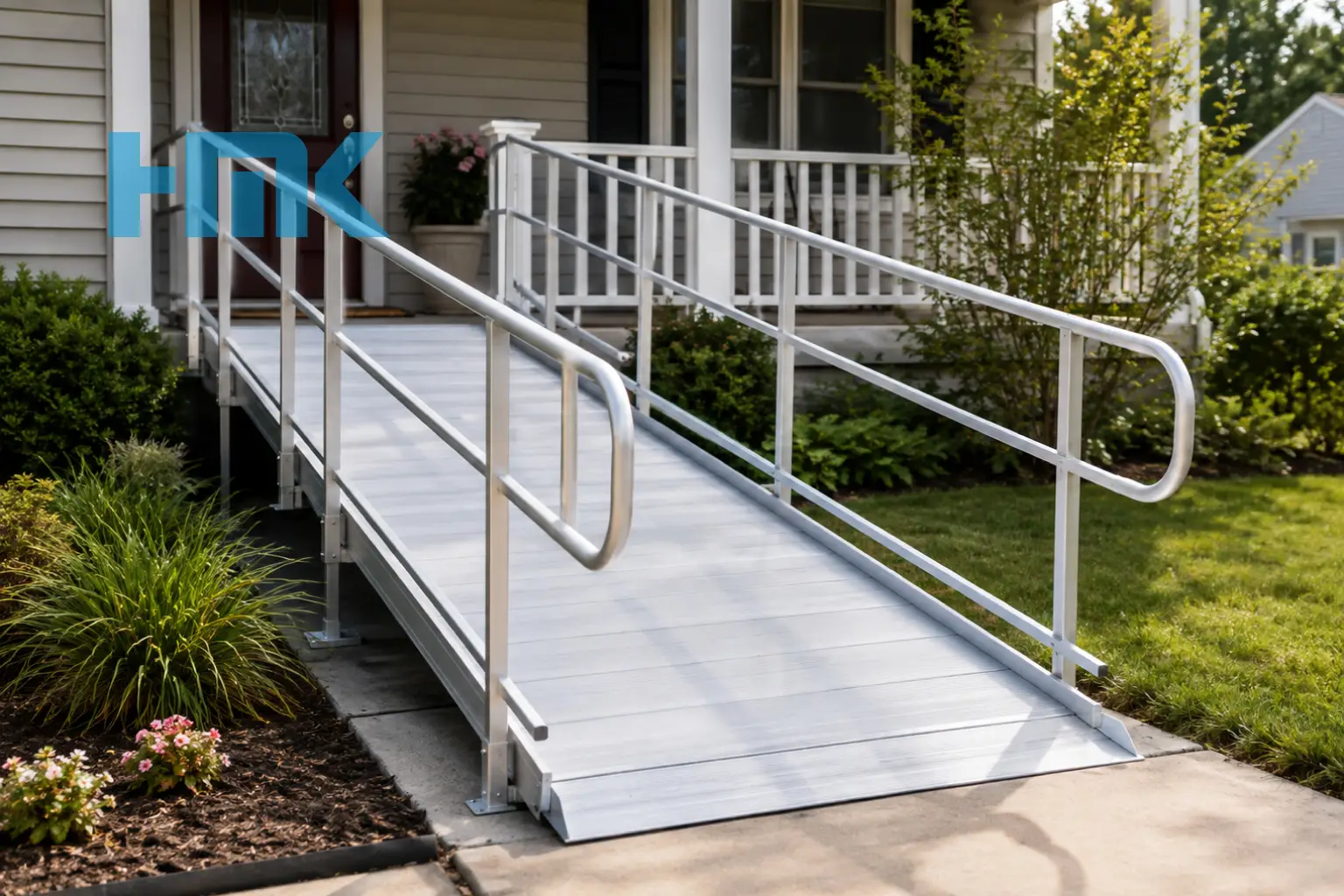
A wheelchair ramp can make the difference between being able to leave home independently and being restricted by a few steps at the entrance. For people who use wheelchairs, walkers, scooters, or other mobility aids, a properly designed ramp can improve safety, independence, and access to everyday activities.
However, installing one can be expensive, particularly when a home needs a long permanent ramp, multiple landings, handrails, or structural modifications. This naturally raises an important question: Are wheelchair ramps covered by insurance or funding programs?
The short answer is sometimes. Coverage depends on the type of insurance, the person's medical needs, the property, and the specific government or nonprofit program. Some health plans may provide assistance, while Medicare generally does not treat a ramp as covered durable medical equipment. Medicaid programs, veterans' benefits, state assistance, and housing grants may offer other options.
This guide explains how wheelchair ramp funding works, what programs to investigate, the costs involved, and the steps you can take before paying out of pocket.
Are Wheelchair Ramps Covered by Insurance?
Insurance coverage for a wheelchair ramp is not automatic. In many cases, insurers distinguish between medical equipment and home modifications.
A wheelchair itself may qualify as durable medical equipment when medically necessary. A permanent ramp, on the other hand, is usually considered a modification to the home rather than medical equipment. This distinction can make coverage more difficult.
That does not mean you should assume your insurer will say no. Some private insurance policies, Medicare Advantage plans, Medicaid programs, and disability-related benefits may provide assistance with accessibility modifications under certain circumstances.
When reviewing your policy, look for terms such as:
- Home accessibility modifications
- Environmental modifications
- Durable medical equipment
- Assistive technology
- Home and community-based services
- Medical necessity
- Disability-related home modifications
- Mobility assistance
You may also need documentation from a physician, occupational therapist, physical therapist, or other qualified professional explaining why the ramp is medically necessary.
The most important point is to check your specific plan before construction begins. If you install the ramp first and ask for reimbursement afterward, you may discover that prior authorization or preapproval was required.
Does Medicare Pay for a Wheelchair Ramp?
For people with Original Medicare, the answer is generally no for a permanent residential wheelchair ramp.
Medicare Part B covers medically necessary durable medical equipment, including certain wheelchairs and scooters. Medicare defines covered DME as equipment used for a medical reason, used in the home, and expected to last at least three years, among other requirements.
A permanent ramp is generally treated differently because it becomes part of the home. Therefore, someone should not assume that Medicare's coverage of a wheelchair means Medicare will also pay for the ramp needed to use it.
There can be another avenue for people enrolled in Medicare Advantage. Medicare Advantage plans are offered by private insurers and can have additional benefits beyond Original Medicare. Accessibility-related benefits vary by plan, so members should contact their plan directly and ask whether home modifications or structural accessibility improvements are covered.
When speaking with a Medicare Advantage representative, be specific. Instead of simply asking, "Does my plan cover a wheelchair ramp?" ask whether the plan offers benefits for home accessibility modifications or environmental modifications related to a mobility limitation.
Can Medicaid Cover a Wheelchair Ramp?
Medicaid can be a more promising option, but coverage depends heavily on the state and the specific Medicaid program.
Federal Medicaid programs allow states to provide Home and Community-Based Services (HCBS). These services are designed to help eligible people receive support in their homes and communities instead of institutional settings.
Some HCBS programs can include environmental or home modifications. Under certain Medicaid authorities, states may provide services such as environmental modifications that help an individual live safely and independently at home.
For example, a Medicaid-funded home modification program may potentially cover accessibility improvements such as:
- Entrance ramps
- Doorway modifications
- Grab bars
- Accessible bathroom changes
- Non-slip surfaces
- Other modifications related to health and safety
The exact rules vary by state, eligibility category, waiver, and individual assessment. A person may also have to demonstrate a particular level of care or meet other medical and financial requirements.
If you have Medicaid, contact your state's Medicaid agency or case manager and ask specifically about HCBS waivers, environmental modifications, and home accessibility adaptations.
Do Private Health Insurance Plans Pay for Ramps?
Private health insurance coverage varies considerably.
Some policies may exclude permanent home modifications entirely. Others may offer limited benefits when a modification is considered medically necessary. A plan might also cover a portion of the cost or impose a maximum benefit.
Before making assumptions, review your policy and contact the insurer. Ask:
- Does my plan cover home accessibility modifications?
- Can a wheelchair ramp qualify as a medically necessary modification?
- Do I need a doctor's prescription?
- Is an occupational therapy evaluation required?
- Do I need prior authorization?
- Must the contractor be in your network?
- Is there a maximum reimbursement amount?
- Does the ramp need to meet specific accessibility or building-code requirements?
- Do I have to own the property?
- Are rental properties eligible?
Get the answers in writing whenever possible.
If your request is denied, ask for the denial reason and information about the appeal process. A denial based on missing documentation may be different from a denial based on an explicit policy exclusion.
VA Programs and Wheelchair Ramp Funding
Veterans may have some of the strongest options for assistance with accessibility modifications.
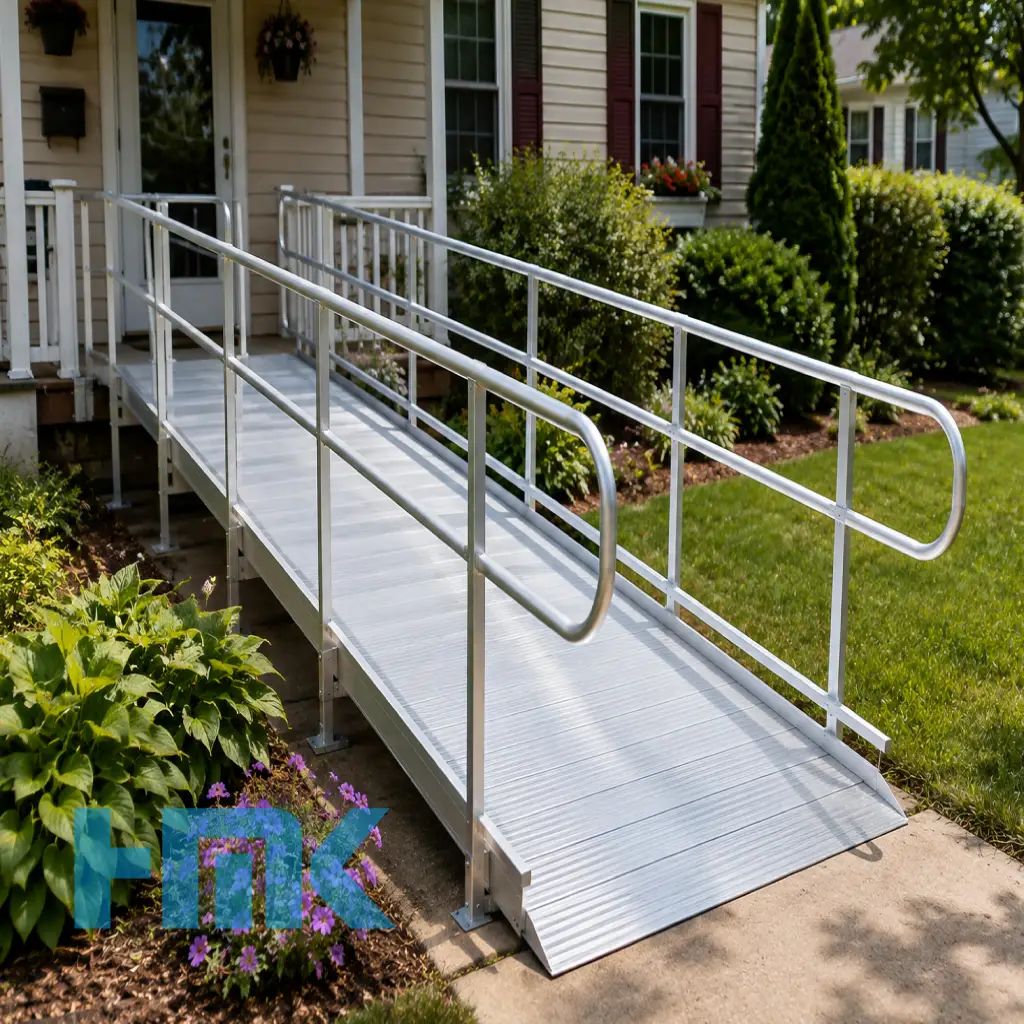
The Department of Veterans Affairs offers several housing adaptation benefits for eligible veterans and service members with qualifying disabilities. VA disability housing grants can help eligible individuals modify a home, including modifications such as installing ramps or widening doorways.
Another option is the Home Improvements and Structural Alterations (HISA) benefit. HISA can provide assistance for medically necessary improvements and structural alterations to a veteran's primary residence. Eligible improvements can include improving access to a home through permanent ramping.
The current VA information lists lifetime HISA benefit amounts of up to $6,800 for qualifying circumstances and $2,000 for certain other disabilities. Eligibility and medical-necessity requirements apply, so veterans should confirm their individual benefit with the VA.
Veterans with spinal cord injuries or disorders may also have access to home-modification assistance through VA care programs. VA resources specifically identify ramps and lifts among possible home accessibility improvements.
Because VA programs have different eligibility rules, it is worth discussing your situation with your VA care team or a VA prosthetics and sensory aids service before starting construction.
Other Government and Community Funding Options
Insurance is only one possible source of financial assistance. Depending on where you live and your circumstances, other programs may help pay for a wheelchair ramp.
USDA Section 504 Home Repair Program
For eligible low-income rural homeowners, the USDA's Section 504 program can provide grants for certain accessibility and health-and-safety improvements.
USDA materials describe grants of up to $7,500 for eligible very-low-income elderly rural homeowners who need critical repairs, including improvements related to accessibility.
Eligibility requirements apply, including age, income, homeownership, and location.
State and Local Programs
States, counties, cities, and local housing agencies may offer home modification assistance. Programs can target:
- Older adults
- People with disabilities
- Low-income homeowners
- Veterans
- People transitioning home after hospitalization
- Individuals receiving Medicaid or other public benefits
Some programs offer grants, while others provide low-interest loans, deferred loans, or direct construction assistance.
Nonprofit and Community Organizations
Local disability organizations, independent living centers, community foundations, and charitable organizations may also help fund accessibility projects.
Availability varies by location, and some programs have limited annual funding. Applying early can therefore be important.
How Much Does It Cost to Install a Wheelchair Ramp?
The price of a wheelchair ramp depends on its size, design, materials, location, and installation requirements.
Current 2026 cost data from Angi puts the average wheelchair ramp installation at approximately $2,292, with a typical range of about $1,122 to $3,594. More complex installations can cost considerably more.
Another Angi guide estimates wheelchair ramps at roughly $50 to $250 per linear foot, depending on materials and project complexity.
A rough budget might look like this:
- Portable or threshold ramp: Around $50–$1,500
- Modular ramp: Approximately $1,500–$4,000
- Permanent ramp: Often around $2,000–$5,500
- Custom or complex installation: $3,000–$7,500 or more
These are general estimates, not guaranteed quotes. Local labor rates, property conditions, permits, and accessibility requirements can change the final price significantly.
Factors That Affect Ramp Installation Costs
Ramp Length
The higher the entrance, the longer the ramp may need to be. A longer ramp requires more materials and labor and may need intermediate landings or a switchback design.
Materials
Common choices include:
- Aluminum
- Pressure-treated wood
- Composite materials
- Concrete
Aluminum modular ramps can be convenient and relatively quick to install, while wood can provide a more traditional appearance. Concrete can be durable but may require more extensive construction.
Landings and Turns
A straight ramp is not always practical. If the property has limited space, a switchback or L-shaped layout may be necessary. Additional landings increase both material and labor costs.
Handrails and Safety Features
Handrails, edge protection, non-slip surfaces, and appropriate transitions can add to the project cost but are important for safe use.
Site Preparation
A contractor may need to level ground, remove landscaping, modify a porch, build footings, or alter the entrance. These tasks can make the project significantly more expensive than the ramp structure alone.
Permits
Permanent accessibility structures may require local permits and inspections. Permit requirements differ by municipality, so check with your local building department before construction.
How to Apply for Wheelchair Ramp Funding
If you are looking for financial assistance, avoid installing the ramp before checking your potential funding sources.
A practical process is:
Get a Professional Assessment
A doctor, occupational therapist, physical therapist, or accessibility specialist may be able to document why a ramp is necessary.
Obtain a Detailed Estimate
Ask an experienced accessibility contractor for a written quote. It should identify materials, labor, ramp length, landings, handrails, permits, and site preparation.
Contact Your Insurance Provider
Ask about home modifications, environmental modifications, prior authorization, and medical-necessity requirements.
Check Medicaid or State Programs
If you receive Medicaid, ask your caseworker about HCBS programs and environmental modification benefits.
Investigate Veteran Benefits
Eligible veterans should investigate VA housing adaptation grants and HISA before paying privately.
Research Local Funding
Contact your local housing authority, Area Agency on Aging, independent living center, disability organization, or community development agency.
Compare Multiple Quotes
If a funding program has a maximum benefit, comparing contractors can help you determine whether the project can be completed within the available budget.
Ways to Reduce Your Out-of-Pocket Cost
If insurance or grants do not cover the full project, several strategies can help.
Consider a modular system. Consider a modular system. A modular wheelchair ramp may cost less than a fully custom permanent structure and can sometimes be adapted if your needs change.
Get multiple estimates. Prices can vary considerably between contractors, particularly when site preparation is involved.
Ask about financing. Some accessibility contractors offer payment plans, although you should compare interest rates and fees carefully.
Check for overlapping programs. Some households may qualify for more than one type of assistance, although programs can have rules about combining funding.
Choose function over unnecessary upgrades. Focus first on safe slope, adequate width, stable surfaces, appropriate landings, and secure handrails.
Most importantly, do not reduce costs by compromising safety. A poorly designed ramp can be difficult or dangerous to use, defeating the purpose of the accessibility improvement.
Conclusion
So, are wheelchair ramps covered by insurance or funding programs? The answer is that they can be, but coverage is highly dependent on the program and the applicant's circumstances.
Original Medicare generally covers medically necessary durable medical equipment such as wheelchairs, but a permanent residential ramp is usually treated as a home modification rather than covered DME.
Medicaid HCBS programs may offer environmental modifications in some states, while eligible veterans can explore VA housing adaptation grants and HISA benefits. Other possibilities include USDA assistance, state and local programs, nonprofit organizations, and community-based funding.
Before spending thousands of dollars, document the medical need, obtain a detailed estimate, and investigate every potentially available funding source. With the right combination of insurance, grants, and assistance programs, the cost of making a home wheelchair accessible may be much more manageable.
FAQ
1- Does Medicare pay for wheelchair ramps?
Original Medicare generally does not cover permanent wheelchair ramps as durable medical equipment. Medicare Part B does cover certain medically necessary wheelchairs and scooters, but a residential ramp is a different type of home modification.
2- Can Medicaid pay for a wheelchair ramp?
Potentially. Some Medicaid Home and Community-Based Services programs can include environmental or home accessibility modifications. Coverage and eligibility vary by state and program.
3- Will private insurance cover a wheelchair ramp?
Some private plans may provide benefits for medically necessary home modifications, while others exclude them. Check the specific policy and ask about prior authorization before installation.
4- Does the VA help veterans pay for wheelchair ramps?
Yes. Eligible veterans may qualify for VA programs that help modify homes for disability-related needs. VA housing adaptation grants and HISA can include assistance related to home access and permanent ramping.
5- What is the average cost of a wheelchair ramp?
In 2026, Angi reports an average installation cost of about $2,292, with many projects falling between approximately $1,122 and $3,594. Complex or custom projects can cost more.
6- Can I get a free wheelchair ramp?
Possibly, depending on your location and eligibility. Medicaid programs, VA benefits, USDA programs, local housing agencies, nonprofits, and community organizations may provide grants or direct assistance that can cover some or all of the cost.
6- Do I need a doctor's prescription for a wheelchair ramp?
Not always, but medical documentation can be important when applying for insurance or disability-related funding. A healthcare professional may need to explain why the modification is medically necessary.
Hamyar Mechanic Koosha Editorial Team
Specialized content team in biomedical engineering and rehabilitation
Hamyar’s editorial team consists of biomedical engineering experts who provide practical, technical content in plain language to raise public awareness.
Related Articles
No articles found.