
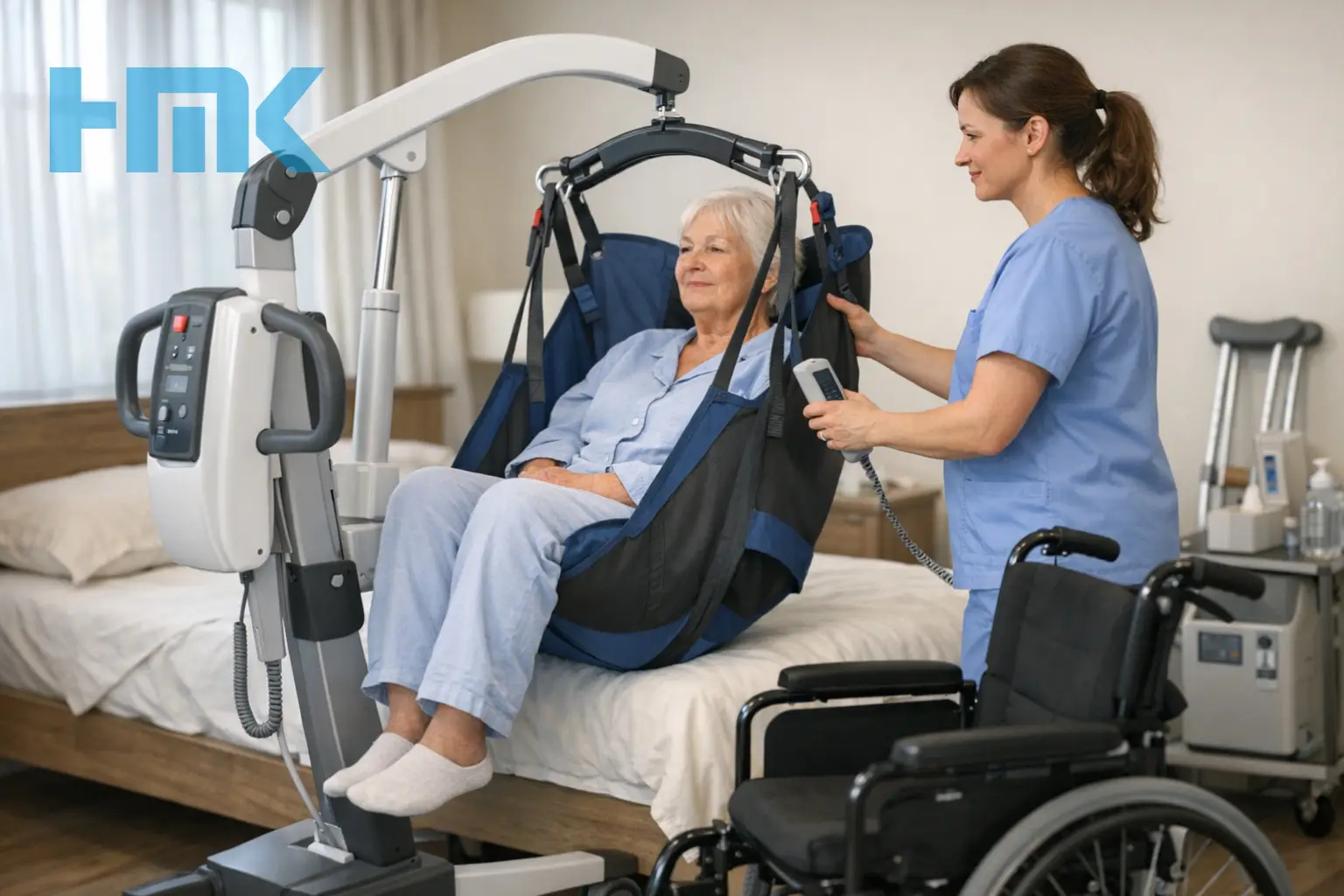
A patient lift (also commonly referred to as a Hoyer lift or a mechanical lift) is an essential medical device designed to assist in these transfers safely. By leveraging mechanical or hydraulic power, these devices minimize manual lifting, ensuring a smoother transition for the individual and protecting the caregiver's physical health.
In this comprehensive guide, we will explore the essential steps for operating a patient lift safely, the different types of slings available, and best practices for maintaining a secure environment.
Understanding Your Equipment
Before attempting a transfer, it is vital to understand the specific equipment you are using. Generally, patient lifts fall into three categories:
- Manual/Hydraulic Lifts: These use a hydraulic pump operated by a hand lever. They are cost-effective and do not require electricity, but they require some physical effort from the caregiver to pump the handle.
- Electric/Power Lifts: Powered by a rechargeable battery, these lifts operate with the push of a button. They provide the smoothest movement and are the easiest for caregivers to manage.
- Stand-Assist Lifts: Designed for patients who have some weight-bearing capability, these help an individual transition from a sitting to a standing position.
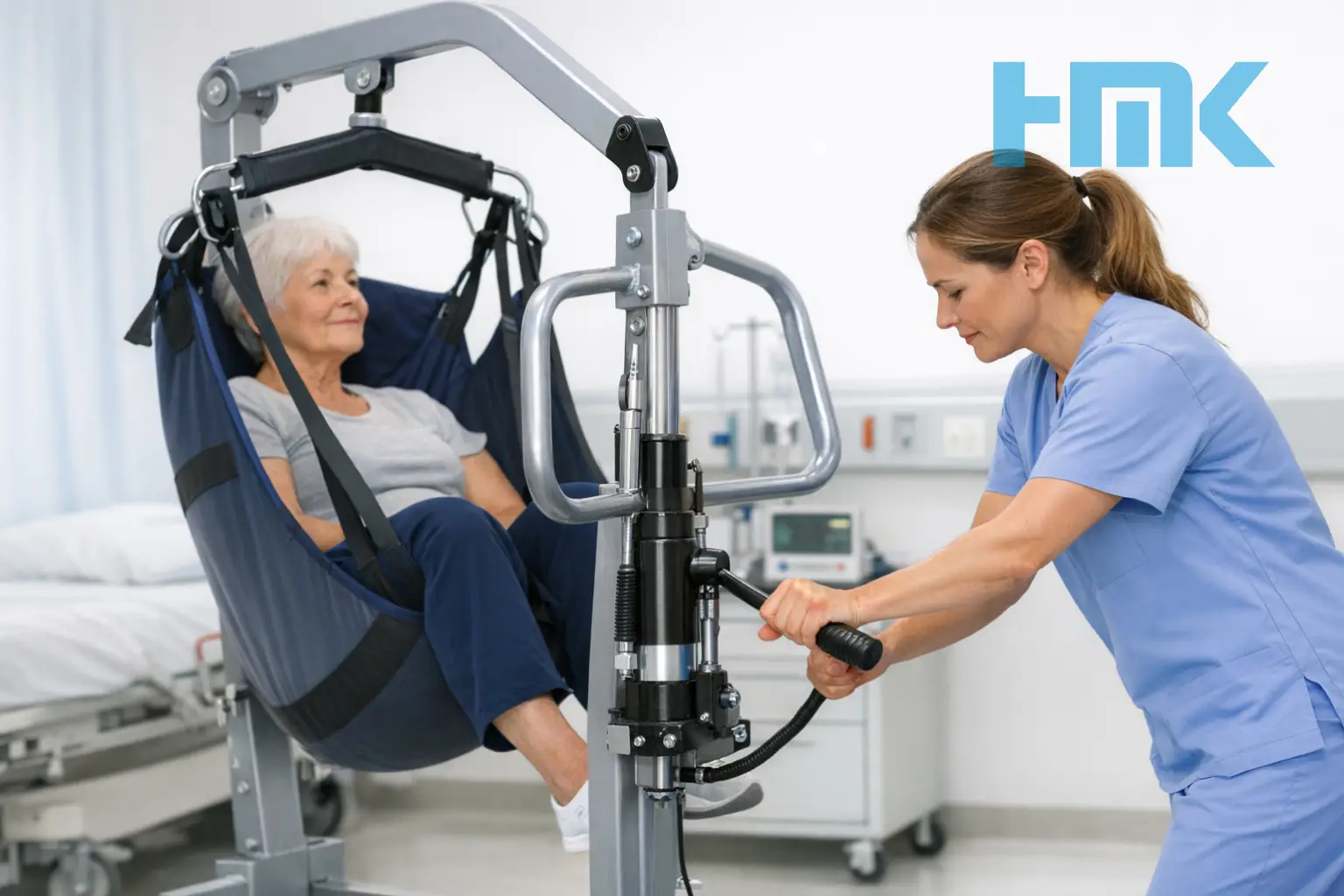
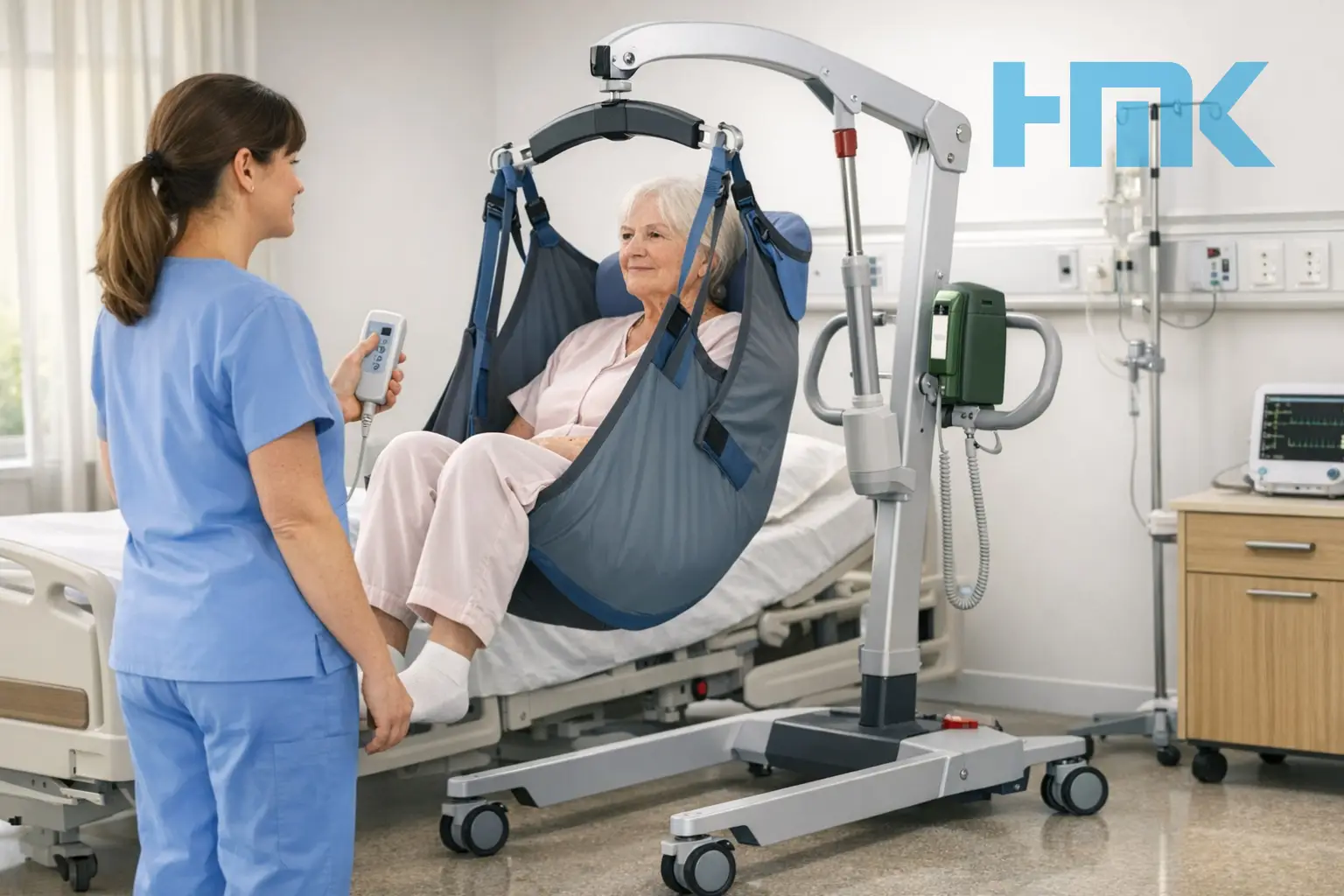
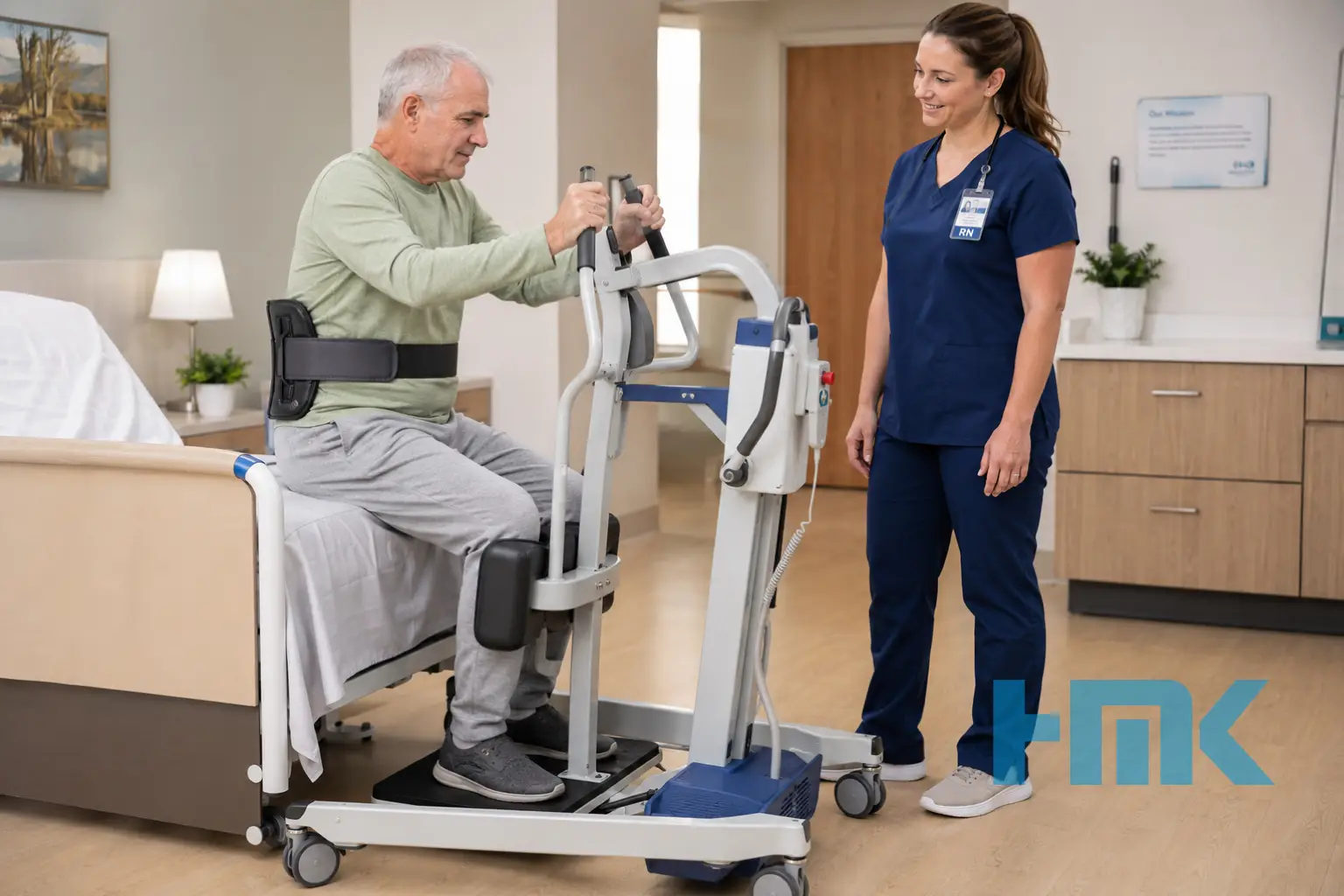
Regardless of the type, every lift consists of a sturdy metal frame, a boom(the overhead arm), a spreader bar (where the sling attaches), and a base with adjustable legs and locking casters.
Step-by-Step Guide to a Safe Transfer
To have a safe and easy transfer you must follow the following steps.
1. Preparation and Safety Check
Safety begins before you even touch the patient.
- Inspect the Lift: Check for any frayed wires (on electric models), leaks in the hydraulic fluid, or cracks in the frame.
- Check the Sling: Ensure the sling is the correct size for the patient and is free of tears, worn stitching, or broken loops.
- Clear the Path: Ensure the floor is dry and free of rugs, cords, or obstacles that could cause the lift to tip or snag.
- Communicate: Explain the process to the patient. Knowing what to expect reduces anxiety, which prevents sudden movements that could destabilize the lift.
2. Positioning the Sling Under the Patient
The sling is the most critical interface between the machine and the human.
- The Log-Roll Technique: While the patient is in bed, gently roll them onto their side. Fold the sling in half lengthwise and place it against the patient’s back.
- Alignment: The bottom of the sling should be just above the back of the knees, and the top should support the neck or shoulders, depending on the sling style.
- Final Placement: Roll the patient back over the folded sling and then onto their other side to pull the remaining half of the fabric through. Ensure the sling is centered and wrinkle-free to avoid skin irritation.
3. Positioning the Patient Lift
- Open the Base: Most lifts have a handle or pedal that widens the base legs. Always keep the legs in the "open" or wide position during a transfer to provide maximum stability.
- Approach the Bed: Move the lift into position so the spreader bar is centered over the patient.
- Lower the Boom: Carefully lower the spreader bar, ensuring it does not come into contact with the patient’s face or body.
4. Attaching the Sling to the Spreader Bar
- Loop Matching: Most slings have color-coded loops (e.g., green for short, blue for long). Ensure you use the same color/length on both sides to keep the patient level.
- The Cross-Leg Technique: For U-slings, cross the leg straps between the patient’s legs before attaching them to the bar. This prevents the patient from sliding out of the bottom of the sling.
- Double Check: Before lifting, verify every hook and loop is securely fastened.
5. Executing the Lift
- The Initial Lift: Slowly raise the patient just a few inches off the bed. Pause here. Check the attachments again and ensure the patient is comfortable and secure.
- The Transfer: Once confirmed, raise the patient high enough to clear the bed and any obstacles. Use the handles on the lift—never the boom or the patient—to guide the device.
- Lowering: Slowly maneuver the lift over the target (chair or wheelchair). Ensure the wheelchair brakes are locked. Gradually lower the patient, using the handles on the back of the sling to guide their hips into the back of the seat.
Vital Safety Tips for Caregivers
- Never Leave a Patient Unattended: Once a patient is in a sling or attached to a lift, never walk away.
- Use Two People if Possible: While many lifts are marketed for single-person use, having a second caregiver to help guide the patient’s legs or stabilize the chair is always safer.
- Know the Weight Limit: Every patient lift has a maximum weight capacity. Exceeding this can cause mechanical failure.
- Lock Brakes Only When Necessary: Usually, you should not lock the lift’s wheels during the actual lifting process. This allows the lift to find its own center of gravity. Lock the brakes only when the lift is in storage or when the patient is being positioned in a chair.
Conclusion
Mastering the use of a patient lift is one of the most impactful skills a caregiver can acquire. It transforms a high-risk, strenuous task into a controlled and dignified process. By prioritizing preparation, maintaining your equipment, and following a strict step-by-step protocol, you protect yourself from career-ending back injuries and ensure your patient remains safe and comfortable.
Remember, the goal of assistive technology is to enhance the quality of care. When used correctly, a patient lift does more than just move a body; it provides peace of mind for the caregiver and preserves the safety and dignity of the individual being cared for. Always refer to your specific model’s user manual and consider seeking a demonstration from a physical therapist or a medical equipment specialist to ensure total confidence in your technique.
FAQs
1- What is the difference between a Hoyer lift and a patient lift?
"Hoyer" is actually a brand name that has become synonymous with the device, much like "Kleenex" is used for tissues. A Hoyer lift is simply a specific brand of mechanical patient lift.
2- Can one person safely operate a patient lift?
While it is possible for a trained individual to operate an electric lift alone, many healthcare facilities require two people for safety. For home caregivers, it is highly recommended to have a second person present until you are completely proficient and the patient is comfortable with the process.
3- How do I choose the right sling size?
Slings are typically sized by weight and torso measurement (Small to XXL). A sling that is too large can result in the patient slipping out, while one that is too small may pinch the skin or fail to support the head. Always consult the manufacturer's sizing chart.
4- How often should the lift be serviced?
A patient lift should undergo a basic safety check by the caregiver before every use. A professional maintenance check should be performed at least once a year to ensure hydraulic seals are intact and batteries are holding a full charge.
5- What should I do if the power fails while the patient is in the air?
All electric patient lifts are equipped with an emergency manual release or a manual override. Familiarize yourself with this feature before you ever use the lift so you can lower the patient safely in an emergency.
Hamyar Mechanic Koosha Editorial Team
Specialized content team in biomedical engineering and rehabilitation
Hamyar’s editorial team consists of biomedical engineering experts who provide practical, technical content in plain language to raise public awareness.
Related Articles
No articles found.