Plan the transfer around the person, caregiver and environment.
A patient lift is considered for assisted transfers of people with limited mobility. The lift and body-support accessory must match the transfer, the person and caregiver training.
Assess both transfer surfaces
Match lift and sling
Train on the actual equipment
Start with your needs
People receiving care at home
Put comfort, privacy and participation at the centre of the transfer assessment with the care team.
Family caregivers
Establish assistance, staffing and skills; powered lifting does not itself make a one-person transfer appropriate.
Care and rehabilitation facilities
Plan for different users, recorded checks, cleaning and staff training alongside the purchase.
People adapting a care room
Measure under-bed clearance, base access, wheelchair position and turning space; room size alone is insufficient.
What matters when choosing this option?
A defined transfer method
Record the origin, destination and method so equipment selection follows the actual task.
Appropriate body support
Include sling type and positioning in the assessment; weight alone does not determine the choice.
Assess caregiver working space
Assess base and boom movement alongside the caregiver’s access to the bed and chair.
Prepare for equipment care
Clarify sling and frame cleaning, wear checks and compatible replacement parts from the outset.
Understand the product and its use
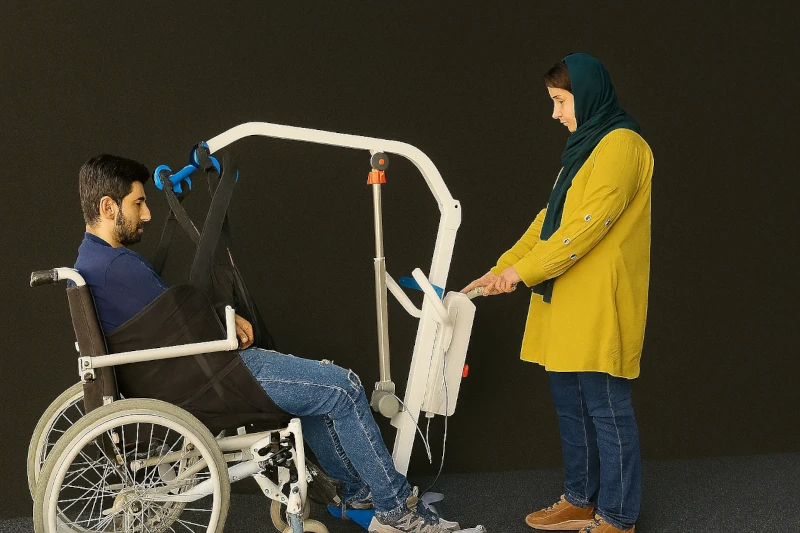
A bed-to-wheelchair or chair transfer involves more than lifting body weight. Sitting position, pain, participation, bed design and caregiver working space affect the method. A patient lift may be part of a transfer plan, but suitability for every person or movement cannot be assumed. Describe the task first, then assess equipment and accessories.
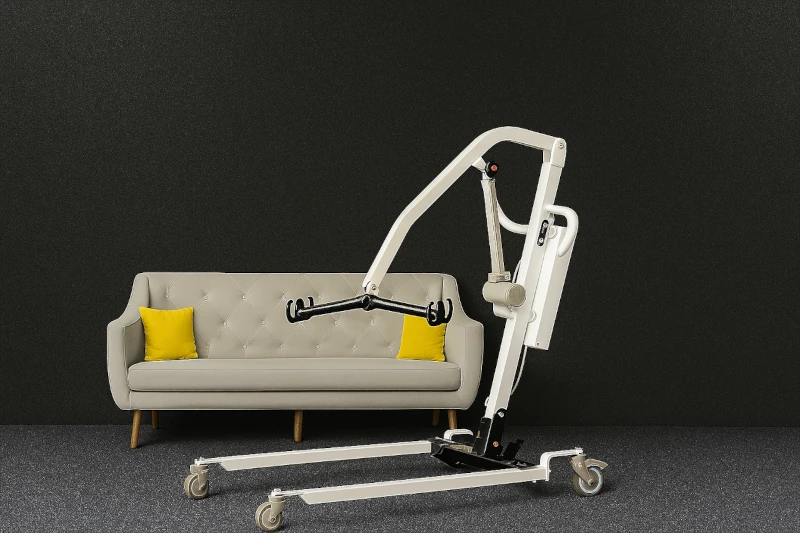
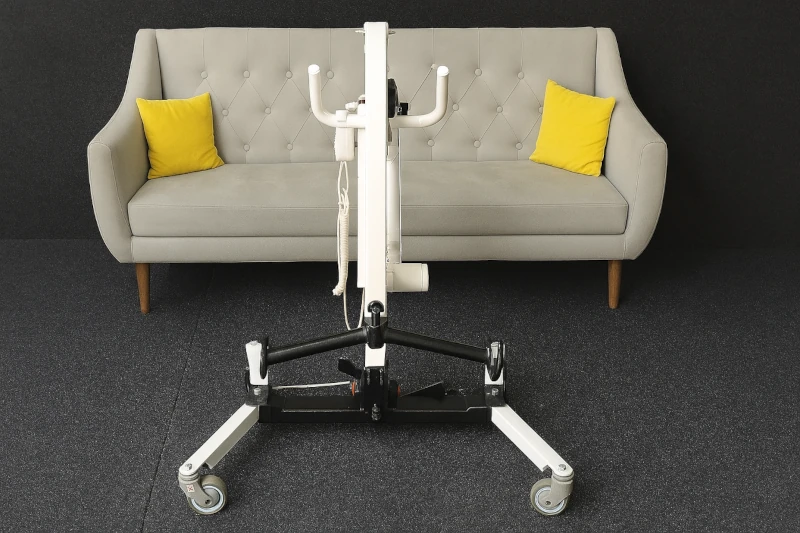
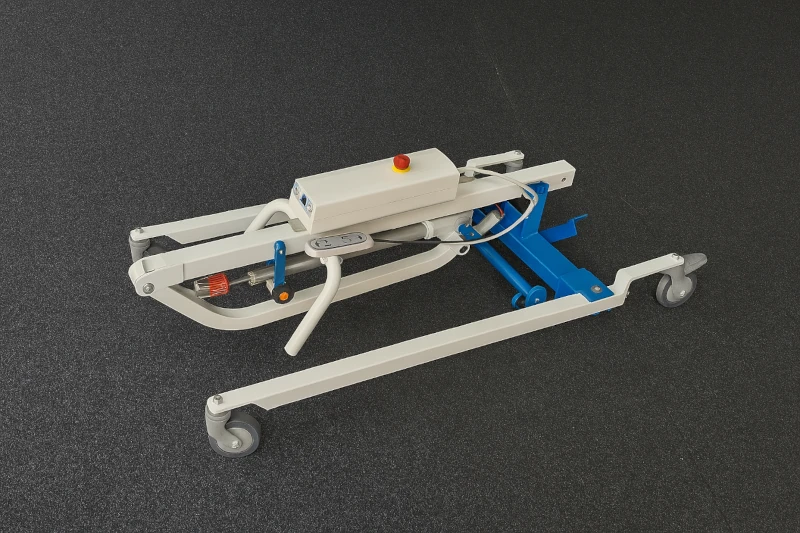
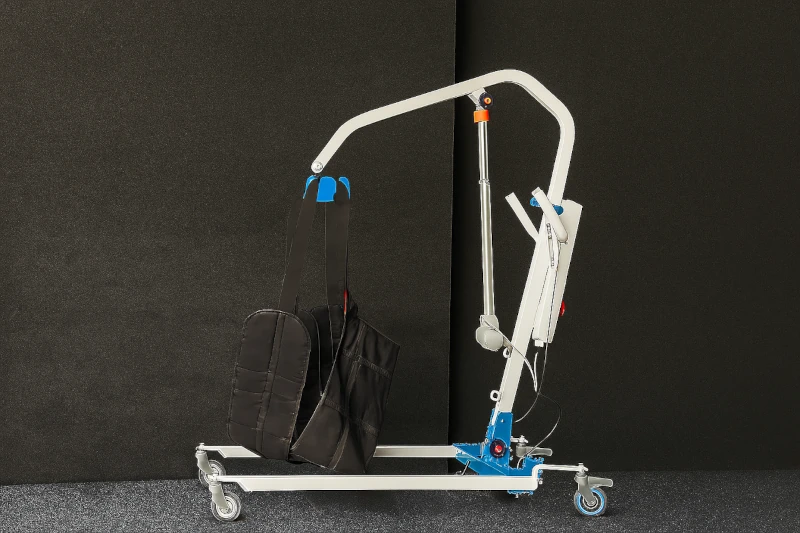
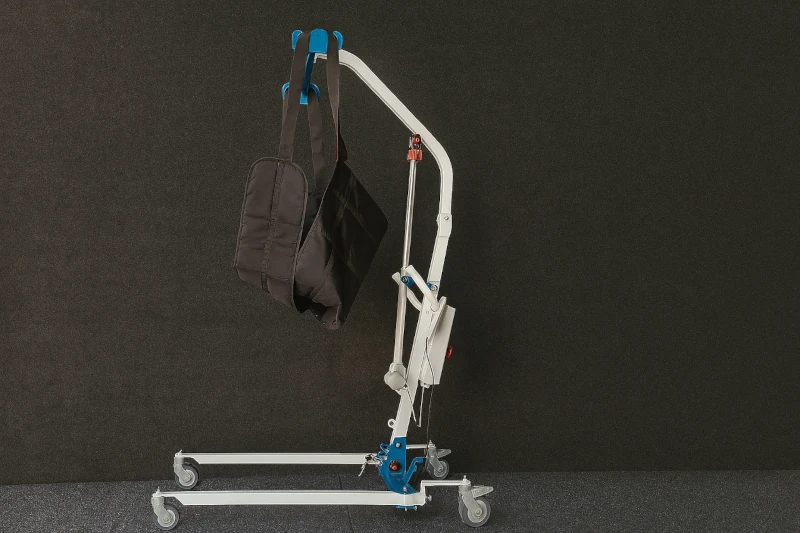
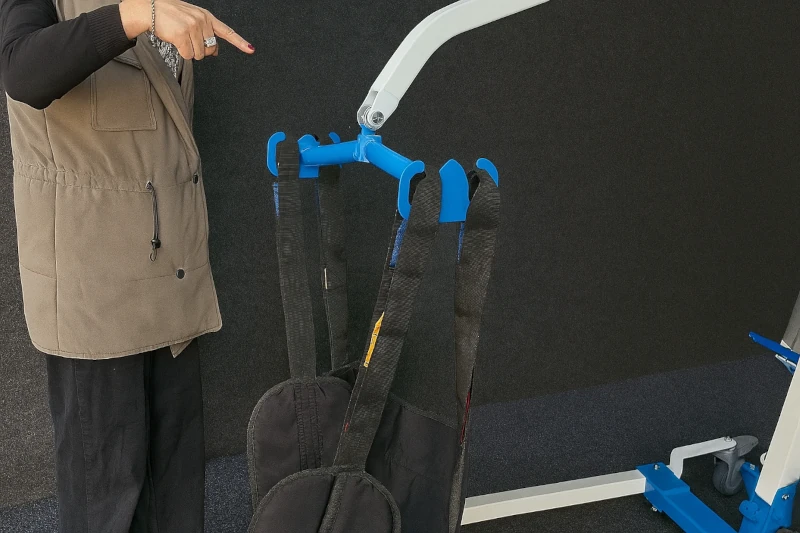
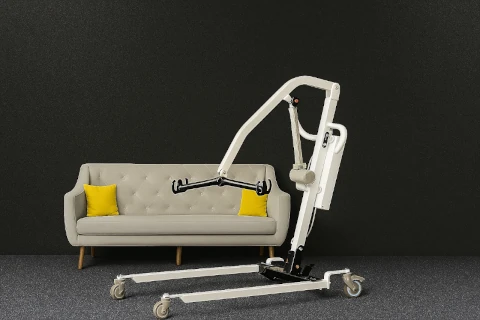
The existing product images show a base, lifting arm and fabric body support, commonly called a sling. Its type, size and attachment method must suit the lift and person. Similar-looking hooks or a capacity marking on one component do not establish compatibility of the assembly. Request a transfer assessment and confirmation of the lift-and-sling combination before ordering.
Introduction video. Follow the model manual and handover training for operation.
Price and quotation scope
Contact for pricing
Confirm the model, included items and installation or delivery costs in the order proposal.
Confirm the lift type, base arrangement, boom range and support accessory for the intended transfer. Obtain a written list of included items and available options. Do not choose a general, toileting, bathing or specialist sling by its name alone: permitted use and compatibility need documentation. If you already own an accessory, provide its model and label for assessment rather than assuming compatibility.
Capacity and dimensions are only part of selection
Check the assembly’s capacity, sling and attachment specifications, lifting range, base opening and under-bed clearance. Discuss weight alongside head or trunk support and the ability to maintain position. Consult the model manual for power, charging and emergency lowering. Values from another model, or another household’s experience, are not a basis for this person’s selection.
Measure the route from bed to chair
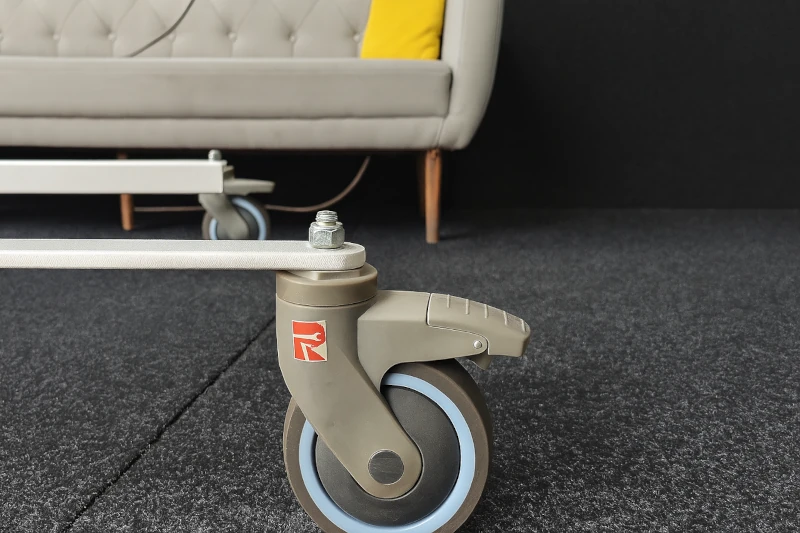
The base must reach the required position and the boom must move without obstruction. Record bed and under-bed heights, chair arms, wheelchair footrests, thresholds and floor conditions. Door and corridor geometry matter between rooms. Castors do not establish permission to transport an occupied lift over any distance; check its transfer purpose and occupied-movement limits in the instructions.
Individual assessment and caregiver training
A diagnosis alone does not determine a transfer method. Needs may change during the day, so the care plan should address assistance, positioning tolerance and participation. A competent assessor should determine caregiver numbers and sling placement using the equipment instructions. The introduction video explains the product; it does not replace practical training or a transfer assessment.
Compare floor-lifting and toilet chairs
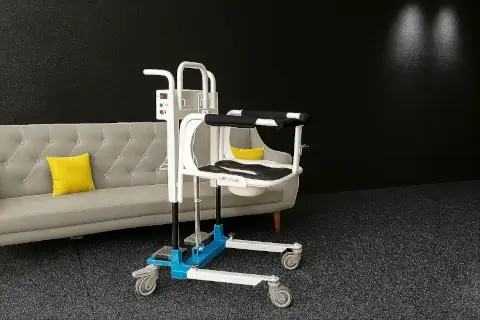
A sling-based patient lift supports the person using an appropriate body-support accessory. A floor lift chair addresses a different low-level lifting task, while a toilet chair has its own bathroom and transfer constraints. Wheels or powered movement do not make them interchangeable. Relate the choice to transfer origin, destination, body support and environment.
Pre-use checks and unexpected stops
Inspect the sling, stitching, attachments and labels as instructed, and do not use damaged equipment. Do not leave a lifted person unattended. Brake use and emergency lowering depend on the model; one generic procedure cannot cover all lifts. During an unexpected stop, do not release load-bearing sling attachments. Seek help according to training, and emergency assistance if there is immediate danger.
Cleaning, service and comparing quotations
Sling and frame cleaning may differ; follow each component’s label and instructions. Ask about inspection schedules, withdrawal criteria for worn parts and compatible replacements. Compare the lift, sling type and quantity, training, delivery and service separately in quotations. Obtain warranty, parts availability and service arrangements for your model and location rather than relying on general promises.
Describe the transfer surfaces, bed and wheelchair, surrounding space and support needs. Medical records or the patient’s identifying details are not needed to begin the discussion.
2
Assess suitability
Review the model, environment and user needs with a competent assessor.
3
Written proposal
Clarify the model, included items, preparation, costs and service terms before ordering.
4
Handover and training
Request operation checks, the model manual, user training and a maintenance plan at handover.
Questions, answered
Explore questions about choosing, using and maintaining this product.
No matching questions. Try another term or contact us.
Before Purchase
What exactly is a patient lift used for?+
It is assessed for care transfers such as bed to chair or wheelchair. Review the surfaces, person and compatible sling. Car, bathroom or floor transfers need explicit confirmation of permitted use.
What is the maximum weight capacity of a patient lift?+
Check the documented capacity of the compatible lift, sling and attachment assembly. A higher rating on one component does not increase the assembly’s capacity. Provide the person’s weight and support needs before ordering.
How much space do we need to use a patient lift?+
Assess under-bed clearance, base opening, boom movement, wheelchair position and caregiver space. General room area is insufficient; map the transfer using actual equipment dimensions.
Does the lift work on mains power or battery?+
Obtain the model’s supply and charger requirements, electrical setup and power-loss behaviour. Do not assume a battery, a number of journeys or operation while charging. Connect and prepare the equipment only as instructed.
Does the lift need installation?+
Follow the manual with a trained person for assembly and initial preparation. Portability does not remove connection checks, training or pre-use inspection.
Can a single caregiver operate the lift alone?+
Caregiver numbers depend on the person, transfer and environment. Powered lifting or simple controls do not establish a one-person transfer. Record the method and assistance in the care plan.
Is the device safe?+
Safety depends on compatible equipment, individual needs, training and maintenance; no transfer is guaranteed risk-free. Review model documentation, sling and attachment condition and the assistance plan.
Can a patient lift be used with a wheelchair?+
Assess the actual wheelchair: base access, arms and footrests must suit the transfer method. Sling type and positioning also matter. Compatibility with all wheelchairs is not assumed.
Does the lift come with accessories?+
Request the included-parts list and specify sling type and size separately. A supplied sling is not necessarily appropriate for every person or task.
During Use
How is the sling placed under the patient?+
Sling placement depends on the person, sling and starting position and requires practical training. Do not use a generic short procedure or connect loops by appearance; follow compatible manufacturer instructions and the transfer plan.
How long does it take to fully charge the battery?+
Use the model’s battery and charger instructions for charging time and method. Use an approved charger and do not assume operation while charging is permitted. Report a noticeable change in battery performance.
Is the lift noisy during operation?+
Assess the actual model in conditions similar to the intended setting or request measurement evidence. A generic decibel figure or a silent-operation promise is not a sound basis for selection. New or abnormal noise needs technical assessment.
Can one person operate the lift alone?+
The transfer assessment must establish this; some situations need more than one assistant. A person in a sling must not be left unattended, and operators need training on the actual lift-and-sling combination.
What happens if the power goes out while lifting?+
Learn the model’s power-loss behaviour and emergency assistance before use. Do not assume backup power or a number of further transfers. During a stop, do not release load-bearing attachments; follow the assistance plan.
How much space is needed for turning and moving the lift?+
Assess base and boom turning and caregiver space with the actual bed, wheelchair and doors. An unoccupied lift passing through a doorway does not establish permitted occupied movement there.
What should we do if the patient gets stuck or the lift stops suddenly?+
Stop movement as trained and attend to the person. Do not release the sling or load-bearing attachments. Assistance and lowering must follow the model instructions and trained procedure; seek emergency help if there is immediate danger.
Can the lift be used in the bathroom or wet areas?+
Only where the model and sling documentation permit wet-area use. One water-compatible component does not make the whole lift suitable for bathing. Check charging and cleaning conditions separately.
Is the lift compatible with all wheelchairs?+
No universal wheelchair compatibility is assumed. Assess base geometry, clearance around and under the chair, seating and sling method for the actual combination.
Can the lift be moved easily between rooms?+
Check unoccupied handling and occupied-movement limits separately in the manual. Floors, thresholds and turns matter; do not use a transfer lift for extended transport unless that application is permitted.
After-Sales Service
How long is the warranty period for the patient lift?+
Obtain the written warranty for the ordered model before purchase. Confirm the start and duration, covered components and battery, exclusions, visit costs and service provider. Terms for another model or an older page do not establish coverage for your order.
In which cities are repair and service available?+
State the equipment location, model and service needed. Confirm whether a visit, parts delivery or workshop work is available and what travel costs apply. Do not assume permanent coverage everywhere or an immediate visit.
Are spare parts such as batteries, handsets and wheels available?+
Provide the model, serial number and part details for compatibility assessment. Stock, price and supply time need confirmation when requested. Do not substitute lookalike parts or modify protective components without technical approval.
Is there phone or online support?+
Use this page’s phone number or form and provide the model, location and issue. Avoid unnecessary identifying information or medical records. Submitting a message does not establish immediate or round-the-clock support.
Does the lift require periodic servicing?+
Set inspection and servicing from the model instructions and conditions of use. Distinguish permitted user checks from technical work and retain service records. Stop using damaged, loose or abnormally operating equipment until it has been assessed.
Is it possible to upgrade or exchange the lift model?+
Exchange or upgrade availability depends on the model, condition and current sales terms. Obtain written compatibility, cost and return or collection terms. A newer component does not authorise increased capacity or a different use.
How is the lift shipped for repair?+
Before shipping, agree whether transport is necessary, packaging, responsibility and costs with service staff. Do not dismantle fixed equipment or load-bearing parts yourself. On-site or workshop repair depends on the fault, model and local facilities.
How are out-of-warranty repair costs calculated?+
Request separate diagnosis, parts, labour and transport or travel costs. Agree the estimate and repair scope before work starts. An older page amount or another device’s repair bill is not a fixed tariff for your request.
Is training provided on how to use and maintain the lift?+
Request practical training and the manual for the delivered model. Users and assistants need to understand operation, pre-use checks, stopping and assistance during a problem. A general video does not replace training or an individual assessment.
Does misuse void the warranty?+
Review the order’s service and warranty document for exclusions, required maintenance and repair responsibility. Obtain written clarification under that contract about damage, component changes or use outside the instructions.
See the product before choosing
Contact our team to see the equipment and discuss whether it suits your needs.
No published reviews yet. Be the first to share your experience.
Tell us about the transfer and care space
Describe the transfer surfaces, bed and wheelchair, surrounding space and support needs. Medical records or the patient’s identifying details are not needed to begin the discussion.
Your product review
Share your experience or ask a question.
Leave a comment
No published reviews yet. Be the first to share your experience.