
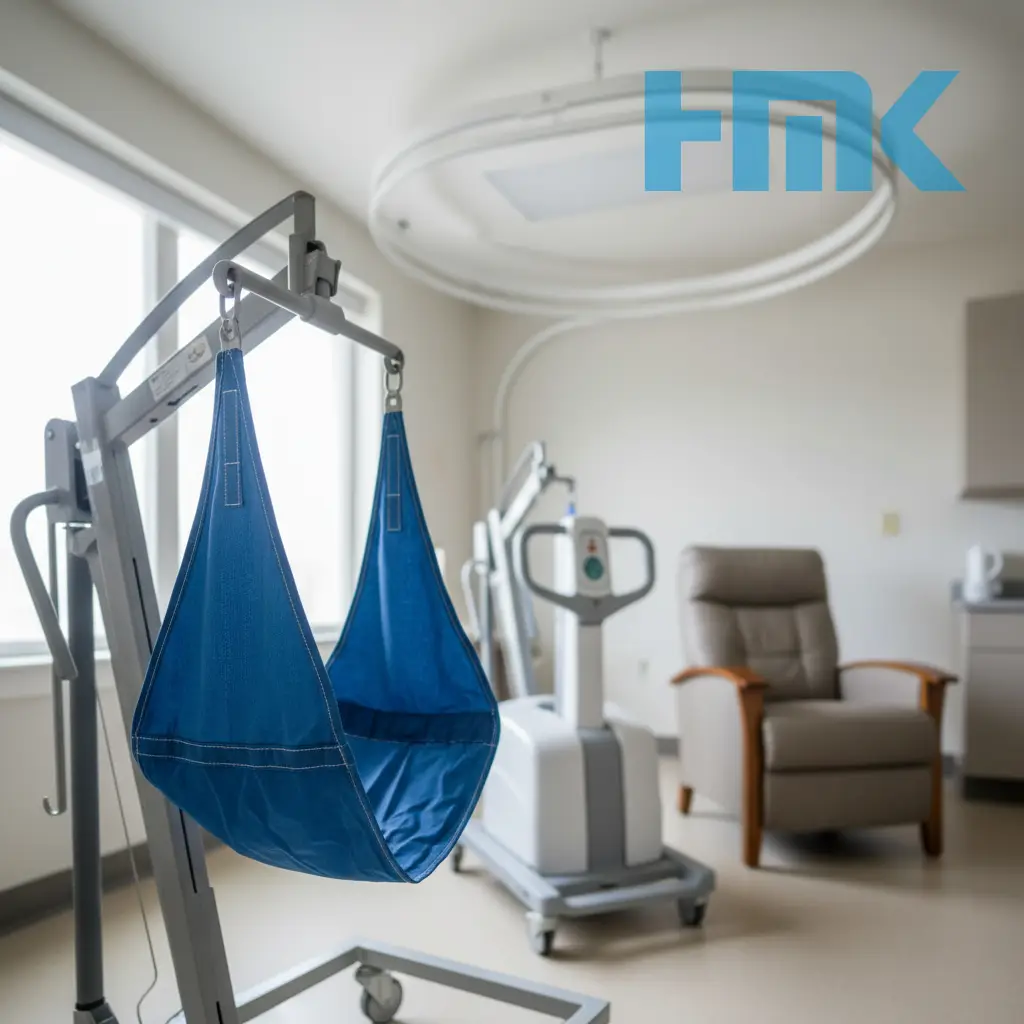
Moving someone who has limited mobility is one of the most physically demanding, and safety-critical, tasks in healthcare and home caregiving. A well-chosen patient lift can reduce the risk of falls, prevent caregiver back injuries, and make daily transfers smoother and more dignified for the person being moved. But patient lift is a broad category: there are multiple lift styles, sling options, and configurations designed for different care settings and mobility levels.
This guide explains the different types of patient lifts, what each is best for, and how to choose the right one based on the patient’s abilities, the environment, and caregiver workflow. Along the way, you’ll also see related considerations such as transfer aids, slings, safe patient handling, weight capacity, and home accessibility, without relying on repetitive phrasing.
What Is a Patient Lift?
A patient lift is a mechanical or powered device designed to assist with transferring a person from one surface to another, commonly:
Depending on the model, a lift may use a sling, a standing support, or a seat-like attachment. Some versions are mobile (on casters), while others are mounted to the ceiling or wall.
Why Choosing the Right Lift Matters
Selecting the right equipment isn’t just about convenience. It affects:
- Safety: Minimizes fall risk and skin shear during transfers
- Comfort and dignity: Supports the patient’s posture, pain level, and privacy
- Caregiver health: Reduces strain and repetitive lifting injuries
- Efficiency: Faster transfers can improve routines and reduce fatigue
- Fit with the home or facility: Space, door widths, flooring, and bathroom layout can make or break usability
In the following, we examine different types of patient lift:
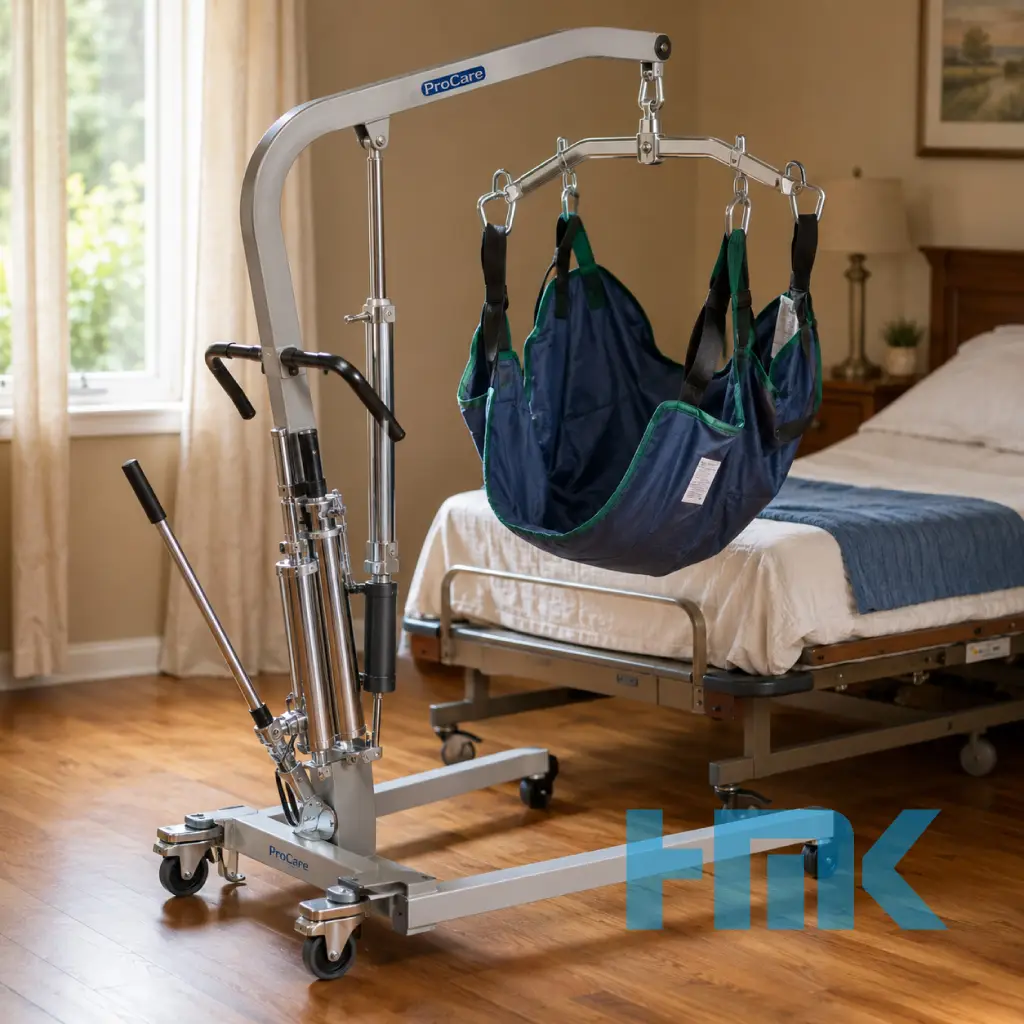
1) Manual Hydraulic Floor Lifts (Classic Hoyer-Style)
A wheeled base with a lifting arm (boom) operated by a hydraulic pump handle. The patient is typically supported in a sling.
| Best for | Pros | Cons |
|---|---|---|
| Full-body transfers for people who cannot bear weight | No charging required | Requires physical effort to pump and maneuver |
| Home care with limited budgets | Often more affordable than powered models | Turning and positioning can be harder on carpet or tight spaces |
| Occasional or moderate-frequency transfers | Reliable, simple mechanics | Transfers may take longer, especially for one caregiver |
Good to know:
Hydraulic lifts can be excellent for dependability, but if transfers occur multiple times daily, caregiver fatigue can become a real issue, often making a powered system worth considering.
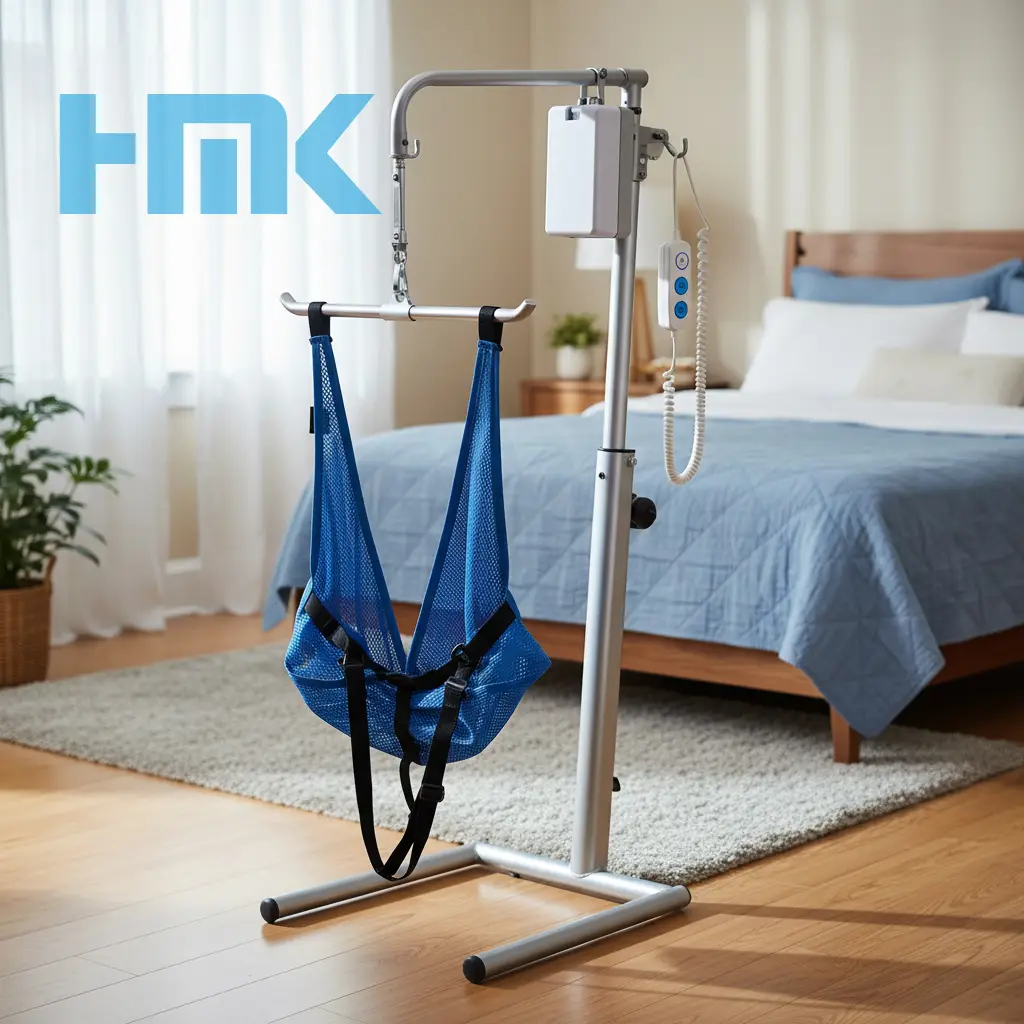
2) Electric (Powered) Floor Lifts
Similar to manual floor lifts, but the raising/lowering is powered by an electric actuator controlled with a hand pendant.
| Best for | Pros | Cons |
|---|---|---|
| Frequent transfers (multiple times a day) | Smoother, more controlled lift motion | Heavier equipment may be harder to transport between rooms |
| Reducing caregiver physical strain | Less physical effort for caregivers | Requires charging and basic battery management |
| Home or facility settings where charging is manageable | Often easier for single-caregiver transfers | Higher upfront cost |
Good to know:
Some powered models also include electric base widening (powered leg spread), which helps position around wheelchairs or recliners and can make transfers far easier in tight areas.
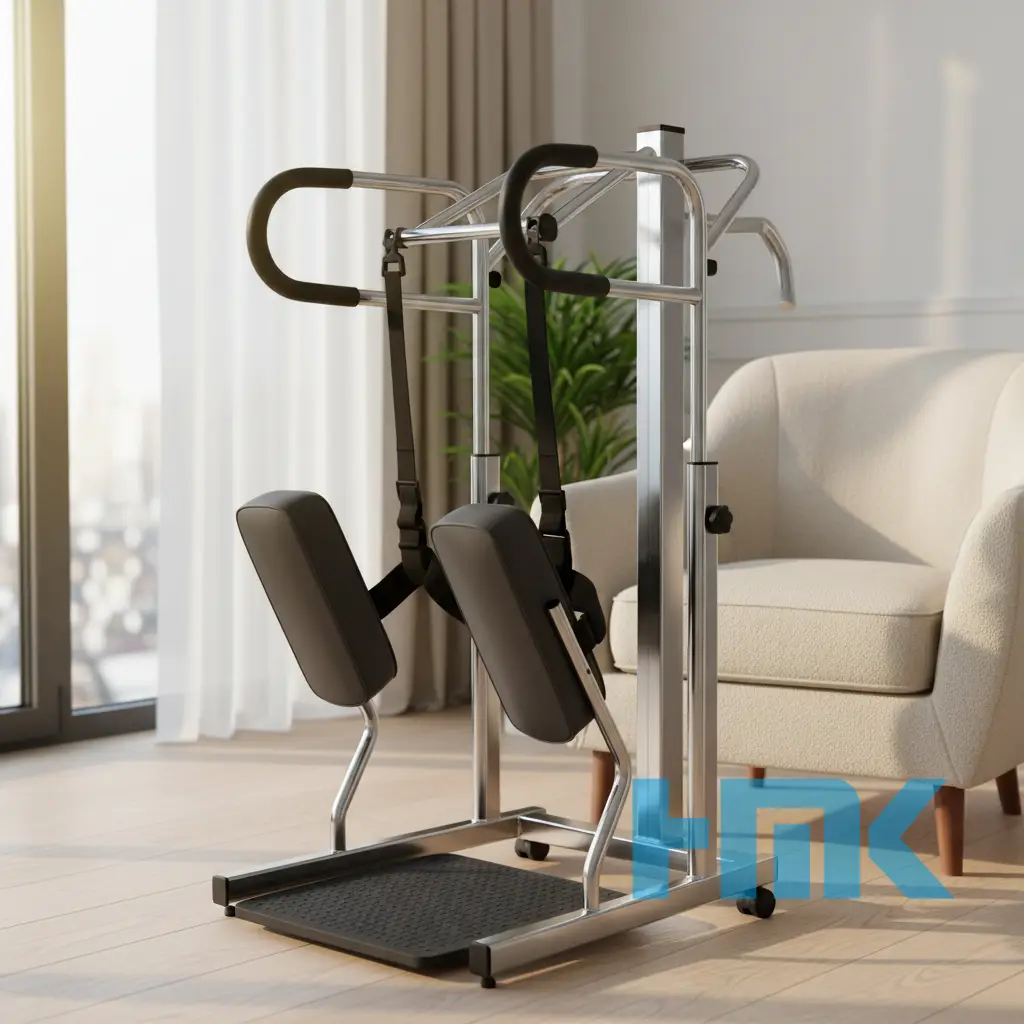
3) Sit-to-Stand (Stand Assist) Lifts
Devices designed for patients who have some weight-bearing ability and can participate in standing. They usually support the torso with a padded knee block and a sling or strap around the back.
| Best for | Pros | Cons |
|---|---|---|
| Transfers to toilet, commode, wheelchair, or chair | Encourages participation and muscle use | Not appropriate for patients with no weight-bearing ability |
| Patients who can bear some weight and follow instructions | Typically faster for toileting transfers | Requires adequate trunk control and cooperation |
| Rehabilitation settings or progressive mobility programs | Less bulky than full-body sling lifts for many tasks | Can be uncomfortable if the sling/strap is poorly matched |
| Often improves caregiver ergonomics for repeated transfers | Often improves caregiver ergonomics for repeated transfers | Not ideal for patients with severe contractures or poor balance |
Good to know:
Sit-to-stand devices are sometimes mistakenly used for people who really need a full-body lift. If the patient cannot reliably bear weight, even briefly, using a stand assist lift can increase fall risk.
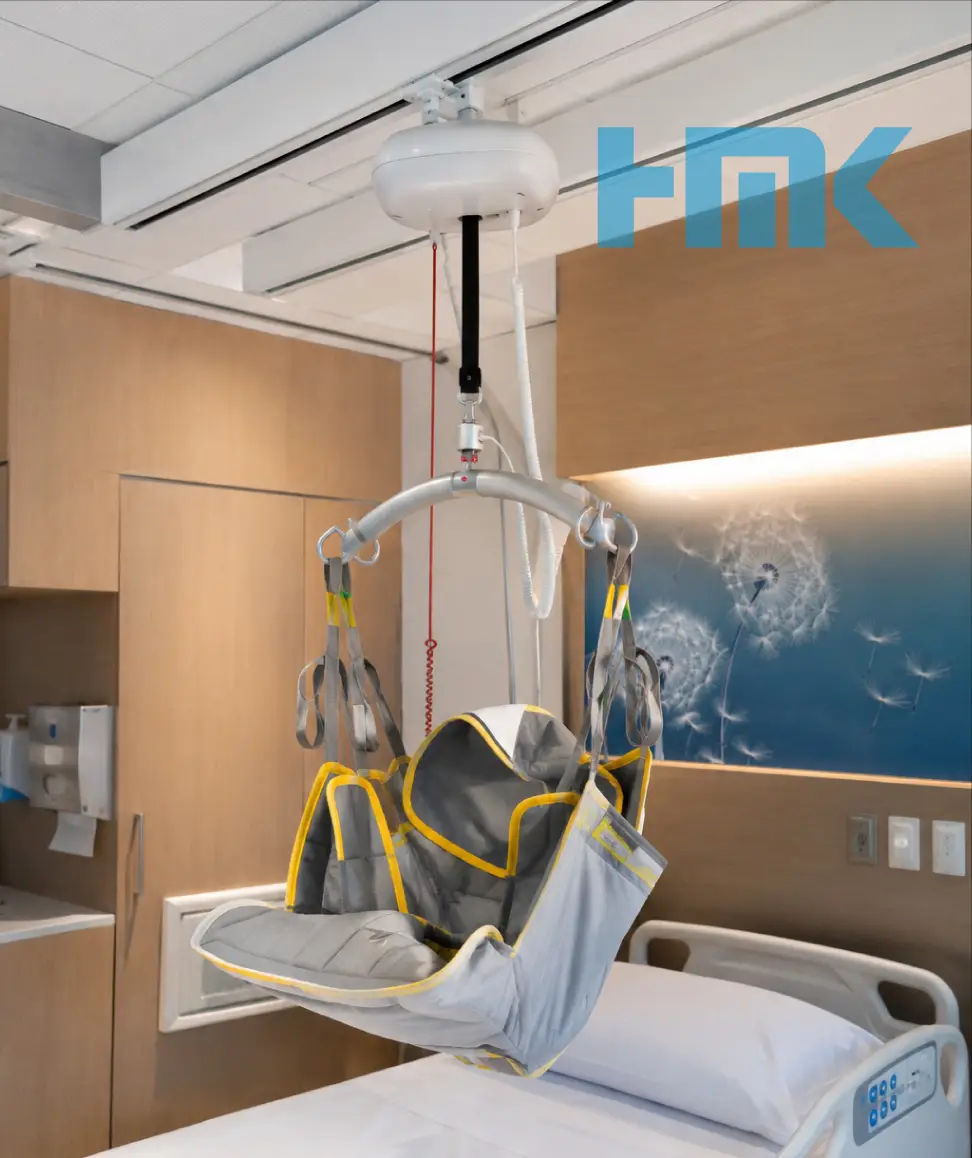
4) Ceiling-Mounted (Overhead) Lifts
A motor unit runs along an overhead track. The patient is transferred in a sling, with minimal equipment on the floor.
| Best for | Pros | Cons |
|---|---|---|
| Frequent transfers | Smooth transfers with less pushing/pulling | Requires professional installation and structural assessment |
| Tight rooms where floor lifts are hard to maneuver | Typically easier for caregivers, especially in small rooms | Higher initial cost |
| Long-term care, hospitals, or highly optimized home setups | Frees floor space and reduces trip hazards | Track layout must match transfer pathways |
| Can cover bed-to-bathroom routes with a track layout | Less portable (fixed to a room or route) |
Good to know:
Ceiling systems can be a major quality-of-life upgrade in homes with limited space. The biggest factor is whether the home structure and intended transfer route support the installation.
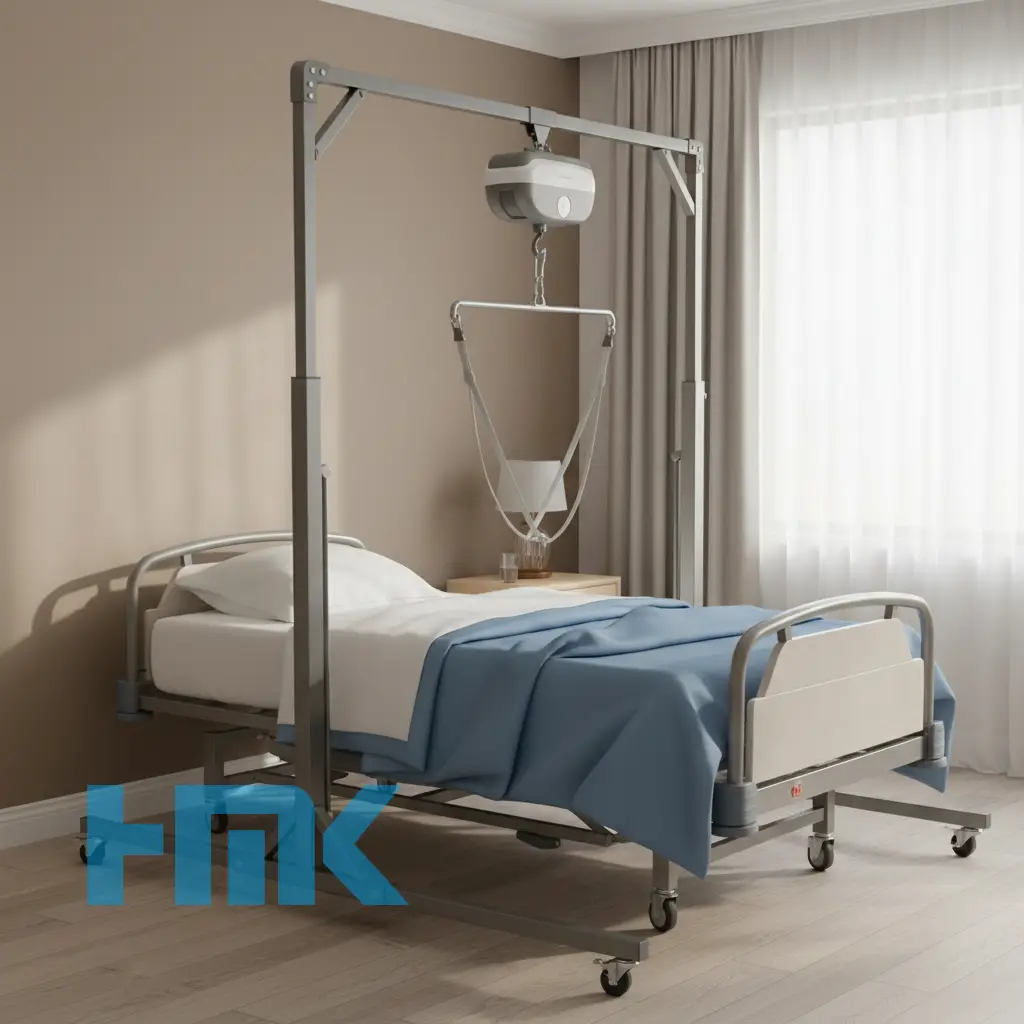
5) Portable/Freestanding Overhead Gantry Lifts
A freestanding frame that supports an overhead lift motor, similar function to a ceiling lift, but without permanent installation.
| Best for | Pros | Cons |
|---|---|---|
| Temporary needs (post-surgery recovery) | No structural modifications required | Frame footprint takes floor space |
| Rent-to-try scenarios | Can be moved and repositioned | Can be expensive and heavy |
| Homes where ceiling mounting isn’t possible | Offers overhead-style transfers in many settings | May not fit well in small bedrooms or bathrooms |
Good to know:
Gantry systems can be a practical compromise when you want overhead ease but can’t mount tracks.
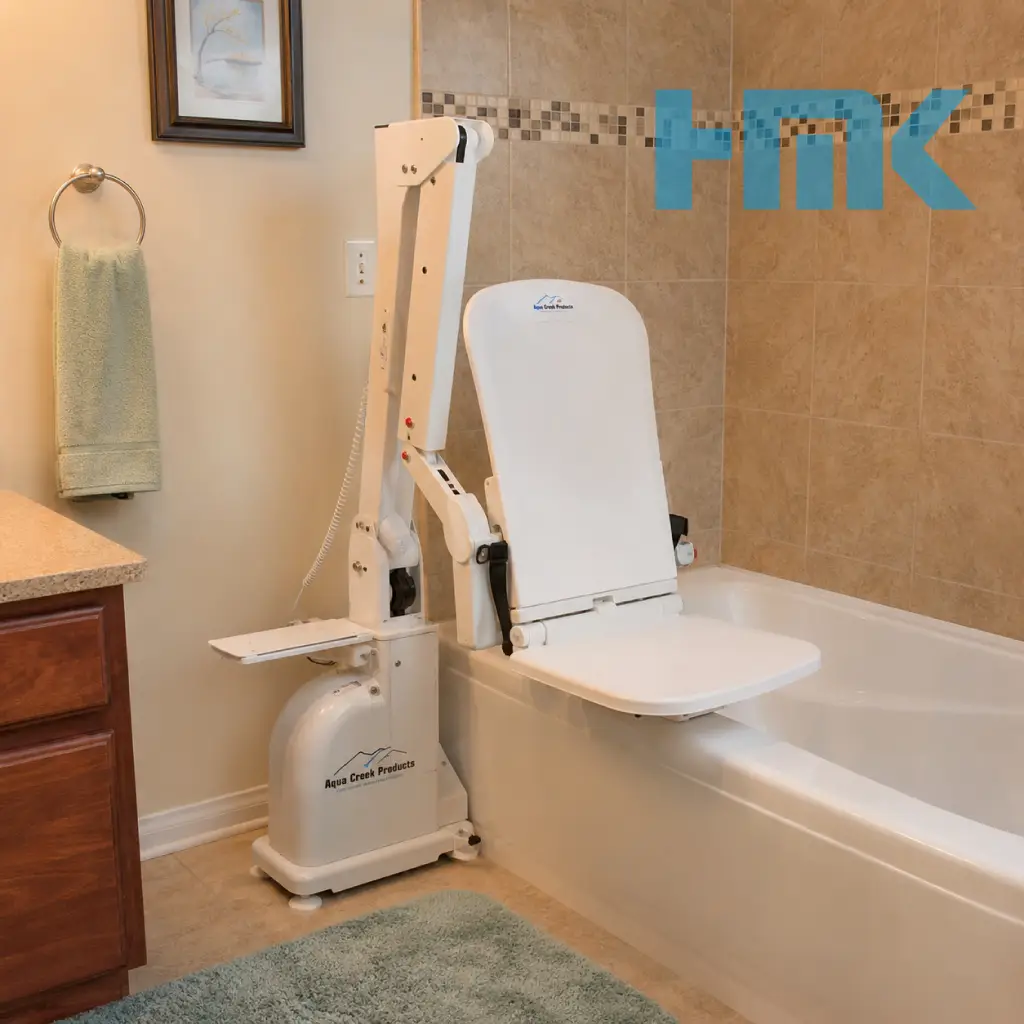
6) Bath and Pool Lifts (Specialty Lifts)
Lifts designed for wet environments, bath tubs, shower areas, or pools.
| Best for | Pros | Cons |
|---|---|---|
| Hygiene routines where step-in access isn’t safe | Improves bathing safety and reduces slip risk | Limited to specific environments |
| Therapy pools or home pools for aquatic therapy | Supports dignity by enabling more consistent hygiene | May require space modifications or compatible tub/pool design |
| Designed with water resistance and safe controls | ||
Good to know:
Bathing transfers often involve unique hazards (water, slippery surfaces, tight spaces). A device built specifically for that environment is typically safer than improvising with general transfer tools.
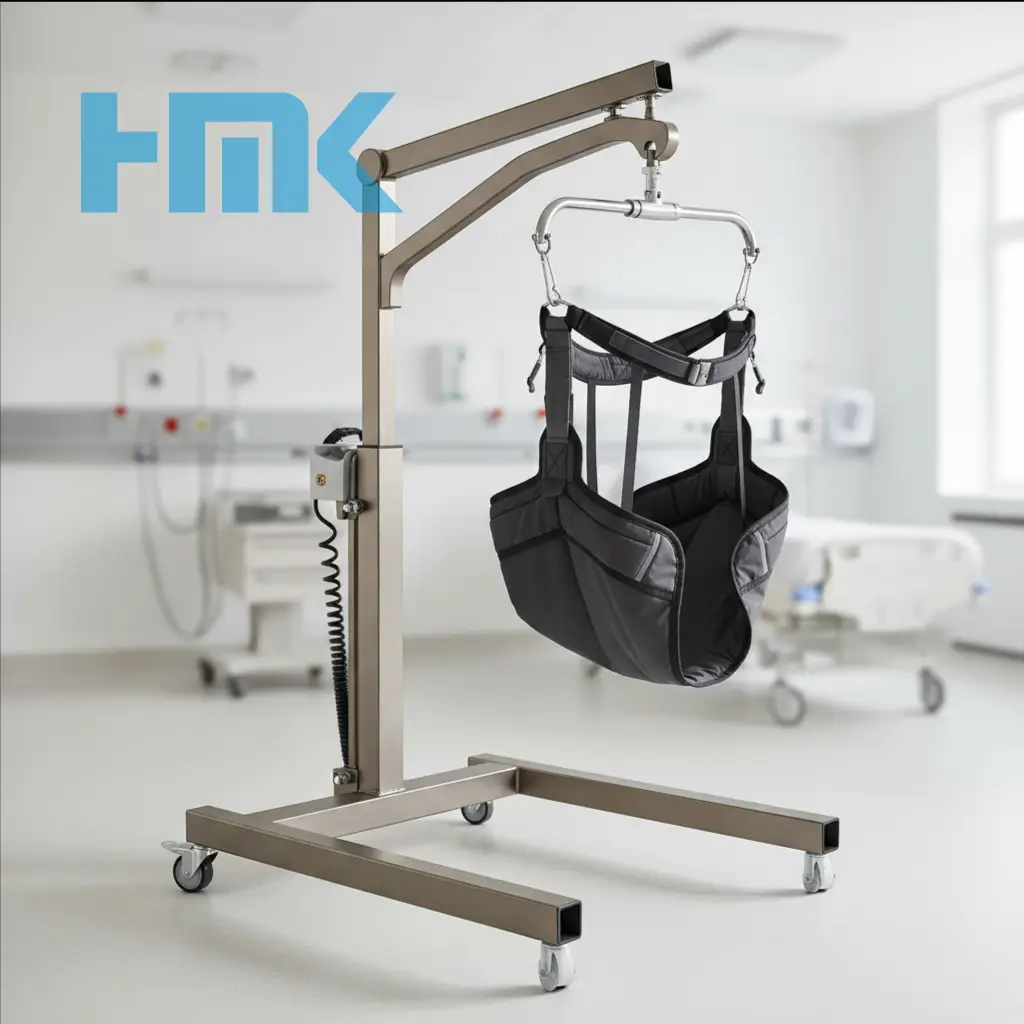
7) Bariatric Patient Lifts
Reinforced lifts (floor or overhead) designed for higher weight capacities and wider sling sizes.
| Best for | Pros | Cons |
|---|---|---|
| Patients requiring higher safe working load | Greater stability, wider bases, stronger components | Larger footprint may not fit in older homes |
| Improved stability and comfort for larger body types | Better sling fit options for comfort and skin protection | More expensive and heavier |
| May require wider doorways and turning radius |
Good to know:
Weight capacity should never be “close enough.” Consider not only body weight but also clothing, blankets, and any movement dynamics. Also check the sling’s rated capacity, not just the lift.
Sling Types and Why They Matter
Many lift problems aren’t caused by the lift itself, but by a mismatched sling. Common sling styles include:
- Full-body (universal) slings: General transfers for dependent patients
- Divided-leg slings: Easier for toileting and clothing management
- Hammock slings: More supportive for fragile patients; can feel more secure
- Toileting slings: Less fabric around the seat area; helps with hygiene
- Standing slings: Designed for sit-to-stand lifts
- Repositioning/turning slings: For rolling and in-bed positioning (facility use)
Sling selection tips
- Match the sling type to the task (toileting vs. bed transfer)
- Ensure correct sizing, too large can cause sliding; too small can pinch
- Consider patient needs: amputations, contractures, wounds, pain, spasticity
- Look for breathable or padded materials if skin integrity is a concern
How to Choose the Right Patient Lift
To choose to right patient lift you must take the following steps
1) Start with the Patient’s Mobility Level
A practical way to think about lift choice is transfer participation:
- Fully dependent / non–weight-bearing: Usually needs a full-body sling lift (floor or ceiling)
- Partial weight-bearing with good cognition and trunk control: A sit-to-stand device may be appropriate
- Rehab progression: Some patients start with full-body transfers and later transition to stand assist
If there’s uncertainty, focus on the side of safer support. Overestimating ability is a common cause of transfer accidents.
2) Define the Main Transfer Scenarios
Write down the top 2–3 transfers that happen daily:
- Bed ↔ wheelchair
- Wheelchair ↔ toilet
- Bed ↔ recliner
- Floor recovery
Then choose equipment optimized for those. For example:
- Frequent toileting transfers often favor a sit-to-stand model (if appropriate).
- Tight bedroom layouts often favor a ceiling track solution.
- Fall recovery may require a lift that can pick up from low positions.
3) Measure the Environment (This Is Often the Decider)
Key measurements and realities include:
- Door widths and hallway turns
- Clearance around bed and toilet
- Flooring type (carpet vs. smooth surfaces)
- Height of bed, chair, wheelchair, commode
- Storage space for the device and slings
A floor lift may look perfect on paper but become frustrating if its base can’t fit under the bed or around the wheelchair, or if it can’t turn into the bathroom.
4) Consider Caregiver Staffing and Strength
Ask:
- Will transfers usually be done by one caregiver or two?
- Are caregivers trained in safe patient handling?
- Is caregiver fatigue already an issue?
If one person is commonly doing transfers, a powered lift (or ceiling lift) can substantially improve consistency and reduce injury risk.
5) Check Weight Capacity and Compatibility
Verify:
- Lift’s safe working load
- Sling’s rated capacity
- Patient’s body shape and sling sizing options
- Compatibility between lift brand/model and sling attachment style (loops, clips, bars)
Also consider future needs if the patient’s condition is progressive.
6) Prioritize Comfort, Dignity, and Clinical Needs
A technically safe transfer can still be a poor choice if it causes discomfort or anxiety. Consider:
- Pain (hips, shoulders, spine)
- Skin integrity and pressure injury risk
- Fear of being suspended
- Need for toileting access
- Range of motion limitations
In many cases, a different sling style or a ceiling lift’s smoother motion improves tolerance dramatically.
7) Think About Maintenance, Charging, and Reliability
- Battery-powered lifts need a charging routine
- Slings require laundering and inspection for wear
- Moving parts should be checked regularly
- Have a plan for downtime (backup sling, backup lift, or alternate transfer method)
Common Mistakes to Avoid
- Choosing based on price alone: The wrong device costs more in injuries, frustration, and replacement.
- Using a sit-to-stand lift for non–weight-bearing patients: High fall risk.
- Ignoring sling fit: Poor sizing leads to sliding, pressure points, and fear.
- Not measuring doorways and bed clearance: A lift that can’t fit is effectively unusable.
- Skipping training: Even simple devices benefit from proper technique and routine checks.
Conclusion
Choosing a patient lift is about matching the device to real-life transfers, the patient’s functional ability, caregiver capacity, and the physical layout of the home or facility. Manual and powered floor lifts are versatile for full-body transfers, sit-to-stand devices can streamline toileting and support mobility when the patient can participate, and ceiling-mounted systems often shine in tight spaces and high-frequency routines. Just as important as the lift itself are the right sling, correct sizing, and practical details like doorway clearance and charging habits.
If you select based on mobility level, transfer goals, and environment, then confirm capacity and comfort, you’ll end up with equipment that improves safety, protects caregivers, and supports the patient’s dignity every day.
FAQ
1) What type of patient lift is best for home use?
It depends on mobility and space. Many homes use a powered floor lift for full-body transfers or a sit-to-stand device for partial weight-bearing patients. If space is tight and transfers are frequent, a ceiling-mounted system can be an excellent long-term option.
2) Can one caregiver safely use a patient lift alone?
Often yes, especially with powered or ceiling lifts, but it depends on the patient’s size, behavior, and the complexity of the transfer. Follow the lift manufacturer’s guidance and your care setting’s safe handling policies.
3) Do I need a sling for every patient lift?
Not always. Full-body and ceiling lifts typically use slings. Sit-to-stand devices use a standing sling/strap. Some bath lifts use a seat rather than a sling. The accessory depends on the lift style and transfer goal.
4) How do I know what sling size to choose?
Use the manufacturer’s sizing chart and consider the patient’s weight, hip width, and torso length. If between sizes, comfort and security matter, too large can cause slipping; too small can cause pressure and discomfort.
5) Are ceiling lifts safer than floor lifts?
They can be safer in tight spaces because they reduce pushing/pulling and awkward positioning. Both can be safe when properly matched to the patient, installed correctly (for ceiling systems), and used with the right sling and technique.
Hamyar Mechanic Koosha Editorial Team
Specialized content team in biomedical engineering and rehabilitation
Hamyar’s editorial team consists of biomedical engineering experts who provide practical, technical content in plain language to raise public awareness.
Related Articles
No articles found.