
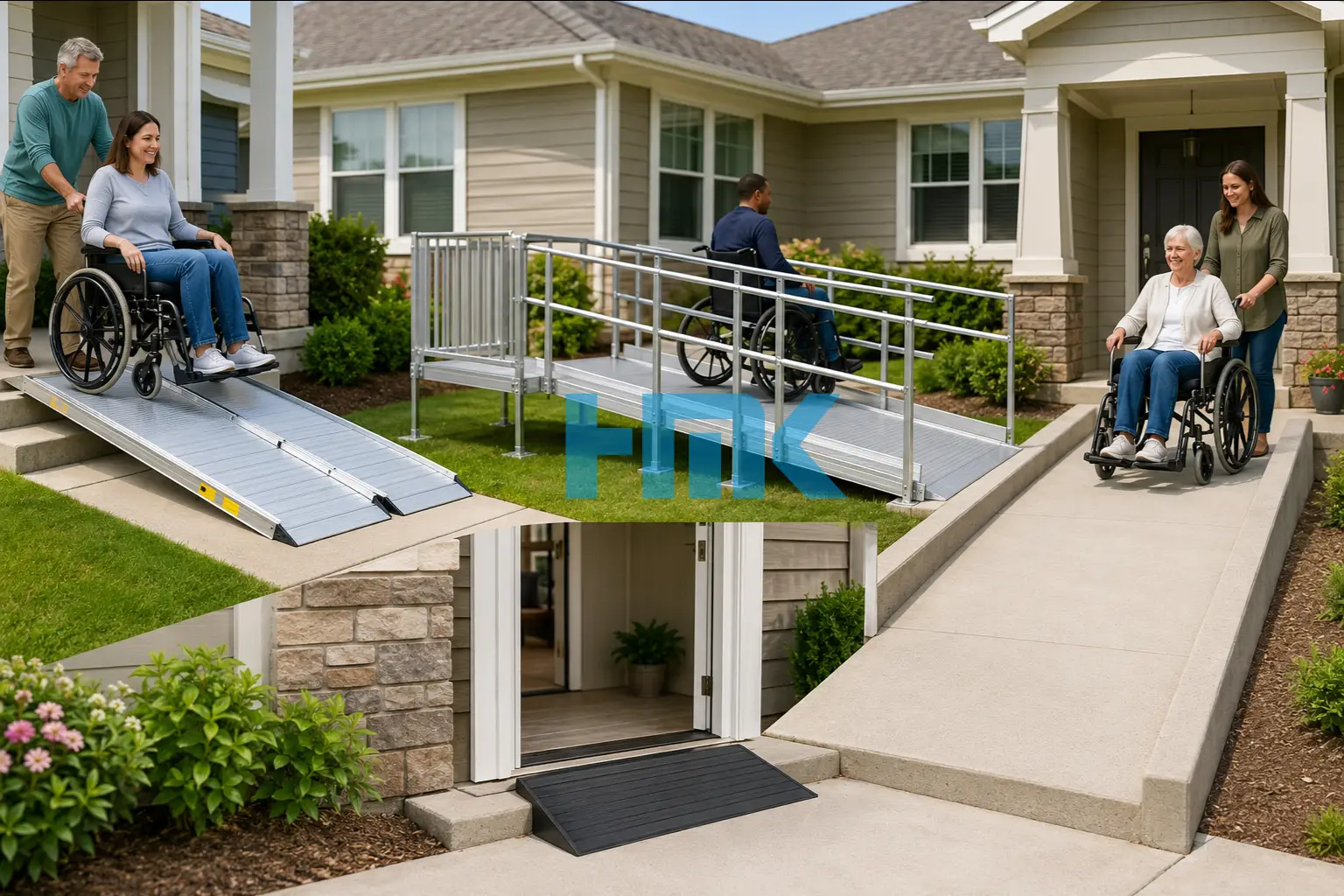
A well-designed wheelchair ramp can be life-changing. It transforms steps and uneven surfaces into accessible pathways, allowing wheelchair users, people with mobility challenges, seniors, and caregivers to move safely and independently. Whether for a private home, a business, or a public facility, choosing the right ramp requires understanding your space, budget, mobility needs, and long-term plans.
In this comprehensive guide, we’ll explore four primary types of wheelchair ramps, portable, modular, threshold, and permanent, and discuss their benefits, limitations, ideal use cases, and key considerations. By the end, you’ll have a clearer idea of which accessibility solution best suits your needs.
Choosing the Right Ramp importance
Accessibility isn’t just about convenience, it’s about safety, independence, and compliance. A properly selected mobility ramp:
- Reduces the risk of falls and injuries
- Improves daily independence
- Supports caregivers
- Enhances property accessibility
- Helps meet ADA (Americans with Disabilities Act) guidelines where required
Each ramp type serves a different purpose. Some are ideal for temporary needs, while others provide long-term structural solutions. Let’s explore each category in detail.
1. Portable Wheelchair Ramps
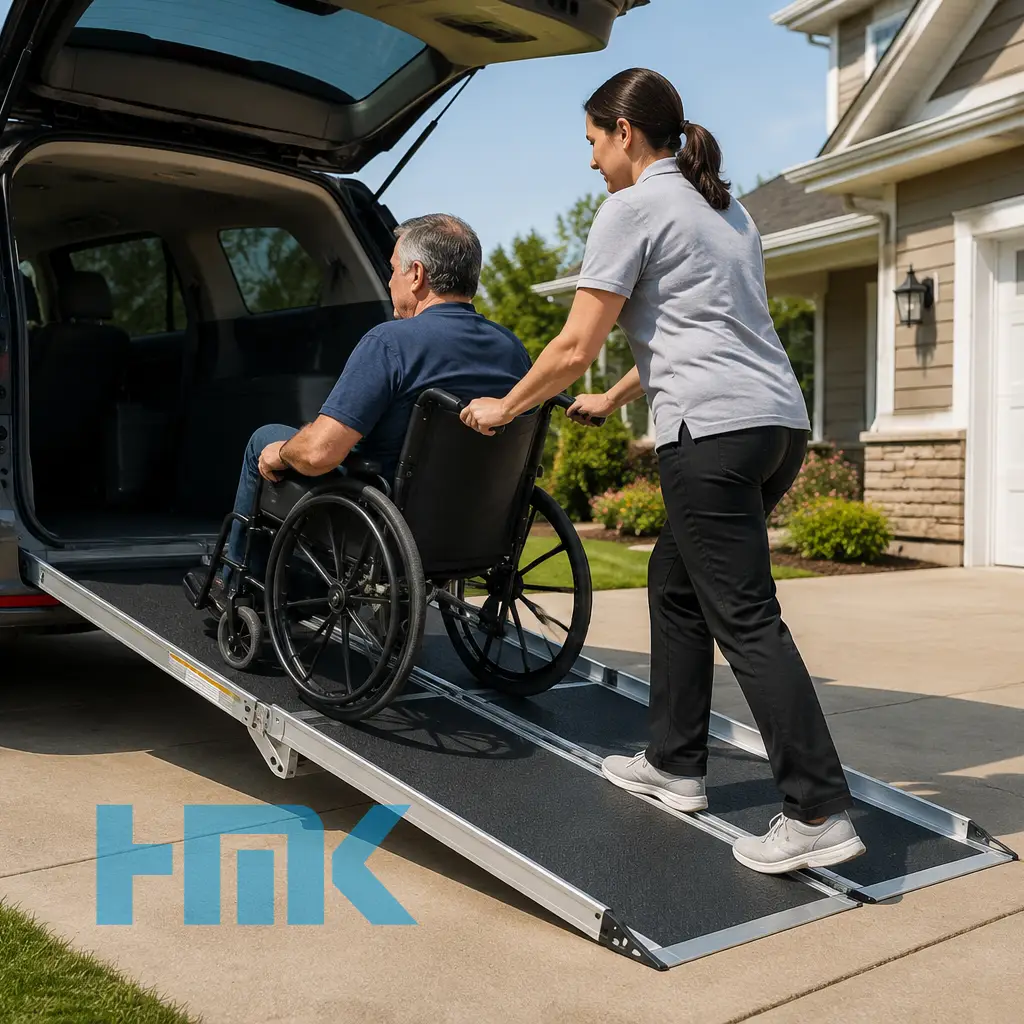
Portable ramps are lightweight, movable solutions designed for short-term or flexible use. They are especially useful for travel or situations where a permanent installation isn’t practical.
Key Features
- Lightweight materials such as aluminum
- Foldable or telescoping designs
- Easy storage and transport
- Non-slip surfaces
- Quick setup with no major installation
Ideal Use Cases
Portable wheelchair ramps are perfect for:
- Temporary access to homes or events
- Travel and vehicle access
- Rental properties
- Occasional use over steps or curbs
They are often used to load wheelchairs or mobility scooters into vans and SUVs. Some models are designed specifically for vehicle access, while others help overcome small staircases or raised entrances.
Advantages
- Cost-effective
- No structural modifications required
- Easy to store
- Versatile for multiple locations
Limitations
- Weight capacity varies
- Less stable than permanent installations
- May not be suitable for long rises
- Requires proper placement each time
Best for:
Individuals who need a flexible, travel-friendly mobility solution or temporary accessibility assistance.
2. Modular Wheelchair Ramps
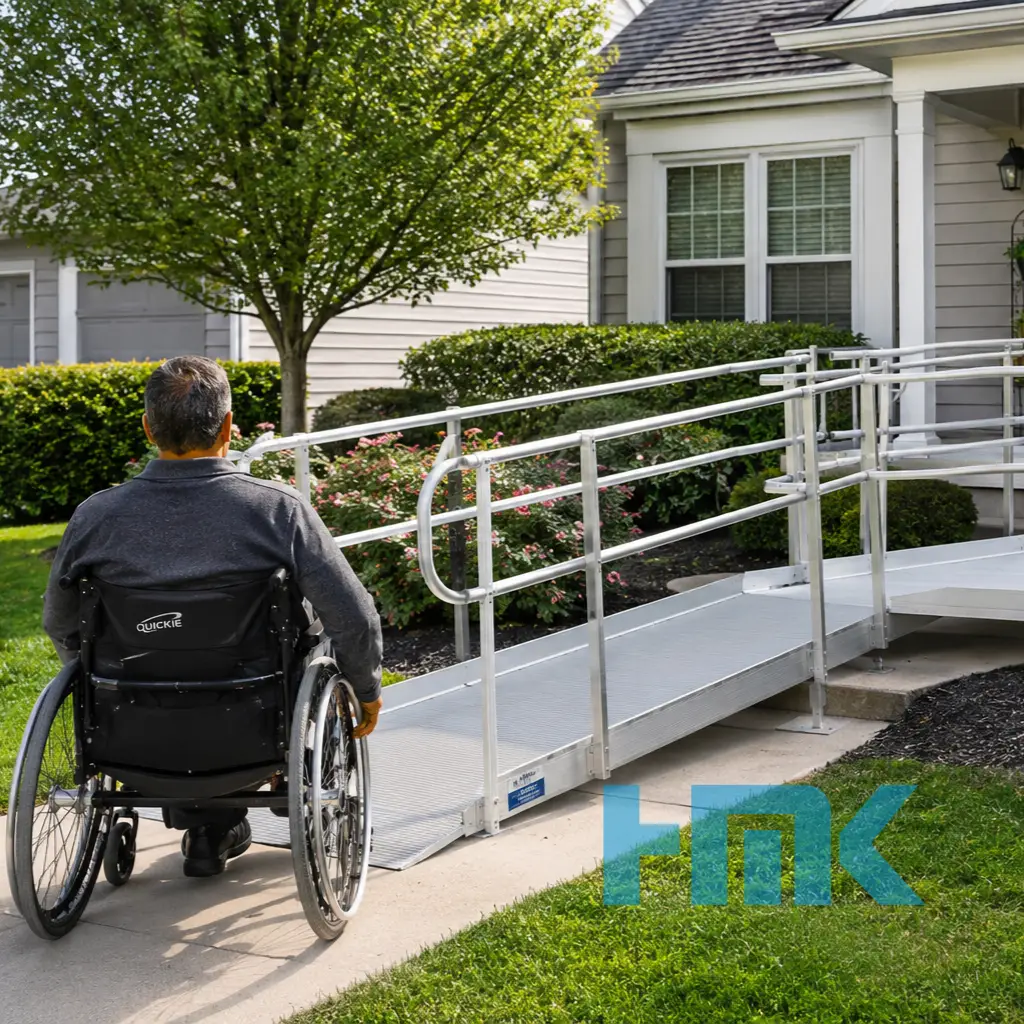
Modular ramps offer a semi-permanent accessibility solution made of prefabricated sections. These systems can be configured to fit different layouts and elevations.
Key Features
- Pre-engineered aluminum or steel sections
- Customizable lengths and turns
- Handrails and guardrails included
- Slip-resistant surfaces
- Can be reconfigured or relocated
Unlike permanent concrete ramps, modular systems are assembled on-site without major construction. They are widely used in both residential and commercial settings.
Ideal Use Cases
- Homes requiring long-term accessibility
- Businesses meeting ADA compliance
- Schools, clinics, and public buildings
- Temporary but extended use situations
Because these ramps can include platforms and switchbacks, they work well when space is limited or the rise is significant.
Advantages
- Durable and weather-resistant
- Customizable design
- Faster installation than concrete
- Often reusable if you move
Limitations
- Higher upfront cost than portable ramps
- Requires professional installation in many cases
- Visible structural appearance may not suit all homes
Best for:
Homeowners or businesses seeking a long-term yet adaptable wheelchair access solution without committing to permanent construction.
3. Threshold Wheelchair Ramps
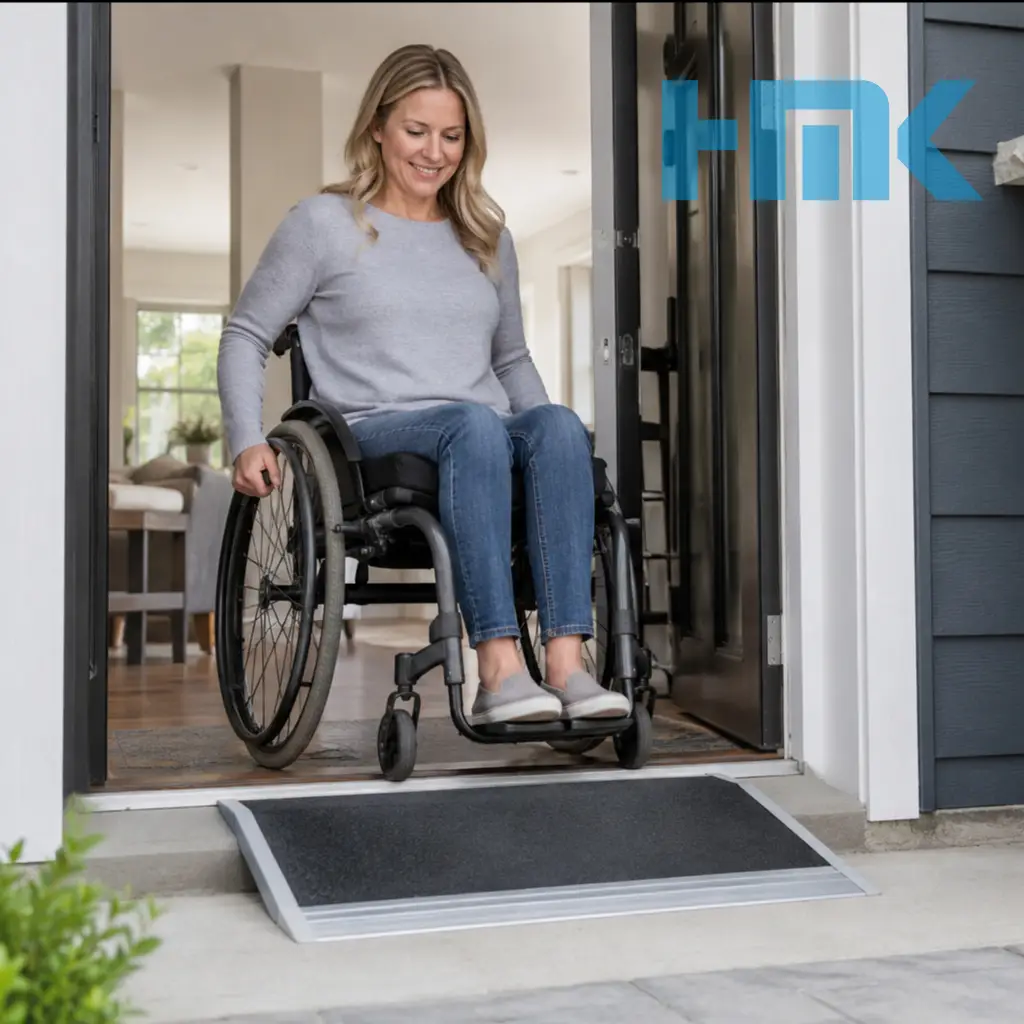
Threshold ramps are small ramps designed to bridge minor height differences, typically at doorways or entry thresholds.
Key Features
- Low-profile design
- Made from rubber, aluminum, or composite materials
- Designed for heights between ½ inch and a few inches
- Slip-resistant surface
These ramps help smooth out transitions between rooms, patios, sliding doors, and raised entryways.
Ideal Use Cases
- Front or back door thresholds
- Sliding glass doors
- Bathroom entryways
- Interior floor height transitions
For individuals using manual wheelchairs, power chairs, walkers, or rollators, even small elevation changes can create obstacles. Threshold ramps eliminate these barriers efficiently.
Advantages
- Affordable
- Easy installation (often no tools required)
- Compact and discreet
- Improves everyday mobility
Limitations
- Not suitable for high steps
- Limited to small height differences
- May require exact measurements
Best for:
Homes where small elevation changes create daily obstacles for wheelchair users or those with limited mobility.
4. Permanent Wheelchair Ramps
Permanent ramps are fixed structures built from concrete, wood, or steel. They are designed as long-term accessibility solutions and often integrated into a building’s architecture.
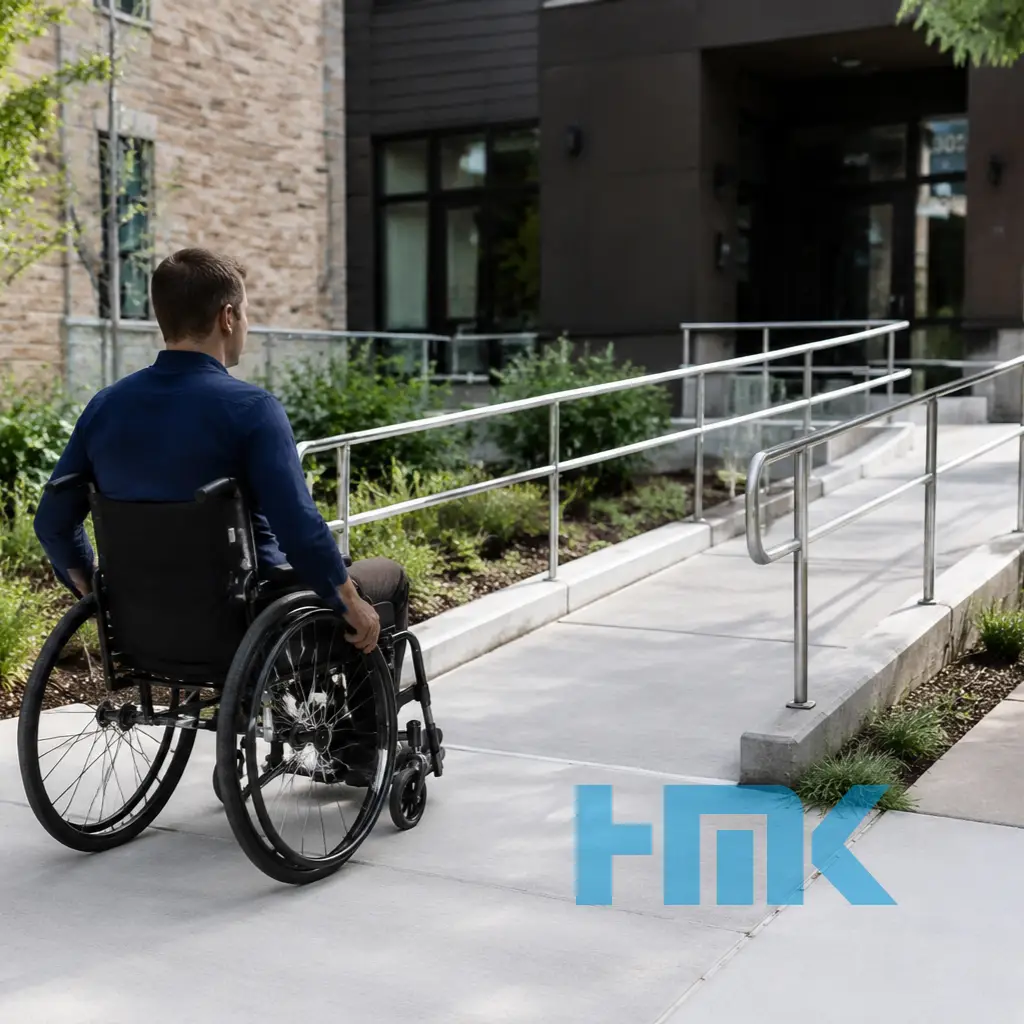
Key Features
- Built-in structural installation
- Custom design and materials
- Handrails and landings as required
- Typically built to meet ADA slope guidelines
These ramps are common in public buildings, healthcare facilities, and private residences requiring continuous access.
Ideal Use Cases
- Long-term home accessibility
- Public facilities
- Commercial properties
- New construction projects
Permanent installations often enhance property value and ensure consistent accessibility.
Advantages
- Highly durable
- Strong and stable
- Aesthetically integrated into property
- Minimal maintenance (especially concrete)
Limitations
- Higher construction cost
- Requires permits and compliance checks
- Not easily removable
- Longer installation timeline
Best for:
Homeowners or organizations planning permanent accessibility improvements.
Comparing the Types of Wheelchair Ramps
| Ramp Type | Best For | Installation | Portability | Cost Range | Durability |
|---|---|---|---|---|---|
| Portable | Temporary use, travel | Minimal | High | Low–Moderate | Moderate |
| Modular | Long-term flexible use | Professional assembly | Moderate | Moderate–High | High |
| Threshold | Small height changes | Very easy | Low | Low | Moderate |
| Permanent | Long-term structural solution | Construction required | None | High | Very High |
Important Factors to Consider before making a choice
Selecting the right ramp involves more than just choosing a type. Consider the following:
1. Slope Requirements
The ADA recommends a slope ratio of 1:12, meaning for every inch of rise, you need at least 12 inches of ramp length.
For example:
"Ramp Length"="Rise"×12
If your doorway is 24 inches high:
24×12=288" inches"=24" feet"
This significantly impacts which ramp type is feasible.
2. Weight Capacity
Ensure the ramp can support:
- Wheelchair weight
- User weight
- Caregiver assistance if applicable
3. Space Availability
Limited yard or entry space may require switchback modular designs or vertical platform lifts instead.
4. Climate and Weather
Consider materials resistant to:
- Rain and moisture
- Snow and ice
- Heat and sun exposure
Aluminum and concrete are popular for durability.
5. Local Regulations
Commercial properties must follow ADA accessibility standards. Residential installations may require building permits depending on location.
Safety Features to Look For
When selecting a wheelchair ramp, prioritize safety-enhancing elements:
- Non-slip surface
- Raised side curbs
- Secure handrails
- Adequate landing platforms
- Proper slope ratio
These features prevent roll-offs and provide better control.
Conclusion
Choosing the right wheelchair ramp is essential for creating a safe and accessible environment. Whether you need a portable solution for travel, a threshold ramp for small door transitions, a modular system for flexible long-term use, or a permanent installation for lasting structural access, each option serves a unique purpose.
Your decision should consider slope requirements, available space, mobility needs, safety features, climate, and budget. Investing in the right accessibility ramp not only improves mobility but also enhances independence, safety, and overall quality of life.
By understanding the differences between portable, modular, threshold, and permanent ramps, you can confidently select a solution that meets both immediate needs and future accessibility goals.
FAQ
1- What is the standard slope for a wheelchair ramp?
The ADA recommends a 1:12 slope ratio. For every inch of rise, the ramp should be at least 12 inches long to ensure safe accessibility.
2- Are portable wheelchair ramps safe for daily use?
Portable ramps can be safe for daily use if properly rated for weight and securely positioned. However, for long-term daily access, modular or permanent ramps are typically more stable.
3- Do I need a permit to install a wheelchair ramp?
It depends on your local building codes. Permanent ramps usually require permits, while portable and threshold ramps generally do not.
4- Can wheelchair ramps increase property value?
Yes. Accessibility improvements can enhance property appeal, especially for aging-in-place buyers or families needing mobility access.
5- What material is best for outdoor ramps?
Aluminum and concrete are popular for outdoor use due to durability and resistance to weather conditions.
Hamyar Mechanic Koosha Editorial Team
Specialized content team in biomedical engineering and rehabilitation
Hamyar’s editorial team consists of biomedical engineering experts who provide practical, technical content in plain language to raise public awareness.
Related Articles
No articles found.