
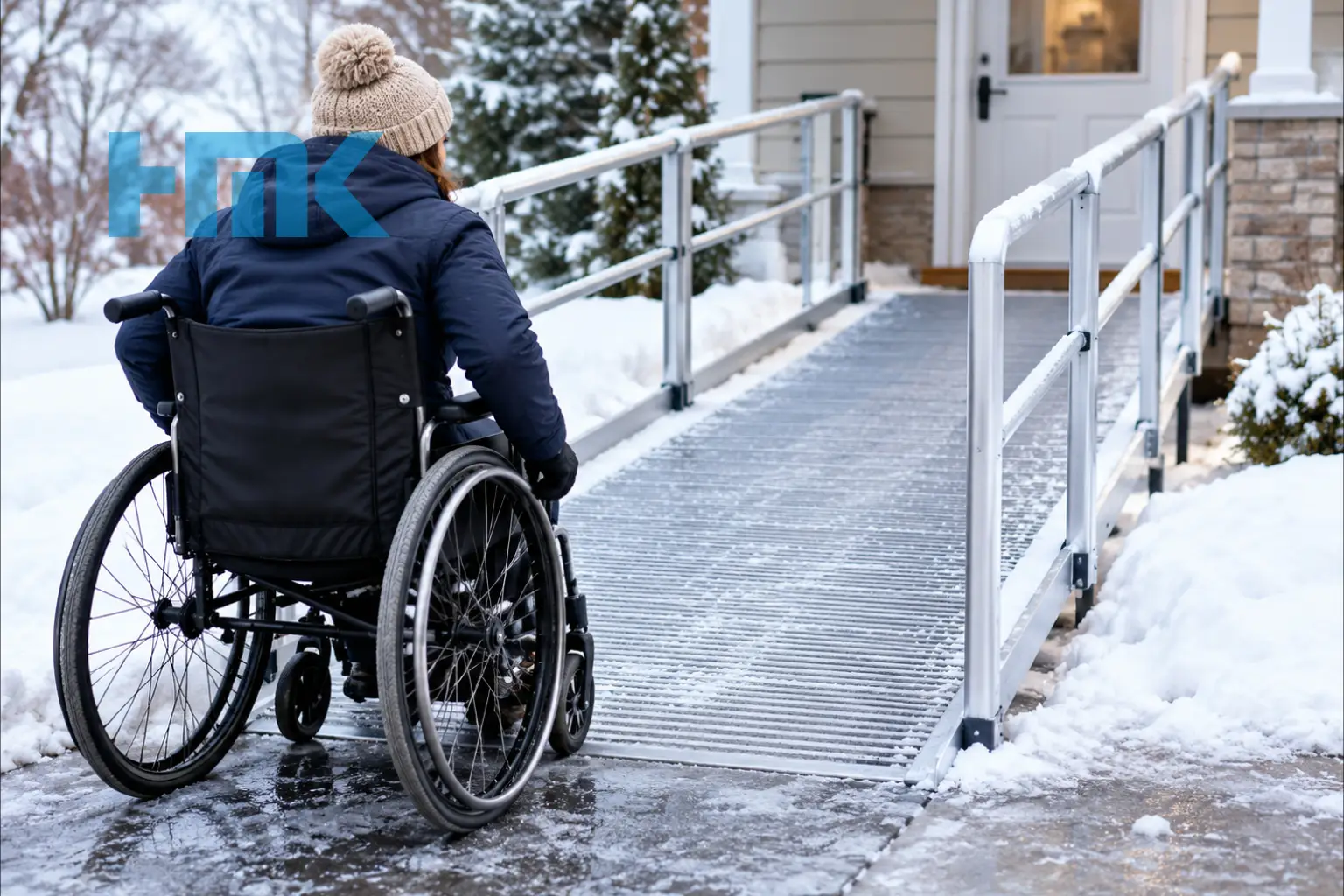
A wheelchair ramp provides essential access for people who use wheelchairs, walkers, scooters, or other mobility aids. However, changing weather can make even a well-designed access ramp more difficult to use. Rain can create slippery surfaces, snow can hide hazards, and ice can dramatically reduce traction. For wheelchair users, caregivers, and family members, these conditions can increase the risk of slips, falls, loss of control, or a wheelchair tipping.
The good news is that many weather-related hazards can be reduced with the right preparation. A combination of proper ramp materials, adequate traction, effective drainage, regular inspections, and timely snow and ice removal can make an accessible entrance much safer throughout the year.
This guide explains practical ways to improve ramp safety in wet and freezing conditions, including important considerations for temporary wheelchair ramps for recovery after surgery.
Why Weather Makes Wheelchair Ramps More Dangerous
Weather can change the conditions of a ramp within minutes. A surface that feels secure when dry may become significantly more slippery after rainfall. During winter, freezing temperatures can turn residual moisture into a thin layer of ice that may be difficult to see.
Snow creates another challenge because it can cover the ramp's surface, edges, and transition points. Even when a ramp has a textured surface, compacted snow can reduce the effectiveness of that texture.
Steep ramps require particular attention. As the slope increases, wheelchair users have to manage more force when moving upward and more braking control when moving downward. A wet, icy, or snow-covered surface can make both directions harder to navigate.
For this reason, ramp safety should not depend on traction alone. The entire access route should be considered, including the landing, doorway, surrounding walkway, handrails, and transition between the ramp and ground.
Choose a Weather-Resistant Ramp Surface
One of the most important ways to improve safety is to select a ramp surface designed for outdoor conditions.
A ramp should provide reliable traction when exposed to water, dirt, and changing temperatures. Textured aluminum, molded composite materials, and other slip-resistant surfaces are commonly used for accessible ramps because they can provide better grip than smooth surfaces.
Avoid adding ordinary household mats or loose rugs as a quick solution. They can move, curl at the edges, collect water, or interfere with wheelchair wheels. Any surface treatment should be firmly secured and appropriate for mobility equipment.
When choosing a ramp system, consider:
- Slip resistance when wet
- Resistance to corrosion
- Drainage capability
- Durability in freezing temperatures
- Ease of snow removal
- Compatibility with wheelchair tires
- Weight capacity
- Surface texture that does not create excessive vibration
A professional installer or accessibility specialist can help determine which material and configuration are appropriate for a particular entrance.
Improve Traction in Rain and Snow
Traction is especially important during bad weather. Even a gradual slope can become difficult to navigate when water or ice forms on its surface.
For permanent installations, consider a ramp with a purpose-built nonslip surface. Some systems incorporate raised textures or traction patterns that allow water to move away while helping tires maintain contact with the surface.
For additional protection, anti-slip treatments designed specifically for ramps may be useful. However, the product should be compatible with the ramp material and safe for wheelchair tires, walkers, and other mobility devices.
Do not rely on sand, salt, or household grit as the primary safety solution. These materials may provide temporary traction but can also create problems. Loose material can interfere with wheelchair movement, damage certain surfaces, or be tracked indoors.
The best approach is to combine a naturally slip-resistant surface with good drainage and prompt removal of precipitation.
Prevent Water From Pooling on the Ramp
Standing water is a major concern because it can increase slipping hazards and contribute to ice formation when temperatures fall below freezing.
A properly designed ramp should allow water to drain rather than collect in low areas. The surrounding ground should also direct water away from the ramp whenever possible.
Check the ramp after heavy rain. Look for puddles, slow-draining areas, or places where water consistently collects. These may indicate a drainage problem or an uneven surface.
Gutters and downspouts deserve attention as well. A downspout that releases water directly onto a ramp can create a recurring wet area. During winter, that same water can freeze and create a dangerous patch of ice.
Redirecting roof runoff away from the accessible route can therefore be one of the simplest and most effective improvements.
Keep Snow and Ice Off the Ramp
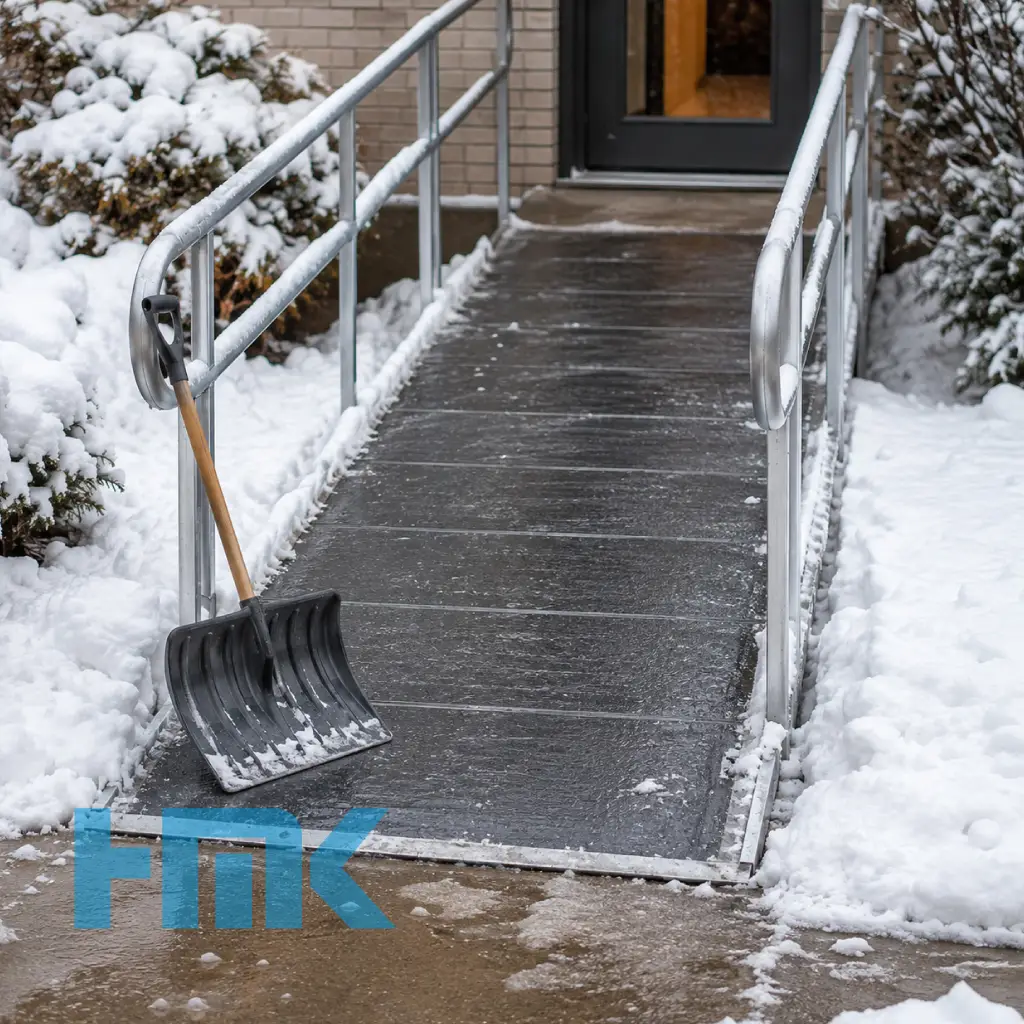
Snow and ice should be removed as soon as reasonably possible after a winter storm.
Use a shovel or snow-removal tool that will not unnecessarily damage the ramp surface. Clear the entire route, including the ramp, top and bottom landings, and the walkway leading to the entrance.
Pay particular attention to:
- The top and bottom transitions
- Ramp edges
- Areas underneath handrails
- Drainage points
- Door thresholds
- Shaded areas
- Places where snow is pushed or piled
Ice can be harder to manage than snow because it may be nearly invisible. If freezing rain or melting snow is expected to refreeze, inspect the ramp again after temperatures drop.
De-icing products may help in appropriate circumstances, but always check whether the product is suitable for the ramp's material. Some chemicals can accelerate corrosion or damage certain surfaces.
Never assume that a ramp is safe simply because it has been shoveled. A thin layer of compacted snow or transparent ice can remain underneath.
Use Handrails and Edge Protection
Handrails provide additional stability for people who can use them and are particularly helpful when conditions are wet or icy.
A properly designed ramp should have secure handrails where required by applicable accessibility standards. The rail should be easy to grip and strong enough to provide meaningful support.
Edge protection is equally important. Raised edges or other appropriate safeguards can help prevent wheelchair wheels, walkers, or mobility scooters from leaving the ramp surface.
Inspect handrails and supports after severe weather. Look for looseness, corrosion, cracks, or movement. A handrail that shifts when someone relies on it can create a serious hazard.
Improve Visibility With Proper Lighting
Winter often brings shorter daylight hours, making visibility another important part of ramp safety.
Install adequate lighting around the ramp and entrance so users can clearly see the surface. Lighting should illuminate the entire route rather than creating bright spots and deep shadows.
Motion-activated lighting can be convenient, particularly for entrances that are not used constantly. Make sure the switch or sensor is positioned so the user does not have to step onto an unlit ramp to activate it.
Good lighting can make it easier to identify:
- Ice patches
- Snow buildup
- Puddles
- Debris
- Damaged surfaces
- Obstacles near the entrance
Lighting should also be checked after storms. Outdoor fixtures, wiring, and connections need to be suitable for their environment.
Inspect and Maintain the Ramp Regularly
A wheelchair ramp should be inspected throughout the year, not only after a major storm.
Look for loose fasteners, damaged traction surfaces, corrosion, cracks, movement, and changes in the surrounding ground. Pay particular attention to areas where the ramp connects to a porch, doorway, or sidewalk.
Before winter arrives, perform a thorough inspection. Clean drainage areas, check handrails, confirm that lighting works, and make sure snow-removal equipment is ready.
After heavy rain or snow, inspect the ramp again. Weather can expose problems that were not obvious under normal conditions.
A simple maintenance routine can include:
- Check the surface for damage.
- Remove leaves, dirt, and debris.
- Confirm that water drains properly.
- Inspect handrails and edge protection.
- Check fasteners and connections.
- Test outdoor lighting.
- Remove snow and ice promptly.
- Recheck the ramp after freezing temperatures.
Regular maintenance is usually easier and less expensive than waiting until a small problem becomes a major accessibility issue.
Temporary Wheelchair Ramps for Recovery After Surgery
A temporary wheelchair ramp can be especially useful during recovery after surgery or an injury. Someone who normally walks without assistance may temporarily need a wheelchair, walker, or mobility scooter while recovering.
Temporary ramps are designed to provide access without necessarily requiring a permanent structural installation. They can be useful when accessibility is needed for a limited period.
However, temporary does not mean less important when it comes to safety.
Before installing a temporary ramp, make sure it is suitable for the user's mobility device and the entrance configuration. The ramp should be stable, positioned correctly, and capable of supporting the expected load.
Weather conditions should also be considered. If the ramp will remain outdoors during a recovery period, choose a model with an appropriate slip-resistant surface and outdoor durability.
For winter use, users should have a clear plan for snow and ice removal. A temporary ramp that is safe in dry weather may still become hazardous when covered by freezing precipitation.
It is also important to check the transition between the ramp and the doorway. A poor transition can create a bump or gap that is difficult for wheelchair users to cross.
Because recovery needs can change, reassess the setup periodically. Someone may initially need a wheelchair but later transition to a walker or cane. The access route should remain appropriate throughout the recovery period.
Also Read: Temporary Wheelchair Ramps for Recovery
Common Mistakes to Avoid
Some attempts to improve winter ramp safety can actually introduce new hazards.
Using loose rugs
Loose rugs can shift beneath wheelchair wheels and create a trip hazard. They are rarely an appropriate substitute for a properly designed nonslip ramp surface.
Ignoring drainage
If water repeatedly collects on the ramp, adding traction material alone does not solve the underlying problem. Improving drainage may be more effective.
Leaving snow at the edges
Snow pushed onto the side of a ramp can melt and refreeze, creating ice. It can also narrow the usable path.
Using unsuitable de-icers
Not every ice-melting product is appropriate for every ramp material. Check manufacturer recommendations before applying chemicals.
Waiting until the last minute
Preparing for a storm only after snow and ice have arrived can make maintenance more difficult. Keep appropriate snow-removal tools and supplies available before winter weather begins.
Overlooking the surrounding walkway
A perfectly maintained ramp cannot compensate for an icy path leading to it. The entire accessible route should be kept clear.
When to Replace or Upgrade a Ramp
Sometimes maintenance is no longer enough. Consider an upgrade or replacement if the ramp has persistent drainage problems, significant corrosion, damaged traction surfaces, unstable components, or structural movement.
A ramp may also need to be reconsidered if the user's mobility needs have changed.
For example, a person recovering from surgery may begin with a wheelchair but later use a walker. A caregiver may also discover that the existing ramp is difficult to navigate safely in winter.
If you are uncertain about the ramp's slope, load capacity, installation, or accessibility features, consult a qualified professional. Local building and accessibility requirements may also apply.
Conclusion
Making a wheelchair ramp safer in rain, ice, and snow requires more than adding a nonslip coating. A reliable solution combines a weather-resistant surface, good drainage, adequate lighting, secure handrails, proper edge protection, regular inspections, and prompt removal of snow and ice.
Temporary ramps can also provide valuable access during short-term situations such as recovery after surgery, but they should receive the same attention to stability, traction, and winter maintenance as permanent installations.
Most importantly, think about the entire route rather than the ramp alone. The walkway, landings, doorway, and surrounding areas all contribute to safe accessibility. With proper planning and consistent maintenance, a ramp can remain a dependable route into and out of a home even when weather conditions become challenging.
FAQ
1- How do I make a wheelchair ramp less slippery in the rain?
Choose a ramp with a built-in slip-resistant surface and make sure water drains effectively. Keep the surface free of leaves, dirt, and debris, and address areas where water regularly pools.
2- What is the best way to remove ice from a wheelchair ramp?
Remove snow first and then carefully address remaining ice using a method appropriate for the ramp material. If using a de-icer, follow the ramp manufacturer's recommendations to avoid surface damage or corrosion.
3- Can I put a regular outdoor mat on a wheelchair ramp?
Generally, loose mats are not a good solution because they can move, curl, or create a bump. A properly secured traction surface designed for accessibility is a safer option.
4- Are temporary wheelchair ramps safe in winter?
They can be safe when properly selected, installed, maintained, and cleared of snow and ice. The ramp should be stable, have adequate traction, and be appropriate for the user's mobility equipment and entrance.
5- How often should I inspect an outdoor wheelchair ramp?
Inspect it regularly and always check it after heavy rain, snow, freezing rain, or extreme temperature changes. A more thorough inspection before winter is also recommended.
6- Does a wheelchair ramp need handrails?
Requirements vary according to ramp design, dimensions, location, and applicable accessibility or building regulations. When handrails are required, they should be securely installed and maintained.
7- Why is drainage important for ramp safety?
Poor drainage allows water to pool on the surface. In cold weather, that water can freeze and create slippery patches. Effective drainage helps keep the access route safer and reduces ice formation.
8- What should I do if my ramp becomes too icy to use?
Do not attempt to use a visibly unsafe ramp. Clear the snow and ice, address the cause of the buildup, and make sure the surface is safe before using it again. If the problem happens repeatedly, consider improving drainage, traction, or the ramp design.