
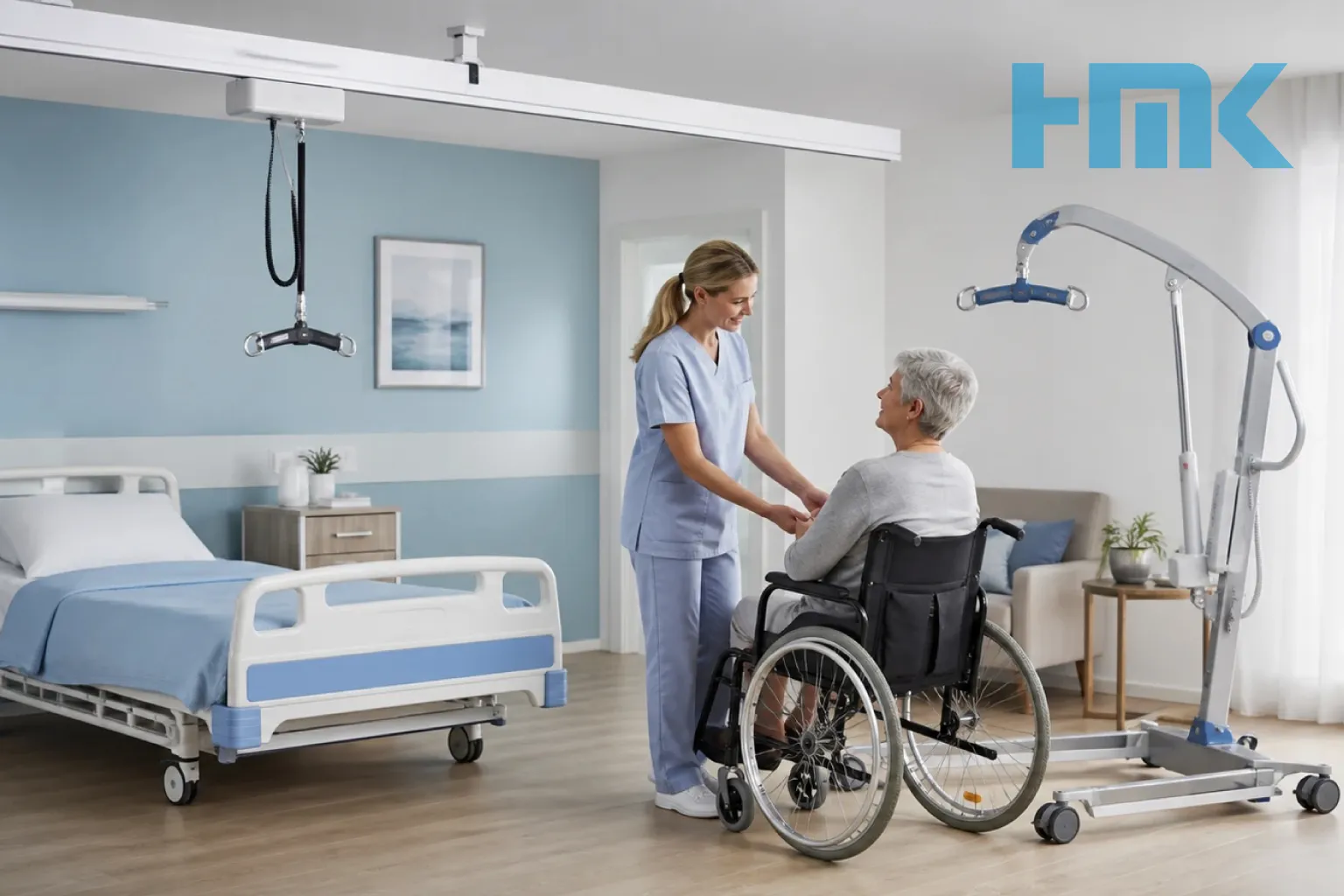
Choosing the right patient lift can make daily care safer, smoother, and less physically demanding for everyone involved. Whether the goal is transferring someone from bed to wheelchair, helping with bathroom access, or supporting rehabilitation at home or in a facility, the lift system you choose affects comfort, efficiency, and long-term usability.
Two of the most common options are ceiling-mounted patient lifts and mobile patient lifts. Both are designed to reduce manual handling risks and improve transfer safety, but they serve different care environments. Understanding the benefits and limitations of each can help families, caregivers, and healthcare providers make the right choice.
What Is a Patient Lift?
A patient lift is a mobility aid designed to move a person with limited strength, balance, or mobility from one place to another with reduced strain on caregivers. These systems are widely used in home care, hospitals, nursing facilities, and rehabilitation settings.
Common transfer tasks include:
- moving from bed to chair
- repositioning in bed
- bathroom transfers
- assisting with sit-to-stand movements
- helping with full-body transfers
Modern lift systems may use slings, spreader bars, electric motors, or manual hydraulic mechanisms depending on the model.
Ceiling-Mounted Patient Lifts
Ceiling-mounted systems, sometimes called overhead lifts or track lifts, are fixed to the ceiling or a supporting structure. They move along a rail system, allowing transfers across a room or between multiple points.
Pros
1. Space-saving design
Because the lift is installed overhead, it does not take up floor space. This is especially useful in small bedrooms, tight care rooms, and bathrooms.
2. Smooth and stable transfers
Overhead movement often feels more controlled, which can increase comfort for the person being transferred and reduce stress for caregivers.
3. Less physical effort for caregivers
The system does most of the work, helping reduce back strain, repetitive lifting injuries, and awkward pushing or pulling.
4. Better for frequent transfers
For people who need daily or multiple transfers, a ceiling lift can improve workflow and consistency.
5. Can support advanced care setups
These systems are often integrated into long-term care environments and can be designed for room-to-room movement.
Cons
1. Higher installation cost
The biggest drawback is usually the upfront expense. Installation may require structural assessment and professional fitting.
2. Not portable
Once installed, the system stays in place. That limits flexibility if care needs change or the person moves to another room.
3. Requires suitable building structure
Not every ceiling can support a track system without reinforcement, which can complicate home installation.
4. Less practical for temporary needs
If the lift is needed only occasionally or for short-term recovery, the investment may not be justified.
Mobile Patient Lifts
Mobile lifts, also called floor lifts or portable lifts, use a wheeled base and are moved from room to room. They are a common choice in home care and facilities where flexibility matters.
Pros
1. Greater flexibility
A mobile patient lift can be used in different rooms and transferred as care needs change.
2. Lower initial cost
Compared with ceiling systems, mobile lifts are usually more affordable upfront.
3. No installation required
This makes them appealing for rental homes, temporary care, or situations where structural work is not possible.
4. Suitable for many care settings
They work well in homes, clinics, and care facilities where one lift must serve multiple people or spaces.
5. Easy to relocate
If a patient’s needs change, the lift can move with them.
Cons
1. Takes up floor space
The base and frame require room to maneuver, which can be difficult in narrow spaces.
2. May be harder to push and position
Caregivers may need to steer the lift carefully around furniture, beds, and doorways.
3. Can feel less streamlined
Transfers may be slower than with an overhead track, especially in cramped rooms.
4. More physical handling during setup
Even though the lift reduces manual lifting, caregivers still need to position it correctly before each transfer.
Manual vs Electric Patient Lifts
When comparing lift types, the power source matters just as much as the mounting style. The two main categories are manual and electric models.
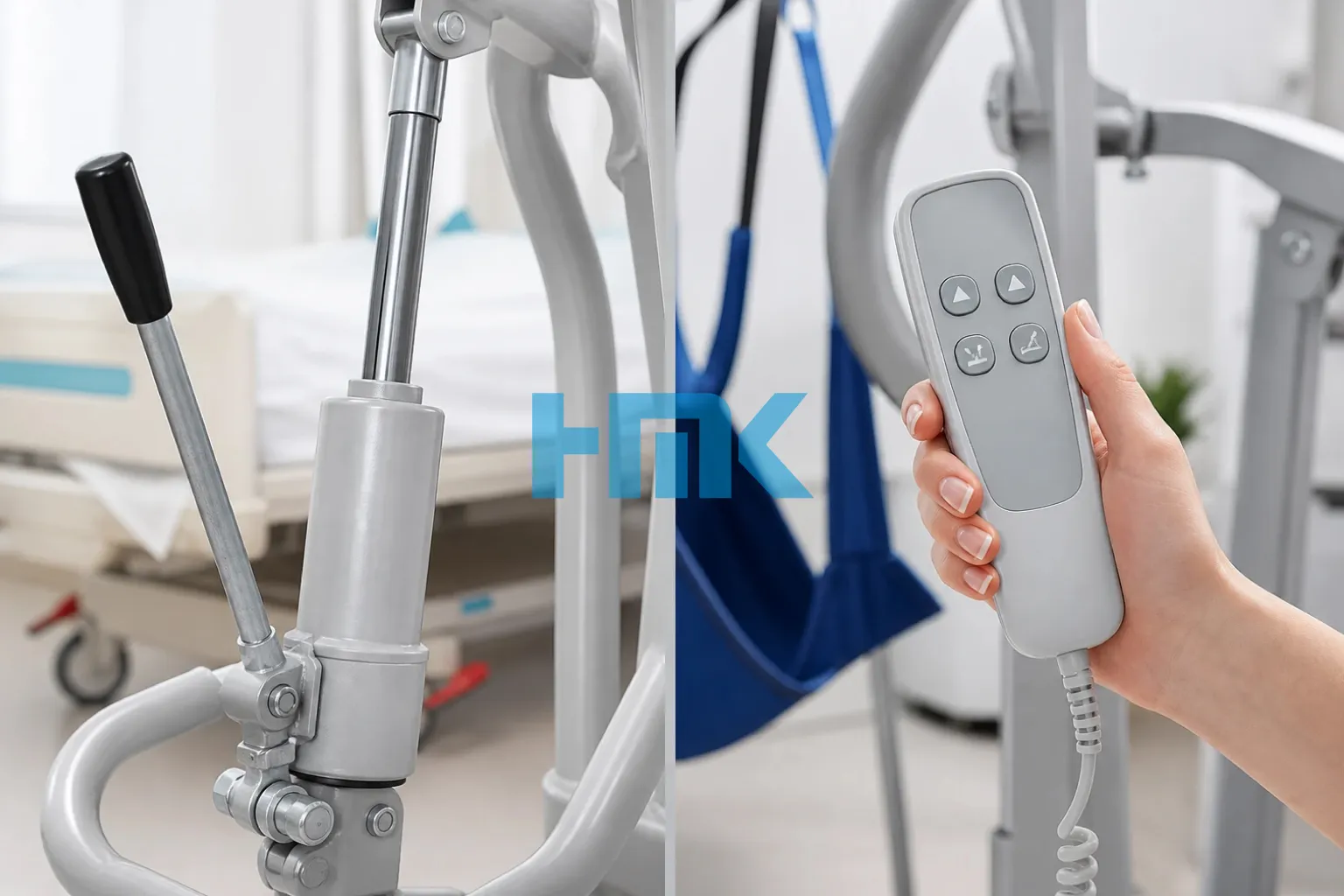
Manual patient lifts
Manual lifts typically use a hydraulic pump operated by hand. They are often simpler, less expensive, and do not depend on batteries or charging.
Advantages:
- lower purchase price
- fewer electronic parts
- useful in low-use settings
- reliable when power is unavailable
Limitations:
- more caregiver effort required
- slower transfer process
- can be tiring during frequent use
Electric patient lifts
Electric models use a motor and rechargeable battery or direct power source. They are often preferred for regular use because they reduce caregiver strain and improve convenience.
Advantages:
- easier operation
- less physical effort
- smoother lifting motion
- better for frequent transfers
Limitations:
- higher cost
- requires charging or power access
- more components that may need maintenance
In practice, electric lifts are often preferred for daily care, while manual systems may suit occasional use or tighter budgets. The best choice depends on transfer frequency, caregiver strength, and the user’s mobility level.
Which Option Is Better?
There is no single best answer for every situation. The right patient lift depends on where it will be used, how often it will be used, and what type of transfers are needed.
A ceiling-mounted lift is often better when:
- transfers happen every day
- floor space is limited
- caregiver strain is a major concern
- the room layout is stable
A mobile lift may be better when:
- flexibility is important
- the budget is limited
- the lift must move between rooms
- installation is not possible
For many families, the decision comes down to balancing convenience, cost, and long-term care needs.
Safety and Comfort Considerations
No matter which system you choose, safe use depends on proper training, the right sling, and regular maintenance. Comfort also matters. A good lift system should support stable posture, minimize pressure points, and make the transfer feel calm and controlled.
Helpful factors to consider include:
- sling size and material
- weight capacity
- turning radius
- battery life or hydraulic ease
- compatibility with beds, chairs, and toilets
- cleaning and maintenance requirements
Conclusion
Both ceiling-mounted and mobile systems offer valuable support for safe transfers, but they solve different problems. Ceiling-mounted lifts excel in space efficiency, smooth movement, and frequent use, while mobile lifts stand out for flexibility, lower upfront cost, and portability. Manual and electric models add another layer of choice, with electric systems generally offering easier operation and manual versions providing a simpler, more budget-friendly option.
If your priority is daily convenience and long-term comfort, a ceiling-mounted setup may be the stronger choice. If you need adaptability and lower installation requirements, a mobile lift may be the better fit. In either case, selecting the right patient lift can greatly improve safety, dignity, and care quality.
FAQ
1- What is the main difference between ceiling-mounted and mobile patient lifts?
Ceiling-mounted lifts use overhead tracks, while mobile lifts use a wheeled base and can be moved from room to room.
2- Are ceiling-mounted patient lifts better for small rooms?
Yes, because they save floor space and reduce clutter during transfers.
3- Are mobile patient lifts easier to install?
Yes, they usually require no installation and can be used right away.
4- Which is better for frequent use?
Ceiling-mounted lifts are often better for frequent transfers because they are efficient and reduce caregiver effort.
5- Should I choose a manual or electric patient lift?
Electric lifts are usually easier for regular use, while manual lifts can be a practical option for lower budgets or occasional transfers.
6- Do patient lifts require training?
Yes, caregivers should be trained on sling use, transfer technique, and safety checks.
Hamyar Mechanic Koosha Editorial Team
Specialized content team in biomedical engineering and rehabilitation
Hamyar’s editorial team consists of biomedical engineering experts who provide practical, technical content in plain language to raise public awareness.
Related Articles
No articles found.