
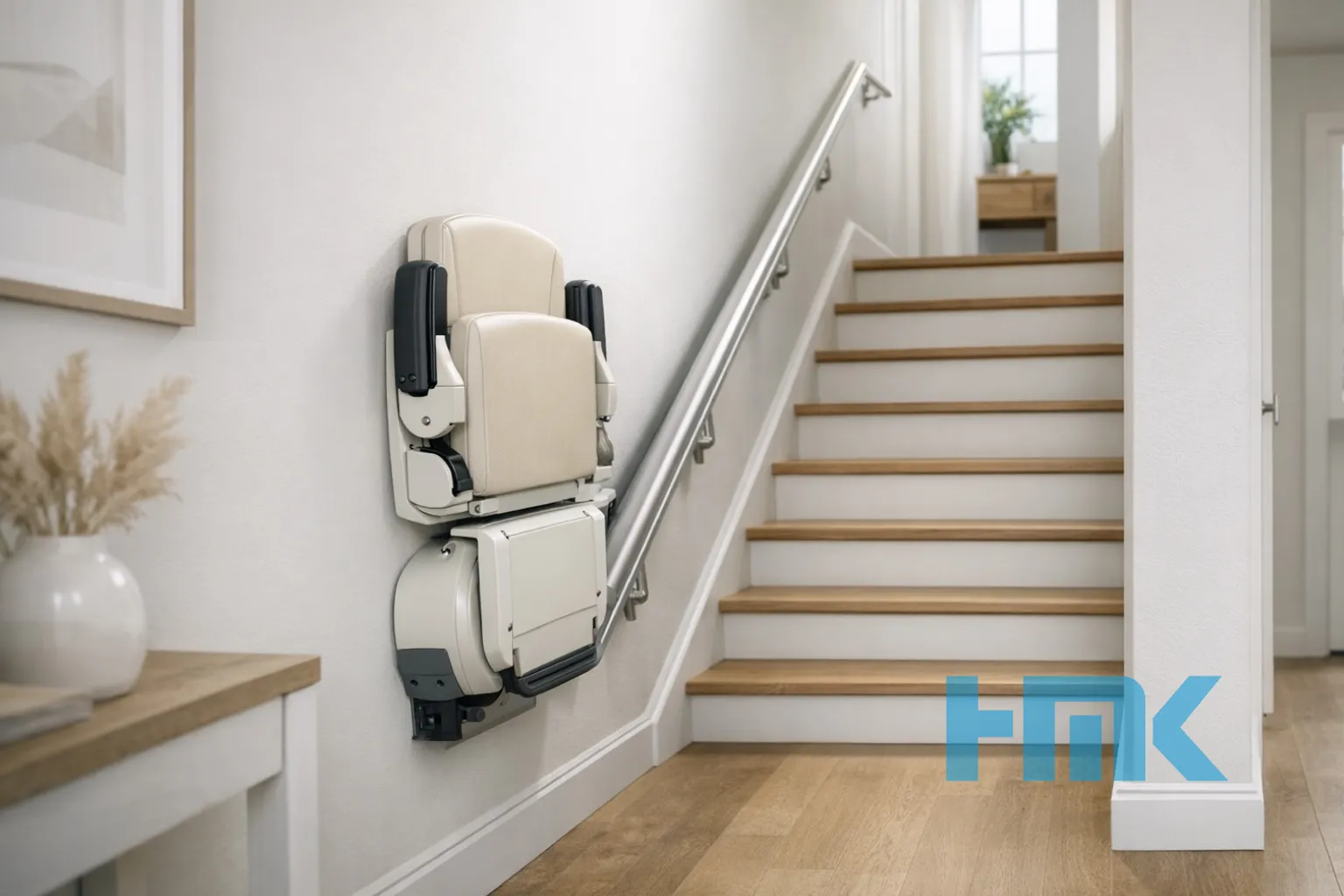
For many homeowners, the concept of a multi-story home becomes challenging when mobility issues arise. The staircase, once a simple feature of the home’s architecture, can transform into a formidable barrier. However, the advancement of home accessibility technology has brought us the modern stairlift, a lifeline that restores independence. But what if your staircase is narrow? What if you are worried that a mobility device will clutter your hallway? The answer lies in the engineering of folding stairlifts and space-saving designs.
This guide explores how modern mobility solutions are evolving to fit tight spaces without compromising safety, comfort, or style.
Space-Saving importance
When we talk about "home accessibility," we aren't just talking about getting from point A to point B. We are talking about maintaining dignity and independence within your own home. For those living in older properties, Victorian townhouses, or compact apartments, the staircase is often the most restrictive part of the house.
A traditional stairlift installation can sometimes feel imposing, especially on narrow flights where space is at a premium. This is why the rise of folding, compact, and low-profile designs has revolutionized the industry. These devices ensure that when the lift is not in use, the staircase remains accessible for other family members, keeping the hallway clear and clutter-free.
Types of Stairlifts for Narrow Spaces
Understanding the specific types of stairlift available is the first step toward finding the right fit for your home. Not all mobility aids are built the same, and the structural integrity of your staircase often dictates which model is most appropriate.
1. Straight Rail Stairlifts
The most common and cost-effective type, straight rail systems are designed for staircases that travel in a single, unbroken line. In narrow homes, manufacturers now produce "ultra-slim" tracks that take up minimal footprint on the stairs, allowing others to pass by more easily.
2. Curved Stairlifts
If your staircase has a landing, a bend, or a spiral, a curved rail is necessary. While traditionally bulky, modern custom-built curved rails are designed to hug the inside of the staircase radius as tightly as possible. This "tight-turn" engineering is crucial for homeowners who cannot sacrifice precious hallway space.
3. Folding or Retractable Rail Stairlifts
This is the "gold standard" for space-saving design. If your staircase has a doorway at the bottom, a standard rail might block the entrance. A powered, retractable, or folding rail automatically lifts out of the way when the stairlift is parked at the top, ensuring that the hallway remains completely clear.
4. Perch Stairlifts
For individuals who have difficulty bending their knees or sitting down for long periods, a perch stairlift allows the user to travel in a semi-standing position. These units are inherently thinner than traditional seat models, making them an excellent choice for extremely narrow corridors where a standard seat might be too wide.
Key Design Features
When you are in the market for a stairlift, the design features matter as much as the motor. Here is what to look for when you need to save space:
- Foldable Footrests and Seats: The ability to fold the seat, armrests, and footrest against the wall when not in use is non-negotiable for narrow stairs. Look for models with "linked" folding mechanisms, where one movement folds everything at once.
- Slimline Carriage Profiles: The carriage, the part of the machine that houses the motor, has become significantly smaller over the last decade. A slimline carriage ensures that the user's knees do not hit the banister or the wall during the ascent.
- Wall-Mounted vs. Stair-Mounted Rails: Most lifts are mounted directly to the stairs (the treads), but in rare cases where the staircase cannot support the weight, wall-mounted options exist. These can sometimes offer a cleaner look for very narrow, enclosed stairwells.
The Importance of Professional Assessment
You might be tempted to browse catalogs and order a unit online, but with narrow staircases, precision is everything. A professional assessment is vital. A mobility specialist will measure the staircase width, the angle of the incline, and the clearance at the top and bottom of the landing.
They will also check for potential obstructions, such as radiators, protruding light fixtures, or narrow doorways. Professional installation ensures that the rail is mounted exactly where it needs to be to maximize the available width of the staircase.
Maintenance
Once installed, your stairlift requires minimal maintenance, but it does need care to stay reliable.
- Battery Management: Modern lifts use rechargeable batteries that keep the device running even during a power cut. Ensure the unit is always parked at a charging point.
- Track Cleaning: Keep the rail free of dust and debris. A clean track ensures a smoother ride and reduces wear on the motor’s drive system.
- Annual Servicing: Just like a car, your mobility device should be serviced annually by a certified technician to ensure safety sensors and emergency stop buttons are fully functional.
Conclusion
A narrow staircase doesn't have to be a barrier to your home life. With the advent of folding stairlifts, retractable rails, and slimline designs, you can regain your independence without losing the aesthetic or functional value of your hallway. By understanding the different types of systems available and prioritizing professional installation, you are making an investment in your safety and quality of life.
Remember, the goal is not just to install a piece of machinery; it is to create a seamless, worry-free environment where you can move freely between floors, day or night.
FAQ
1- Can a stairlift be installed on very narrow stairs?
Yes. Many manufacturers specialize in ultra-slim designs specifically for narrow staircases. Features like perch seats or slimline carriages often provide the clearance needed. A site survey by a professional is the only way to confirm if your specific staircase meets the minimum width requirements.
2- What happens to the staircase when I’m not using the stairlift?
Most modern units are designed to be "parked" at the top or bottom of the stairs. The seat, armrests, and footplate fold away flat against the wall, leaving the staircase usable for other family members.
3- Will the rail block the doorway at the bottom of the stairs?
If a doorway is located at the foot of your stairs, a standard fixed rail would indeed be a trip hazard. However, you can opt for a "hinged rail" or "powered retractable rail" that automatically lifts or folds away, clearing the floor space completely.
4- How much does a space-saving stairlift cost?
The price varies significantly depending on whether your staircase is straight or curved, the length of the rail, and the features you select. It is best to get a customized quote after a home survey to ensure you aren't paying for features you don't need.
5- Is the installation process invasive?
No. Most stairlifts are mounted directly to the treads of the stairs, not the wall, meaning there is no structural work or damage to your wallpaper or paint. Installation is usually completed in a single day.
Hamyar Mechanic Koosha Editorial Team
Specialized content team in biomedical engineering and rehabilitation
Hamyar’s editorial team consists of biomedical engineering experts who provide practical, technical content in plain language to raise public awareness.
Related Articles
No articles found.