

Discover the perfect mobility solution for your home. Our guide explores the key differences between three types of stairlift straight, curved, and outdoor stairlifts, helping you choose the right model to improve safety, comfort, and independence for every staircase.
This guide explains the main types of stairlifts, straight, curved, and outdoor models, so you can understand how each one works, what makes them different, and which option may be best for a particular home. If you are researching mobility aids, home accessibility, or senior living solutions, learning about these models can help you make a more informed decision.
What Is a Stairlift?
A stairlift is a motorized chair or platform that moves along a rail fitted to a staircase. It allows a person to travel up and down stairs without climbing them. Most residential stairlifts are designed for one user at a time and come with safety features such as seat belts, swivel seats, obstruction sensors, and smooth start-and-stop controls.
Stairlifts are often recommended for people who have reduced balance, joint pain, muscle weakness, or difficulty lifting their legs. They are also useful for households wanting to make a property more accessible without major structural changes.
Why Stairlift Choice Matters
Choosing the correct stairlift model is important because every staircase is different. A straight staircase may require a simple rail, while a staircase with turns, landings, or spirals needs a custom-built solution. Outdoor stairs add another layer of complexity because the lift must withstand weather conditions like rain, heat, and frost.
The right stairlift should fit the staircase well, provide a comfortable ride, and suit the user’s daily needs. It should also offer long-term reliability and low maintenance, especially for people who depend on it every day.
1. Straight Stairlifts
Straight stairlifts are the most common and usually the simplest type. They are designed for staircases that go directly from one floor to another without any curves, corners, or intermediate landings.
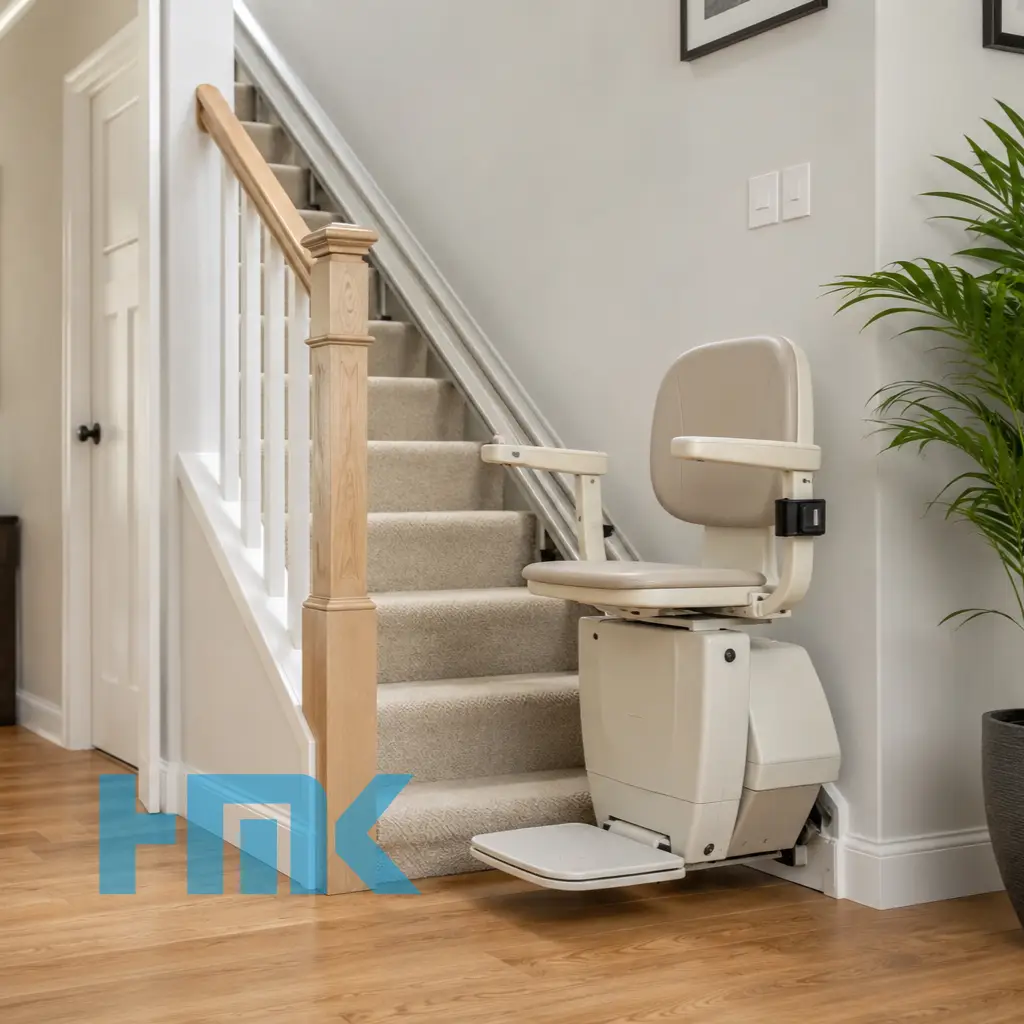
How straight stairlifts work
A straight stairlift runs on a rail that is mounted directly onto the stair treads or wall side of a straight staircase. Since the rail does not need to bend or change direction, installation is typically faster and less complex than with other models.
Key benefits of straight stairlifts
One of the biggest advantages of straight stairlifts is affordability. Because the design is standard and the installation process is straightforward, they are often the most budget-friendly option. They also tend to be available more quickly than custom models.
Other benefits include:
- Fast installation
- Simple operation
- Lower cost compared with custom stairlift systems
- Compact design for narrow staircases
- Reliable daily use
Best suited for
Straight stairlifts are ideal for homes with a single, uninterrupted staircase. They are a practical choice for users who need a dependable mobility aid without requiring a custom rail.
Things to consider
While straight stairlifts are efficient and cost-effective, they cannot be used on stairs that turn or have landings. They are also less adaptable for unusual staircase layouts. If the staircase includes a curve, even a small one, a straight model will not fit properly.
2. Curved Stairlifts
Curved stairlifts are designed for staircases that bend, turn, or include landings. These are more complex than straight models because the rail must be customized to follow the exact shape of the staircase.
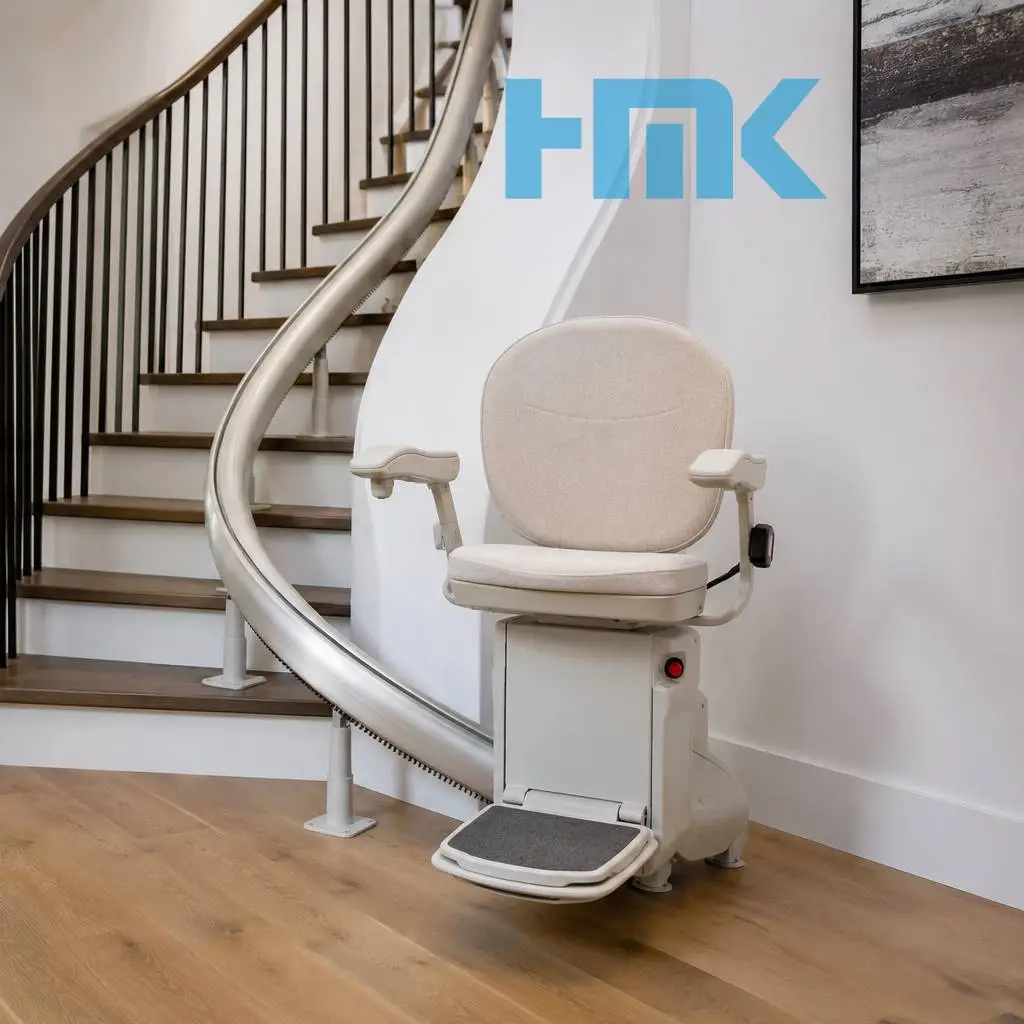
How curved stairlifts work
A curved stairlift uses a rail that is manufactured specifically for the home. Measurements are taken carefully so the rail can follow every turn, spiral, or landing with precision. This custom fitting allows the chair to travel smoothly around bends without interruption.
Key benefits of curved stairlifts
Curved stairlifts offer a highly tailored solution for homes with unique staircase designs. They provide access where a standard lift would not work and help preserve independence in multi-level homes.
Their benefits include:
- Custom-made rail for exact staircase shape
- Smooth travel around corners and landings
- Suitable for complex or spiral stairs
- Long-term accessibility for unusual layouts
- Comfortable ride tailored to the home
Best suited for
Curved stairlifts are the right choice for staircases with one or more turns, split-level landings, or spiral patterns. They are commonly used in homes where the staircase design is architecturally distinctive.
Things to consider
Because curved stairlifts are custom-built, they generally cost more than straight stairlifts. The design and manufacturing process also takes longer. However, for homeowners with curved staircases, this is usually the only practical indoor lift option
If you are comparing mobility solutions, it is useful to think of curved stairlifts as a made-to-measure product rather than an off-the-shelf one.
3. Outdoor Stairlifts
Outdoor stairlifts are built for exterior steps, porches, garden paths, and access points leading into the home. They are especially useful where the entry to a property includes stairs that can be difficult to navigate safely.
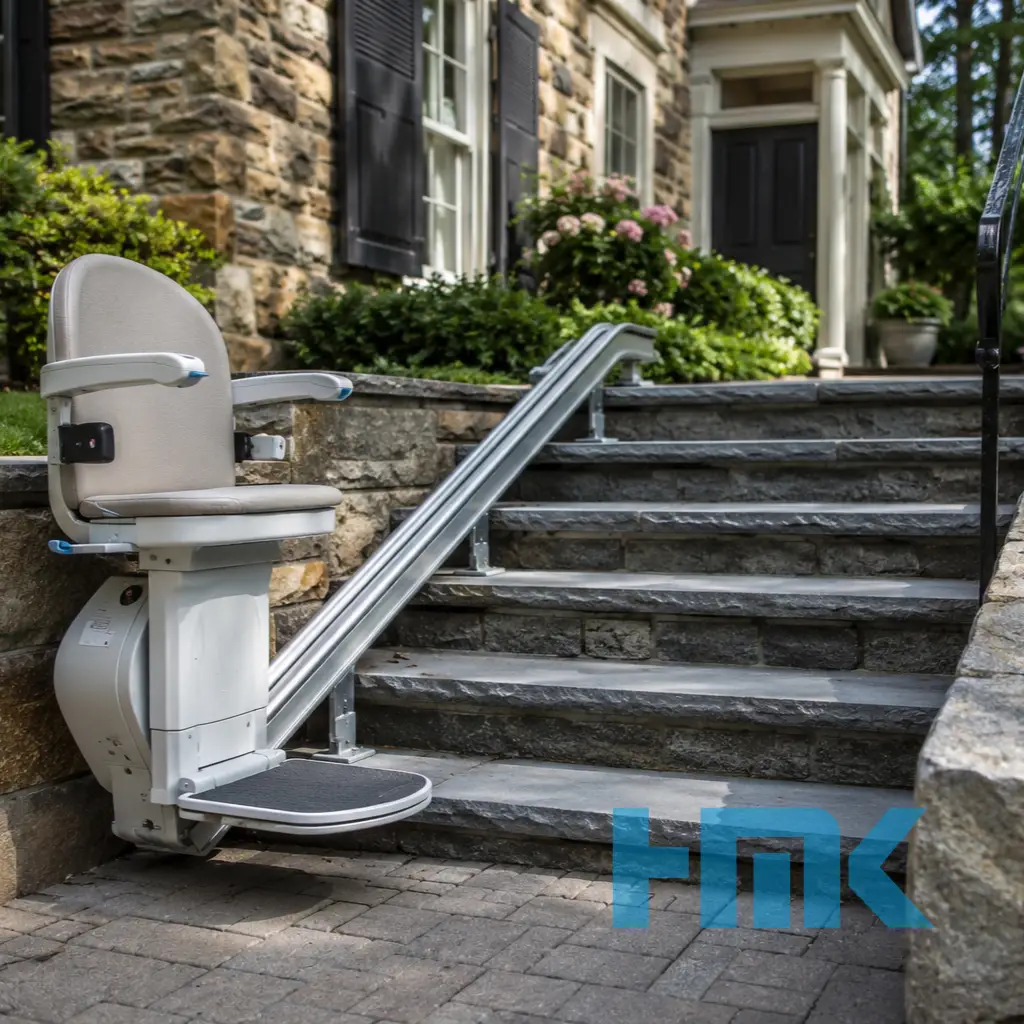
How outdoor stairlifts work
Outdoor models are similar to indoor stairlifts in function, but they are made with weather-resistant materials and protective features. The rail, seat, and mechanical components are designed to cope with rain, humidity, sunlight, and changing temperatures.
Key benefits of outdoor stairlifts
Outdoor stairlifts can greatly improve access to a home’s entrance or garden area. They are a strong option for people who want to move safely between outdoor levels without relying on help from others.
Main benefits include:
- Weather-resistant construction
- Safe access to front doors, patios, and garden steps
- Durable materials for outdoor use
- Improved independence around the home
- Useful for homes with steep exterior staircases
Best suited for
Outdoor stairlifts are ideal for homes with steps leading from a driveway, front porch, backyard, or patio. They can also be helpful in properties where the main entrance is not at ground level.
Things to consider
Outdoor stairlifts need regular maintenance to stay in good condition, especially in areas with harsh weather. Protective covers are often recommended when the lift is not in use. It is also important to ensure that the model is specifically approved for external use, since indoor stairlifts should not be installed outdoors.
All types comparison
Each type of stairlift serves a different purpose. Straight stairlifts are best for simple staircases, curved stairlifts are designed for more complex indoor layouts, and outdoor stairlifts are made for exterior access.
Here is a simple comparison:
| Type of stairlift | Best for | Main advantage | Main limitation |
|---|---|---|---|
| Straight | Direct stairs without turns | Lower cost and quick installationCannot fit curved stairs | |
| Curved | Staircases with turns or landings | Custom fit for complex layoutsHigher cost and longer lead time | |
| Outdoor | Exterior steps and access areas | Weather-resistant and durableRequires maintenance for outdoor exposure | >
When selecting a model, the staircase layout is the first thing to consider. After that, think about the user’s comfort, the available space, the installation process, and long-term upkeep.
Features to Look for in a Stairlift
Although the stairlift type matters most, certain features can improve comfort and safety across all models.
Swivel seat
A swivel seat makes it easier to get on and off the lift at the top of the stairs. It also reduces the need to twist awkwardly.
Safety belt
A secure belt helps keep the user safely seated during travel.
Folding seat and footrest
These features help save space when the stairlift is not in use, which is useful on narrow staircases.
Obstruction sensors
Sensors can stop the stairlift if something is in the way, reducing the risk of damage or accidents.
Battery backup
Battery-powered systems can keep the lift working during a power outage, which is especially useful for users who rely on it daily.
Remote controls
Remote controls make it easy to call the stairlift to the top or bottom of the stairs when needed.
Who Benefits Most from a Stairlift?
Stairlifts are helpful for a wide range of people, including older adults, people recovering from surgery, and those living with chronic mobility challenges. They can also benefit caregivers by reducing the physical strain of helping someone up and down stairs.
People often choose stairlifts when they want to stay in their own home instead of moving to a single-level property. In that sense, stairlifts support aging in place, home safety, and independent living.
Installation and Maintenance
A stairlift should be installed by a trained professional to ensure proper fit and safe operation. Installation time depends on the model. Straight stairlifts may be installed quickly, while curved stairlifts take longer because the rail must be custom-made.
Regular maintenance is also important. Common upkeep includes checking the rail, battery, seat, safety belt, and controls. Outdoor stairlifts may need additional care to prevent weather-related wear and tear.
A well-maintained stairlift can provide dependable service for many years. Routine inspections can also help catch small issues before they become larger problems.
Choosing the Right Stairlift
To choose the best stairlift, begin by looking closely at your staircase. Ask these questions:
- Is the staircase straight or curved?
- Are there landings or turns?
- Is the lift needed indoors or outdoors?
- How much space is available?
- What safety features matter most?
- Is long-term maintenance manageable?
A professional assessment can help identify the most suitable option. In many cases, the staircase design will clearly point to the correct model. Straight stairs call for a straight stairlift, while more complex layouts usually require a curved lift. Outdoor access needs a purpose-built exterior model.
It is also worth considering the user’s physical needs. For example, someone with limited knee mobility may need extra seat height or a powered swivel seat. Someone who uses the lift frequently may want a model with battery backup and easy remote controls.
Conclusion
Stairlifts are a valuable mobility solution for people who want safer and easier access to different levels of their home. The main types, straight, curved, and outdoor models, each serve a specific purpose. Straight stairlifts are best for simple staircases, curved stairlifts are custom-made for complex layouts, and outdoor stairlifts provide reliable access to exterior steps.
Choosing the right stairlift comes down to staircase design, user needs, and where the lift will be used. Instead of solely focusing on stairlift cost, By focusing on comfort, safety, and practicality, homeowners can select a solution that supports independence and improves daily life. Whether the goal is to make an indoor staircase easier to manage or to create safe access to the front entrance, the right stairlift can make a meaningful difference.
FAQ
1. What is the difference between a straight and curved stairlift?
A straight stairlift is made for staircases without turns, while a curved stairlift is custom-built for stairs with bends, landings, or spirals.
2. Can a stairlift be installed on narrow stairs?
Yes, many stairlift models are designed with compact rails and folding components to suit narrow staircases. A professional assessment is recommended.
3. Are outdoor stairlifts waterproof?
Outdoor stairlifts are weather-resistant, not usually fully waterproof. They are built to handle outdoor conditions, but protective covers and regular maintenance are important.
4. How long does it take to install a stairlift?
Straight stairlifts can often be installed quickly, sometimes within a day. Curved stairlifts take longer because the rail must be custom manufactured.
5. Do stairlifts require a lot of maintenance?
Most stairlifts need only basic maintenance, such as cleaning, checking the battery, and ensuring the rail is clear. Outdoor models may require more frequent care.
6. Can a stairlift be removed later?
Yes, stairlifts can usually be removed if no longer needed. The staircase is generally left in usable condition after removal.
Hamyar Mechanic Koosha Editorial Team
Specialized content team in biomedical engineering and rehabilitation
Hamyar’s editorial team consists of biomedical engineering experts who provide practical, technical content in plain language to raise public awareness.
Related Articles
No articles found.