
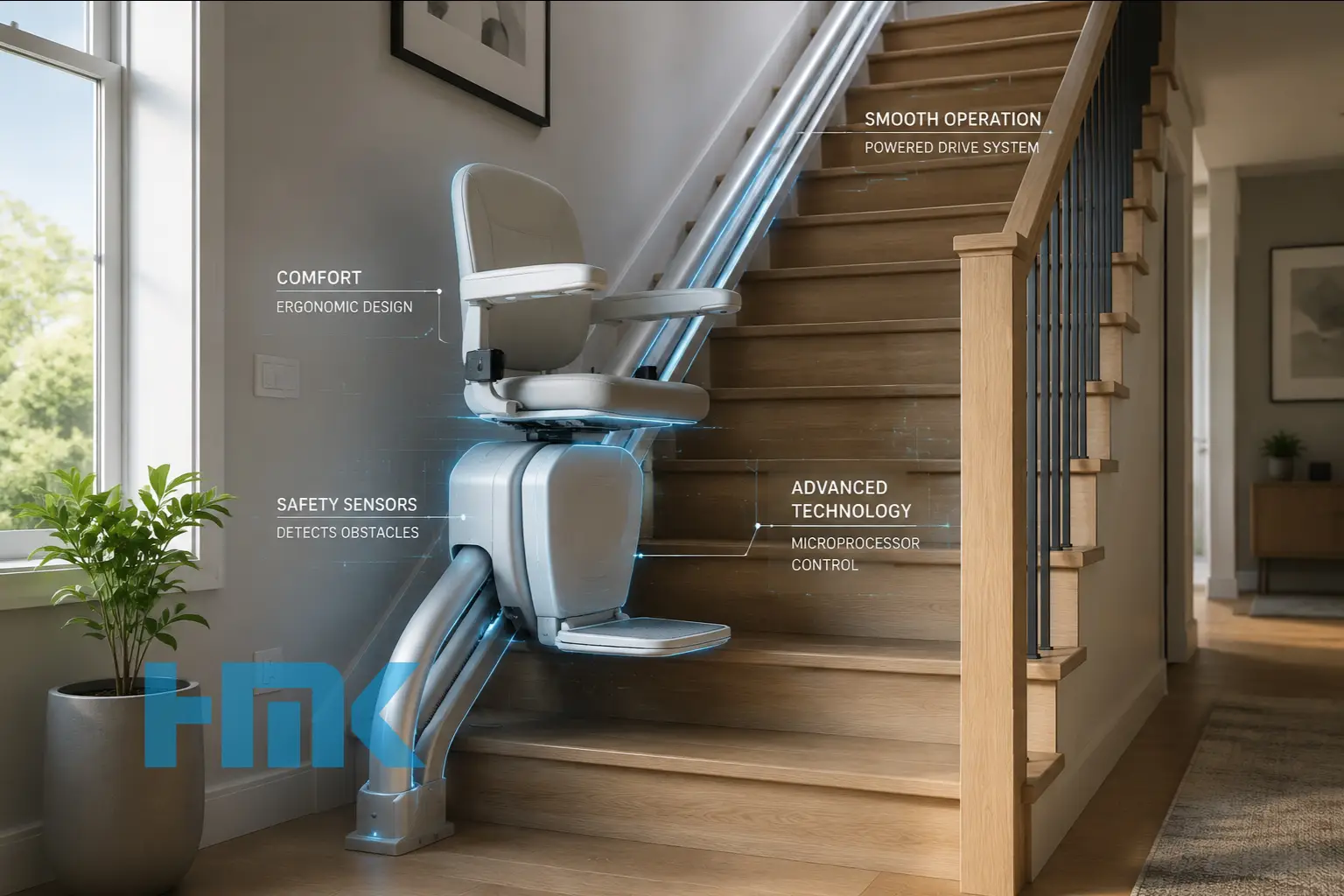
Mobility challenges can make everyday tasks feel overwhelming, especially when stairs become a daily obstacle. For many people, a stairlift provides a practical, safe, and reliable way to move between floors without strain or risk. But while most people are familiar with the seat that glides up and down the staircase, few understand the sophisticated technology working quietly behind the scenes.
In this in-depth guide, we’ll explore how a stairlift operates, the engineering principles that ensure safety and comfort, and the components that make smooth movement possible. Whether you’re considering installing one for your home or simply curious about how these mobility solutions function, this article will give you a complete overview.
What Is a Stairlift?
A stairlift is a motorized chair system mounted to a staircase that transports users safely between levels. Unlike elevators, which require structural modifications, a stairlift is installed directly onto the stair treads using a rail system. It’s designed for individuals with limited mobility, seniors aging in place, or anyone recovering from injury who struggles with climbing stairs.
Modern stairlifts come in various configurations:
- Straight stairlifts for standard staircases
- Curved stairlifts for staircases with turns or landings
- Outdoor stairlifts designed for weather resistance
- Standing or perch models for users with limited knee flexibility
At first glance, the system may appear simple, but the internal technology is remarkably advanced.
Also read : stairlift guide
The Core Components of a Stairlift
Understanding how a stairlift works starts with examining its key parts. Each component plays a critical role in delivering safe, smooth, and reliable motion.
1. The Rail (Track System)
The rail is the backbone of the system. Contrary to common belief, a stairlift is mounted on the stairs, not the wall. The rail is secured to the stair treads using brackets.
\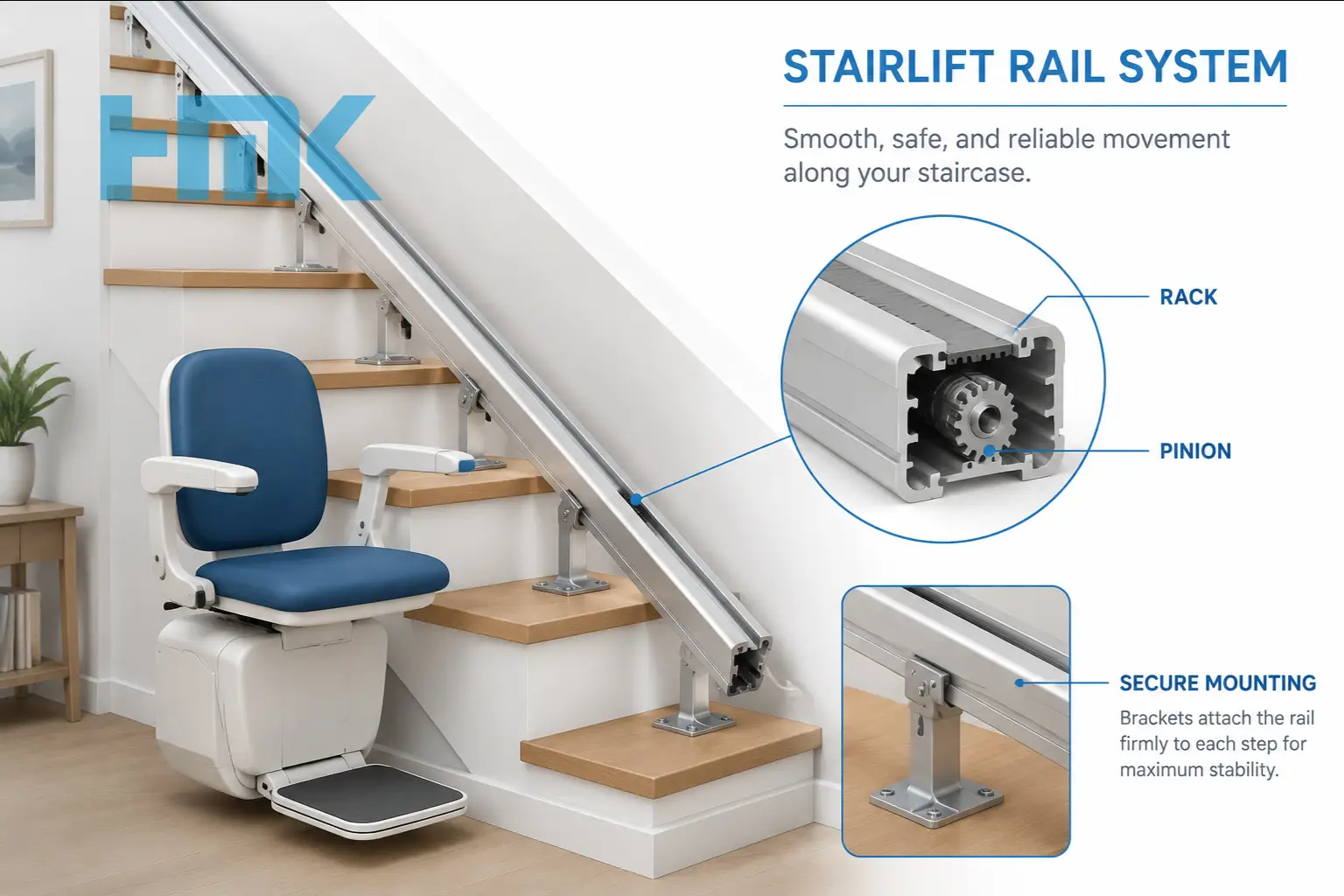
Key Features of the Rail:
- Made from aluminum or steel for durability
- Custom-built for curved staircases
- Contains a gear rack or cable system
- May include a folding design to save space
Inside or along the rail, you’ll typically find a rack-and-pinion mechanism, a crucial technology that allows controlled movement.
2. The Motor
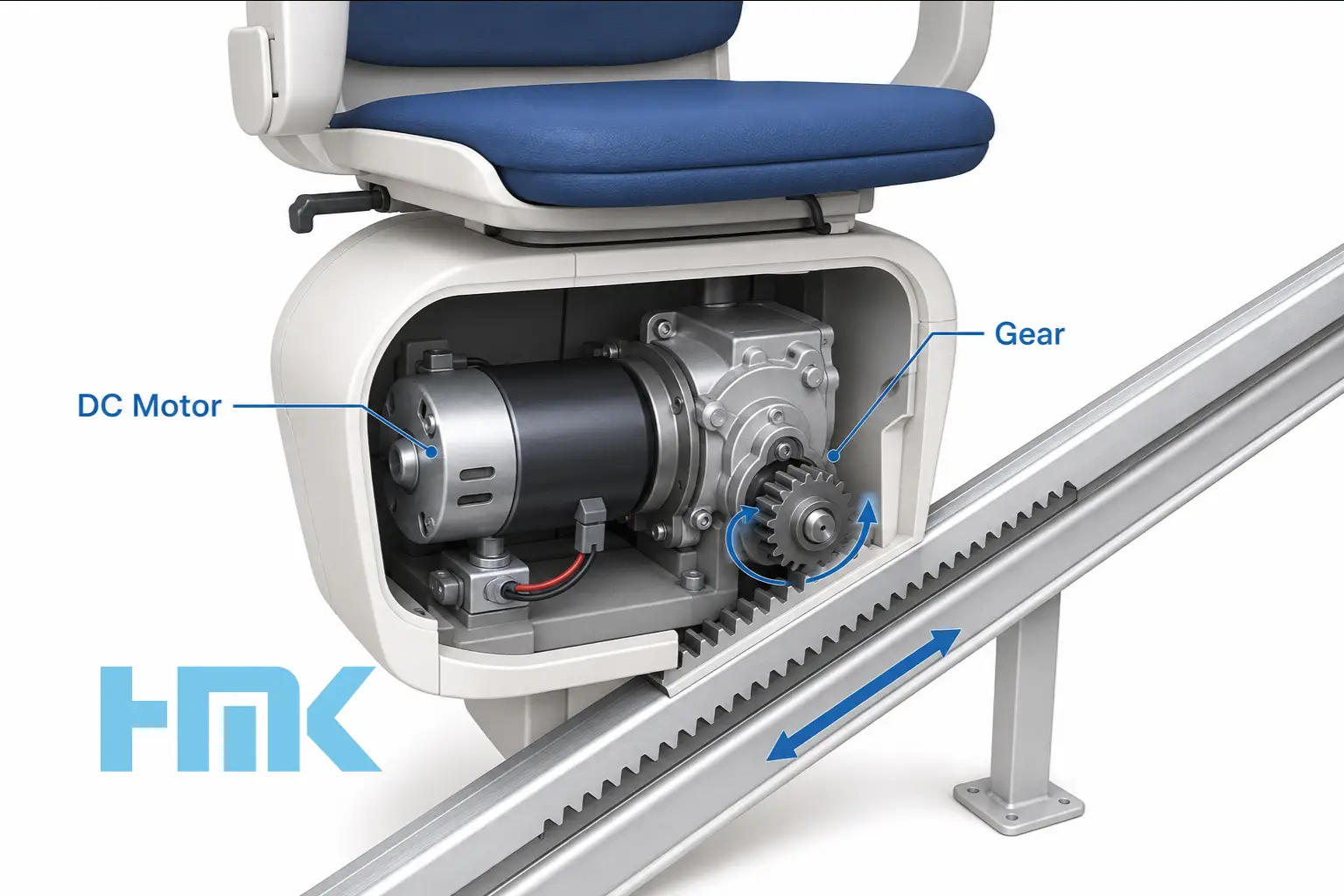
The motor is what powers the stairlift. It is usually housed in the base of the chair.
How It Works:
Most modern stairlifts use a DC (direct current) motor, powered by rechargeable batteries. The motor rotates a gear that meshes with the gear rack along the rail. This interaction creates controlled linear movement.
The motor:
- Operates quietly
- Provides consistent torque
- Adjusts speed for smooth starts and stops
Because stairlifts operate on DC power, they continue functioning even during a power outage.
3. The Transmission System
The motor alone isn’t enough. A stairlift includes a transmission (gearbox) that reduces the motor’s high-speed rotation into slow, powerful motion suitable for lifting a person safely.
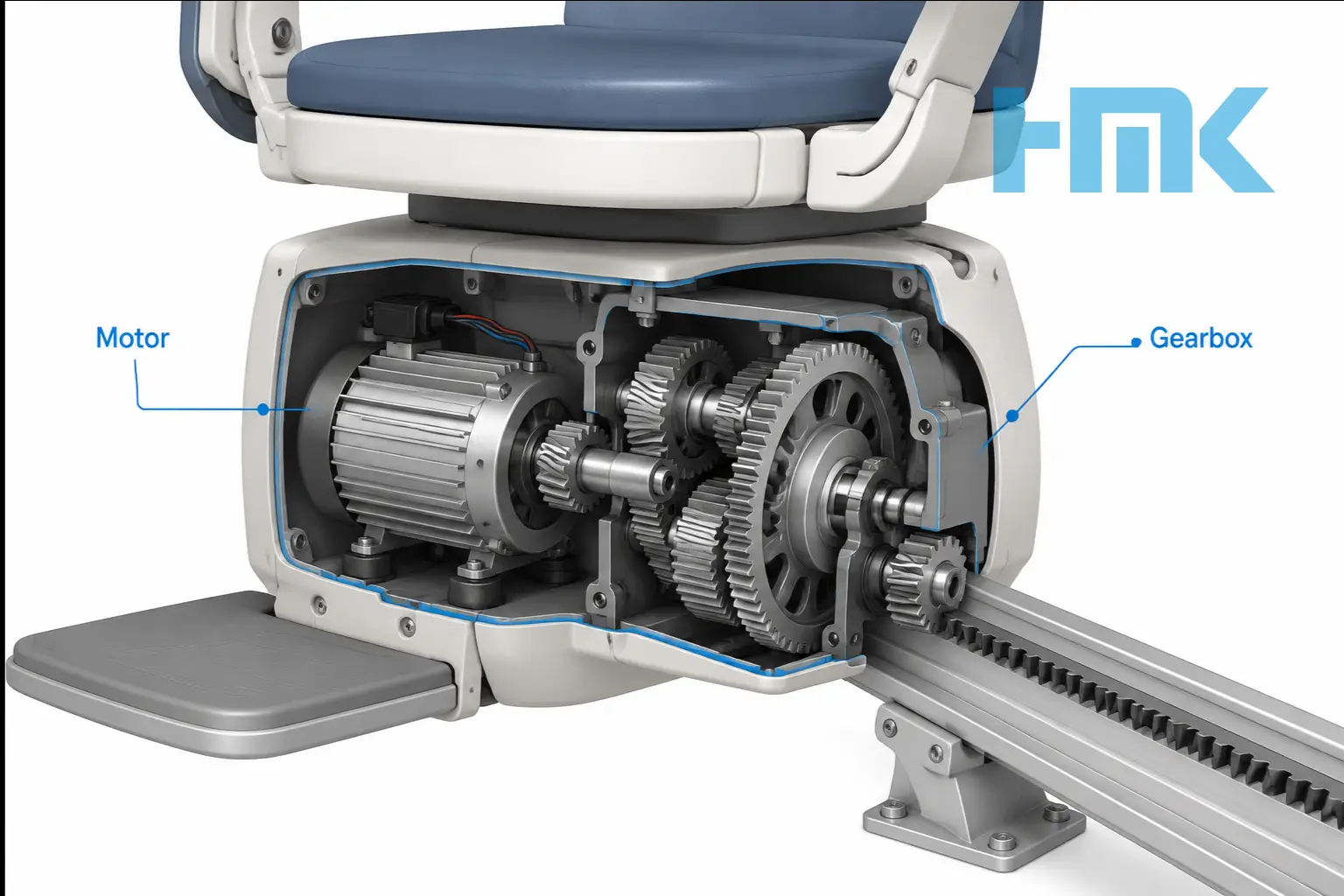
Why a Gear Reduction System Is Important:
- Increases torque
- Controls speed
- Prevents jerky motion
- Enhances safety
Without gear reduction, the chair would move too quickly to be safe or comfortable.
4. Battery and Charging System
Most stairlifts today are battery-powered, even though they plug into a household outlet.
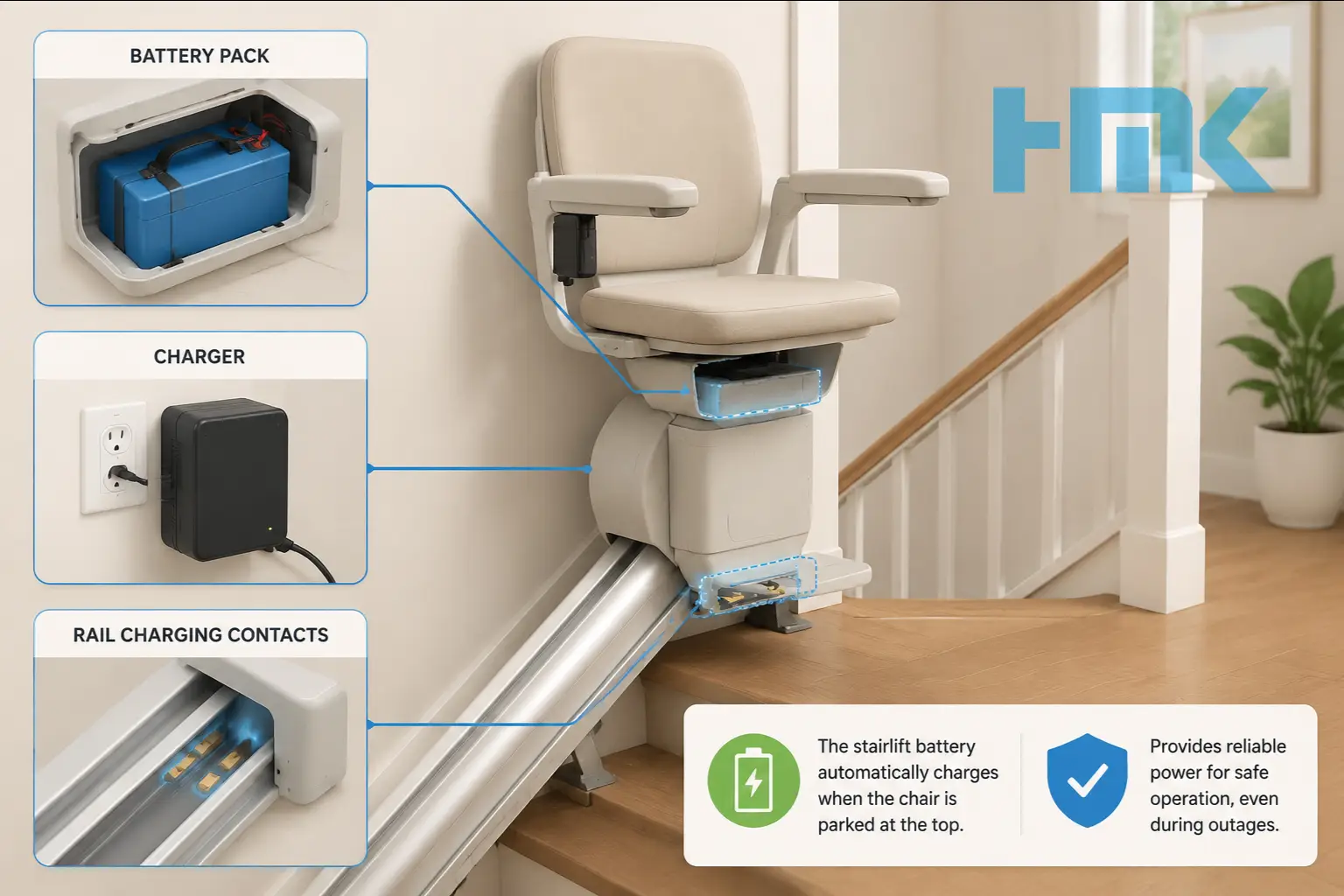
How the Charging Works:
- The unit charges automatically when parked
- Charging contacts are located at the top or bottom of the rail
- Batteries are typically sealed lead-acid or lithium-ion
- A full charge can handle multiple trips
Battery operation ensures uninterrupted mobility, even during electrical outages.
5. Control System and User Interface
Stairlifts are equipped with intuitive controls designed for simplicity.
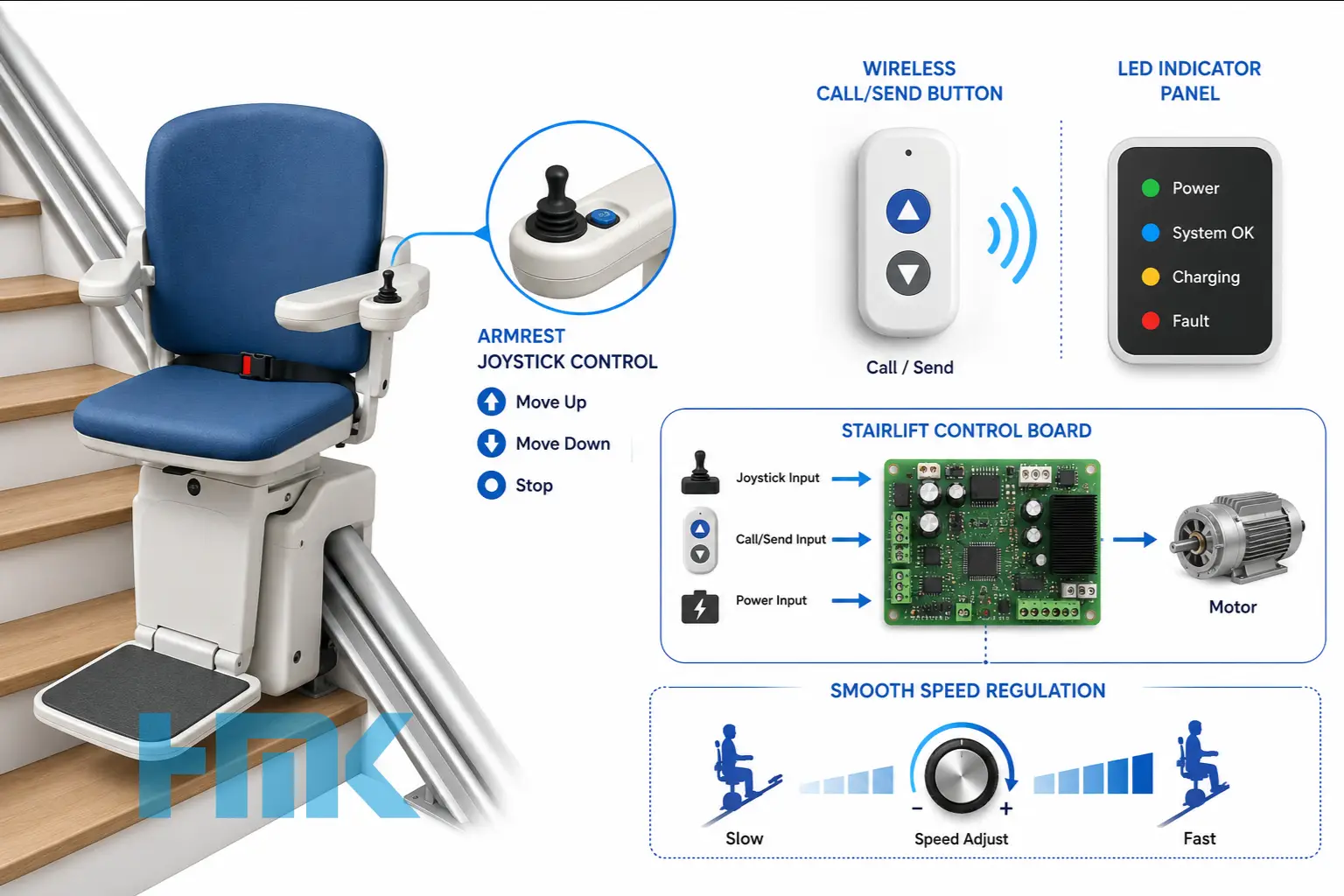
Common Control Features:
- Armrest joystick or rocker switch
- Remote call/send stations
- Wireless controls
- LED indicators for diagnostics
The control board regulates speed, monitors safety sensors, and ensures smooth acceleration and deceleration.
Safety Technology Inside a Stairlift
Safety is the most critical aspect of stairlift engineering. Manufacturers integrate multiple redundant systems to protect users.
1. Seat Belt and Swivel Seat
A seat belt keeps the rider secure during travel. Many models also feature a swivel seat at the top landing, allowing users to exit safely away from the staircase.
Swivel mechanisms often include:
- Manual or powered rotation
- Locking positions
- Safety interlocks preventing movement unless locked
2. Obstruction Sensors
Stairlifts are equipped with pressure-sensitive safety edges.
How They Work:
If the footrest or carriage detects an obstacle (like a dropped object on the stairs), the lift automatically stops.
- These sensors:
- Prevent damage
- Protect pets and children
3. Overspeed Governor
An overspeed governor acts like an emergency brake. If the unit moves faster than its programmed speed (due to mechanical failure), the system engages automatically.
This mechanical safeguard ensures:
- Controlled descent
- Automatic braking
- User protection even in rare failure scenarios
4. Soft Start and Stop Technology
Modern stairlifts use microprocessor-based control systems that enable gradual acceleration and deceleration.
Benefits include:
- Reduced jerking
- Improved comfort
- Less mechanical wear
This feature is especially helpful for users with balance issues or joint pain.
How Movement Happens: Step-by-Step
To better understand how a stairlift works, let’s break down what happens during operation:
- The user presses the control switch.
- The onboard computer checks safety systems.
- Power flows from the battery to the motor.
- The motor turns the gearbox.
- The gearbox rotates the drive gear.
- The gear engages with the rack on the rail.
- The chair glides smoothly along the track.
- Sensors monitor speed and obstacles.
- The lift slows gently at the destination.
This entire sequence happens seamlessly within seconds.
Types of Drive Systems in Stairlifts
Not all stairlifts use identical drive mechanisms. Here are the most common systems:
Rack-and-Pinion System
The most popular design. A gear (pinion) meshes with a toothed rack along the rail.
Advantages:
- Durable
- Reliable
- Low maintenance
Cable-Driven System
Uses a steel cable to pull the chair along the track.
Advantages:
- Smooth ride
- Less visible mechanical components
Chain-Driven System
Operates similarly to a bicycle chain system.
Advantages:
- Strong pulling force
- Suitable for heavier capacities
Each technology achieves the same goal: stable and controlled stair transportation.
Installation and Structural Considerations
One common misconception is that installing a stairlift requires major home renovation. In reality:
- Installation typically takes a few hours
- No structural wall changes are required
- The system mounts to the stairs
- Units can often be removed without damage
For curved staircases, a custom rail is fabricated based on precise measurements or digital scans.
Maintenance and Longevity
A stairlift is built for durability. With proper maintenance, it can last many years.
Routine Maintenance Includes:
- Battery replacement every 2–5 years
- Rail cleaning
- Safety checks
- Lubrication (if required)
Most manufacturers recommend annual servicing to ensure optimal performance.
Energy Efficiency and Power Consumption
Stairlifts are surprisingly energy efficient.
- They use minimal electricity while charging
- Standby power consumption is low
- DC battery operation reduces energy spikes
In most cases, the annual electricity cost is comparable to running a small household appliance.
Comfort and Ergonomic Design
Beyond engineering, comfort plays a major role.
Modern stairlifts often include:
- Padded seats
- Adjustable armrests
- Folding footrests
- Weight capacities up to 400+ lbs
- Custom upholstery options
These features enhance the overall experience and encourage independent living.
Who Benefits Most from a Stairlift?
A stairlift can be beneficial for:
- Seniors aging in place
- Individuals with arthritis
- People recovering from surgery
- Those with neurological conditions
- Anyone with reduced mobility
By eliminating the risk of falls, stairlifts significantly improve home safety.
Conclusion
A stairlift may appear simple on the outside, but beneath its sleek design lies a sophisticated combination of motors, gear systems, safety sensors, and intelligent controls. From rack-and-pinion drive mechanisms to battery backup systems and overspeed governors, every component is engineered to deliver secure, smooth, and reliable mobility.
For individuals facing mobility challenges, a stairlift is more than just a chair on a track, it’s a gateway to independence and confidence at home. With modern advancements in safety technology, energy efficiency, and ergonomic design, today’s stairlifts offer a dependable solution that blends seamlessly into everyday living.
Understanding how a stairlift works not only helps you appreciate its technology but also empowers you to make informed decisions when considering one for your home. Safe, smooth movement isn’t accidental, it’s the result of thoughtful engineering designed to keep you moving comfortably and securely for years to come.
FAQs
1- How long does a stairlift installation take?
Most straight stairlifts can be installed within 3–5 hours. Curved models may require more time due to customization.
2- What happens if the power goes out?
Because most stairlifts operate on rechargeable batteries, they continue to function during power outages.
3- How much weight can a stairlift hold?
Standard models typically support 250–350 lbs. Heavy-duty models can accommodate 400–600 lbs depending on the manufacturer.
4- Is a stairlift noisy?
Modern units are designed for quiet operation. You may hear a gentle hum from the motor, but it’s generally minimal.
5- Can a stairlift be installed on narrow stairs?
Yes, many models are designed for compact staircases. Foldable seats and footrests help maximize space.
6- How often do stairlifts need servicing?
Annual maintenance is recommended. Batteries may need replacement every few years.
7- Are stairlifts safe for pets and children?
Yes. Built-in obstruction sensors stop the lift if something blocks its path.
Hamyar Mechanic Koosha Editorial Team
Specialized content team in biomedical engineering and rehabilitation
Hamyar’s editorial team consists of biomedical engineering experts who provide practical, technical content in plain language to raise public awareness.
Related Articles
No articles found.