
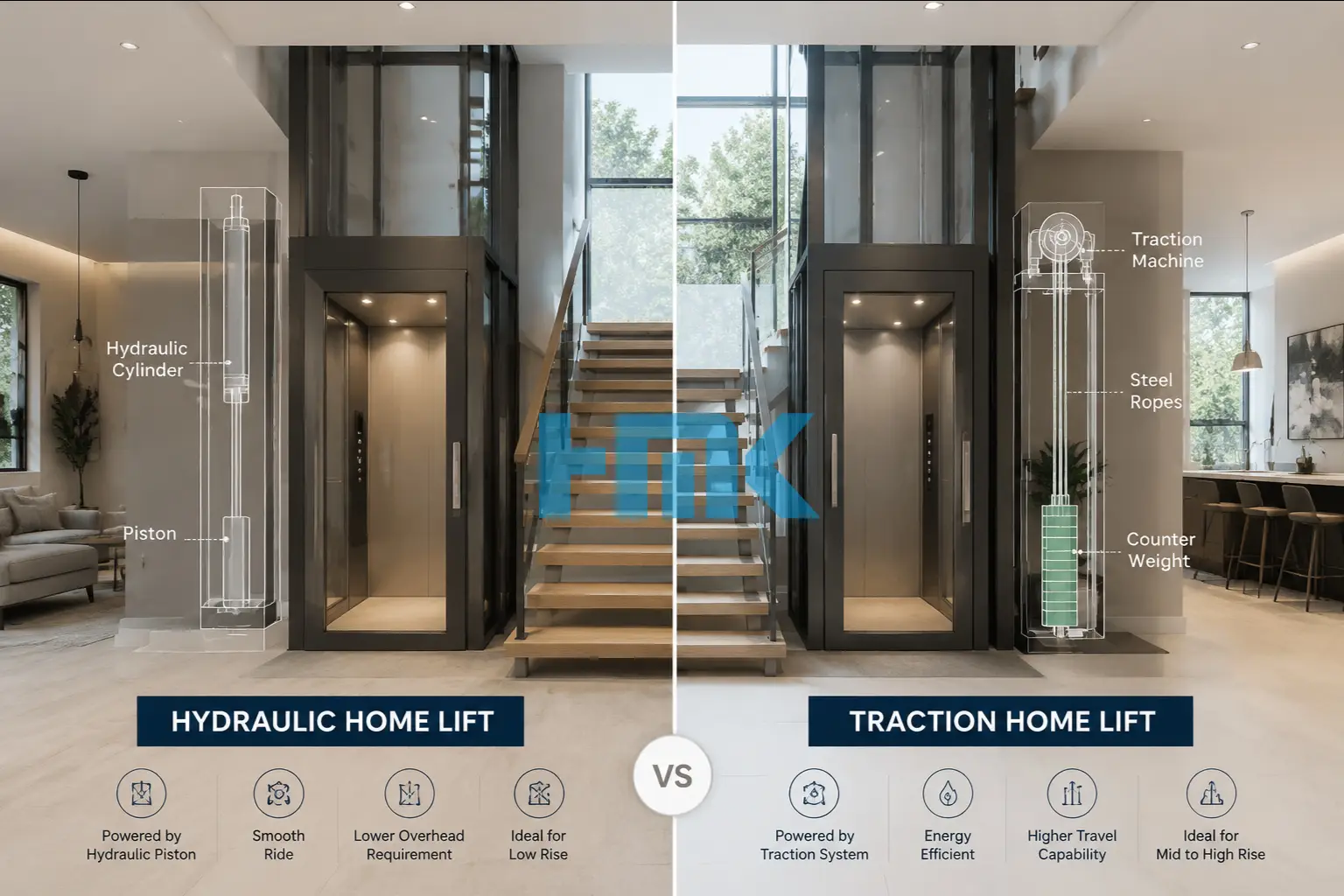
As modern homes evolve to prioritize accessibility, comfort, and long term convenience, installing a home lift has become an increasingly popular solution. Once considered a luxury reserved for large mansions, residential lifts are now widely used in multi story houses to improve mobility, enhance property value, and make homes more future ready.
Among the many lift technologies available, hydraulic lifts and traction liftsare two of the most common choices for residential buildings. Each system has its own advantages, limitations, and ideal applications. Understanding the differences between these two technologies can help homeowners choose the most suitable home lift for their space, lifestyle, and budget.
This article explores how hydraulic and traction home lifts work, their key differences, and which option might be better for residential use.
Why Home Lifts Are Becoming Popular
Residential architecture is changing. Multi story homes, aging in place designs, and accessibility needs are pushing homeowners to consider vertical mobility solutions earlier than ever before.
A residential elevator provides several important benefits:
- Improved accessibility for seniors or individuals with mobility challenges
- Increased convenience when moving between floors
- Enhanced property value and modern appeal
- Easier transport of heavy items like groceries, luggage, or laundry
- Future proofing a home for long term living
Because of these advantages, installing a home lift system is no longer limited to luxury homes. Today, compact and energy efficient models make it possible for many households to integrate a lift into new constructions or even retrofit them into existing homes.
However, choosing the right type of lift technology is essential. The two most widely used systems, hydraulic and traction, operate very differently.
What Is a Hydraulic Home Lift?
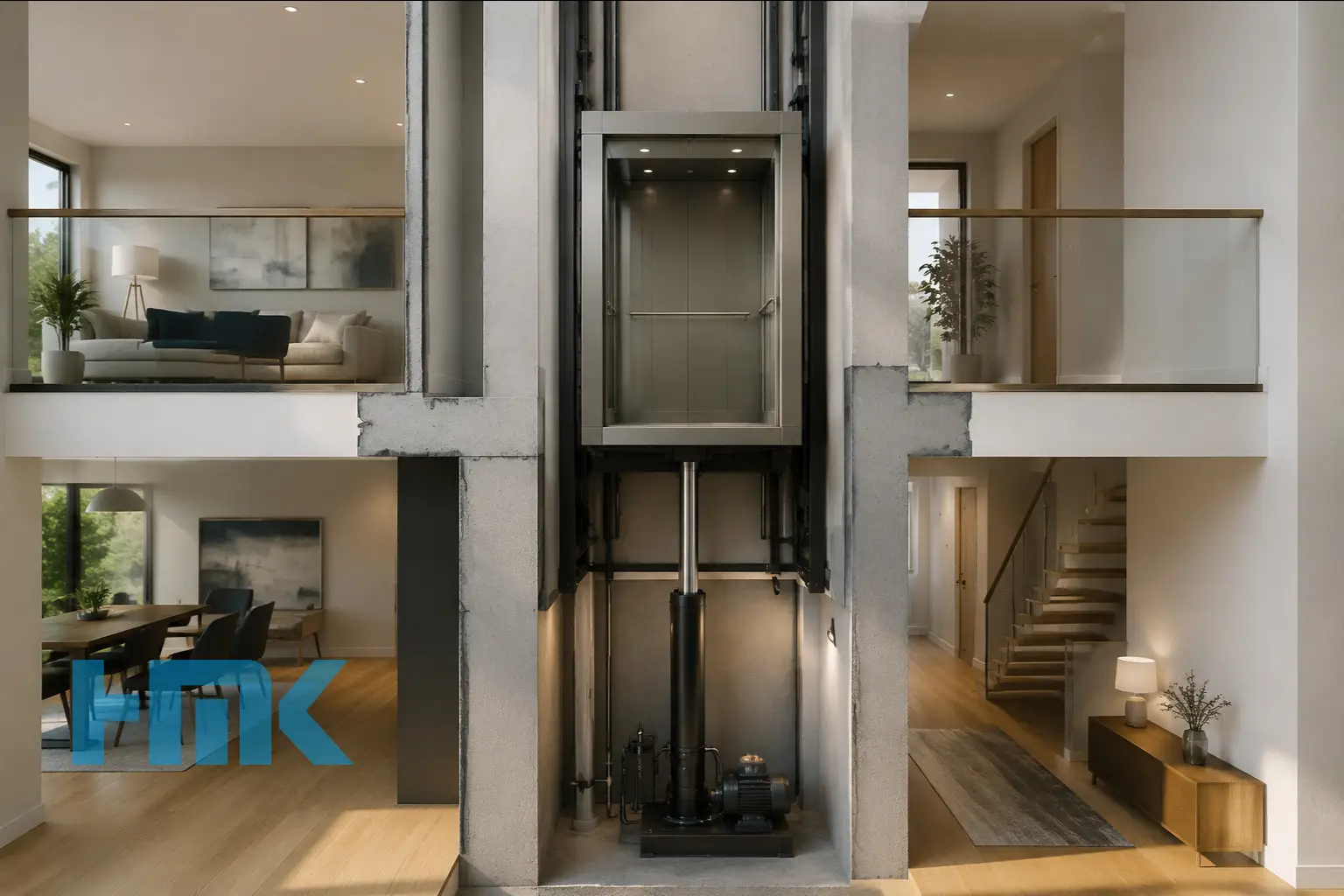
A hydraulic home lift operates using a hydraulic pump and piston mechanism. The system uses fluid pressure to move the lift car upward, while gravity helps bring it down.
How Hydraulic Lifts Work
The basic components of a hydraulic residential lift include:
- Hydraulic pump
- Cylinder and piston
- Control system
- Lift car and shaft
When the lift moves upward, a pump pushes hydraulic fluid into a cylinder, forcing a piston upward and raising the lift car. To descend, the system releases the fluid back into the reservoir, allowing the lift to lower smoothly.
Advantages of Hydraulic Home Lifts
Hydraulic lifts are widely used in residential environments because of several benefits.
Smooth and quiet operation
Hydraulic systems provide very smooth travel, making them comfortable for residential users. The ride quality is often considered gentle and stable.
Lower initial cost
Compared with many traction systems, hydraulic lifts generally have a lower upfront installation cost, making them attractive for homeowners working within a budget.
Simple technology
The mechanical structure of hydraulic lifts is relatively straightforward. This simplicity often results in easier maintenance and fewer complex components.
Good for low rise homes
Hydraulic lifts perform best in buildings with two to five floors, which matches the layout of most residential properties.
Limitations of Hydraulic Lifts
Despite their advantages, hydraulic lifts also have a few drawbacks.
Higher energy usage
Hydraulic pumps require significant power when lifting the car upward, which can result in higher electricity consumption.
Machine room requirement
Many hydraulic systems require a dedicated machine room to house the pump and fluid reservoir, which may take up additional space.
Potential fluid maintenance
Over time, hydraulic fluid may require replacement or servicing, which adds to long term maintenance considerations.
What Is a Traction Home Lift?
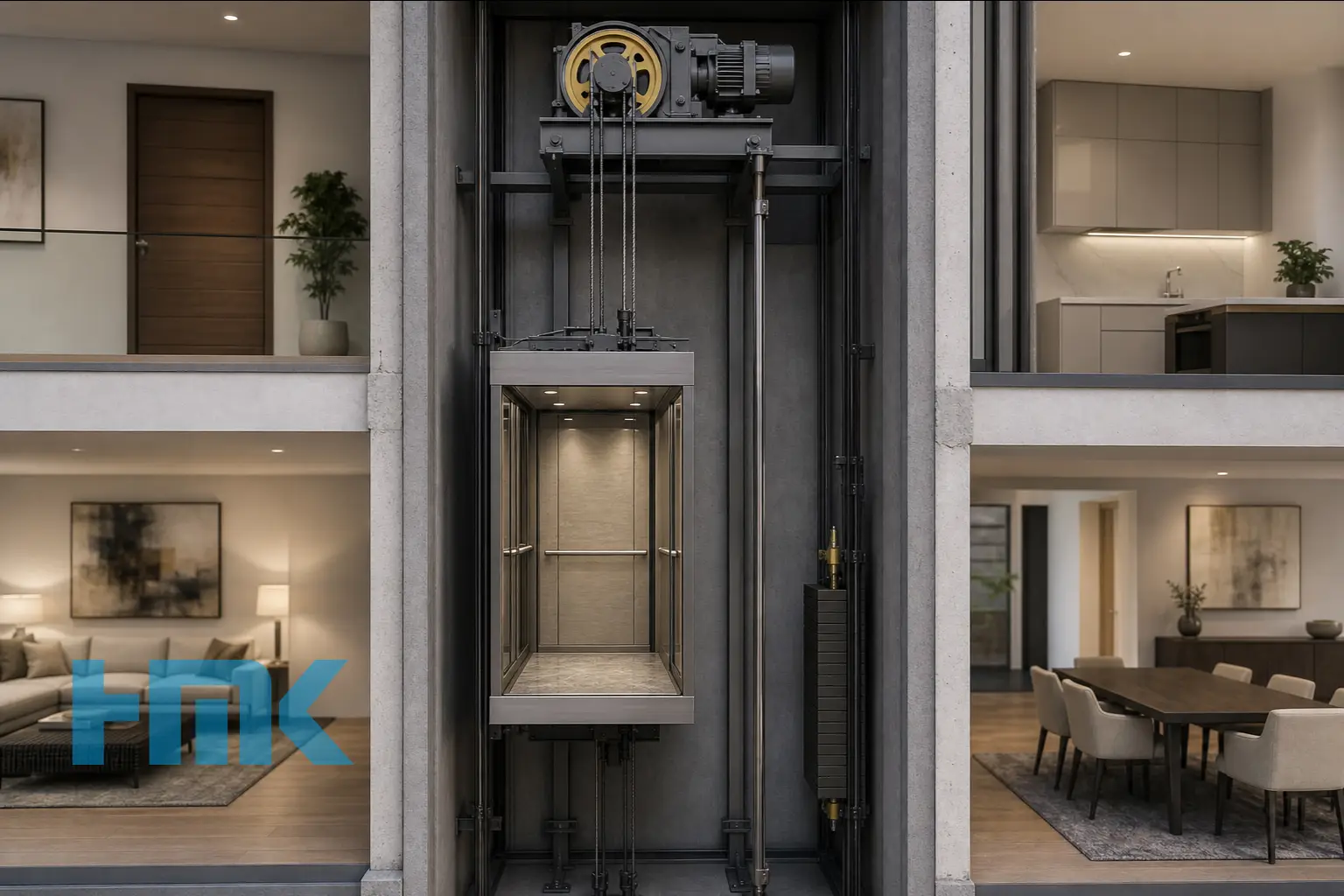
A traction home lift operates using a system of ropes or belts connected to a counterweight. The lift car moves when a motor rotates a pulley (sheave), which raises or lowers the car.
How Traction Lifts Work
A traction residential elevator typically includes:
- Electric motor
- Pulley or sheave system
- Steel ropes or belts
- Counterweight
- Lift car and control system
The counterweight balances the weight of the lift car, reducing the amount of energy required to move the elevator.
Advantages of Traction Home Lifts
Traction lifts are known for their efficiency and advanced technology.
Energy efficiency
Because the counterweight balances the lift car, traction systems consume less energy than many hydraulic lifts.
Compact design
Many modern traction home elevators are machine room less (MRL), meaning the motor is installed within the shaft. This reduces the space required for installation.
Higher travel capability
Traction lifts can handle more floors and greater travel heights, making them ideal for taller residential buildings.
Modern technology
Advanced traction systems often include smart controls, improved safety systems, and quieter motors.
Limitations of Traction Lifts
Although traction systems offer several benefits, they also come with a few potential drawbacks.
Higher installation cost
Traction home lifts usually cost more upfront due to their advanced components and technology.
More complex maintenance
The rope system, motor, and electronics may require specialized servicing.
Potential noise from machinery
While modern models are quiet, some traction lifts may produce mechanical sounds depending on installation and design.
Hydraulic vs Traction Home Lift
Understanding the differences between these two systems helps homeowners determine which lift fits their needs best.
Installation Requirements
Hydraulic lifts typically require a machine room and deeper pit, which can influence building design. Traction lifts, especially machine room less models, offer greater flexibility in installation.
Energy Consumption
Traction lifts generally consume less energy because the counterweight balances the system. Hydraulic lifts require more power during upward movement.
Ride Comfort
Both systems provide smooth rides, but hydraulic lifts are often praised for their soft start and stop motion, which some homeowners prefer.
Building Height Compatibility
Hydraulic lifts are ideal for low rise homes, while traction lifts perform better in taller residential buildings.
Maintenance
Hydraulic lifts have simpler mechanical systems but require fluid monitoring. Traction lifts involve more components but typically have longer service intervals for certain parts.
Factors to Consider When Choosing
Selecting the right home lift technology depends on multiple factors beyond just the type of mechanism.
Home Layout and Space
The available shaft space, pit depth, and overhead clearance will influence whether a hydraulic or traction system fits best.
Number of Floors
Homes with two to three floors may find hydraulic lifts perfectly suitable, while taller homes may benefit more from traction technology.
Budget
Hydraulic lifts usually offer a lower initial installation cost, while traction lifts may deliver long term efficiency benefits.
Energy Efficiency Goals
Homeowners prioritizing sustainability may prefer traction lifts because of their lower energy consumption.
Noise Preferences
Both systems can be quiet when installed properly, but some homeowners prefer the ultra smooth operation of hydraulic lifts.
Future Accessibility Needs
If the lift will be used by seniors or individuals with mobility challenges, features like smooth ride quality, reliability, and safety systems become especially important.
Are Home Lifts Safe?
Modern home lift systems are designed with multiple safety features to ensure reliable operation. Common safety elements include:
- Emergency stop buttons
- Battery backup systems
- Automatic door locks
- Overload protection
- Alarm systems and intercoms
When installed by professional lift companies and maintained regularly, both hydraulic and traction home lifts provide high levels of safety for residential environments.
Cost Comparison
The cost of installing a home lift varies depending on factors such as travel height, customization, building modifications, and brand.
Generally speaking:
- Hydraulic home lifts often have lower upfront costs but may consume more electricity.
- Traction home lifts may require a higher initial investment but often provide better energy efficiency and advanced features.
Installation costs can also vary depending on whether the lift is installed during new home construction or as a retrofit in an existing house.
Which model Is Better for Residential Use?
There is no universal answer to which system is better. The best choice depends on the specific needs of the homeowner and the building design.
Hydraulic lifts are often ideal for:
- Smaller homes
- Two to three story houses
- Budget conscious installations
- Homeowners who prioritize smooth ride comfort
Traction lifts may be the better option for:
- Taller residential buildings
- Homes with limited space for a machine room
- Energy efficient households
- Long term modern elevator solutions
Consulting with a residential lift specialist can help homeowners determine which system suits their property best.
Conclusion
Choosing between a hydraulic and traction system is one of the most important decisions when installing a home lift. Both technologies offer reliable and safe solutions for residential mobility, but they serve different needs.
Hydraulic lifts are known for their smooth ride, simpler technology, and affordability, making them well suited for smaller homes and low rise buildings. Traction lifts, on the other hand, offer greater energy efficiency, compact designs, and better performance in taller residential structures.
Ultimately, the best home lift is the one that fits the architectural design of the home, meets the homeowner’s accessibility needs, and aligns with long term lifestyle plans. By understanding the advantages and limitations of each system, homeowners can make a confident decision and enjoy the convenience and comfort that a residential lift provides.
FAQ
1- What is the best type of home lift for residential use?
Both hydraulic and traction lifts are suitable for residential use. Hydraulic lifts are often preferred for smaller homes, while traction lifts are ideal for taller houses or energy efficient installations.
2- Are hydraulic home lifts safe?
Yes. Modern hydraulic home lifts include safety features such as emergency lowering systems, overload protection, and automatic door locks to ensure safe operation.
3- Do traction home lifts use less electricity?
Generally, yes. Because traction lifts use a counterweight system, they typically consume less electricity than hydraulic lifts.
4- How much space is needed for a home lift?
The required space depends on the lift type and design. Compact residential elevators can fit into relatively small shafts, making them suitable for many homes.
5- Can a home lift be installed in an existing house?
Yes. Many home lifts are designed specifically for retrofit installation in existing homes, although structural modifications may be required.
Hamyar Mechanic Koosha Editorial Team
Specialized content team in biomedical engineering and rehabilitation
Hamyar’s editorial team consists of biomedical engineering experts who provide practical, technical content in plain language to raise public awareness.
Related Articles
No articles found.