
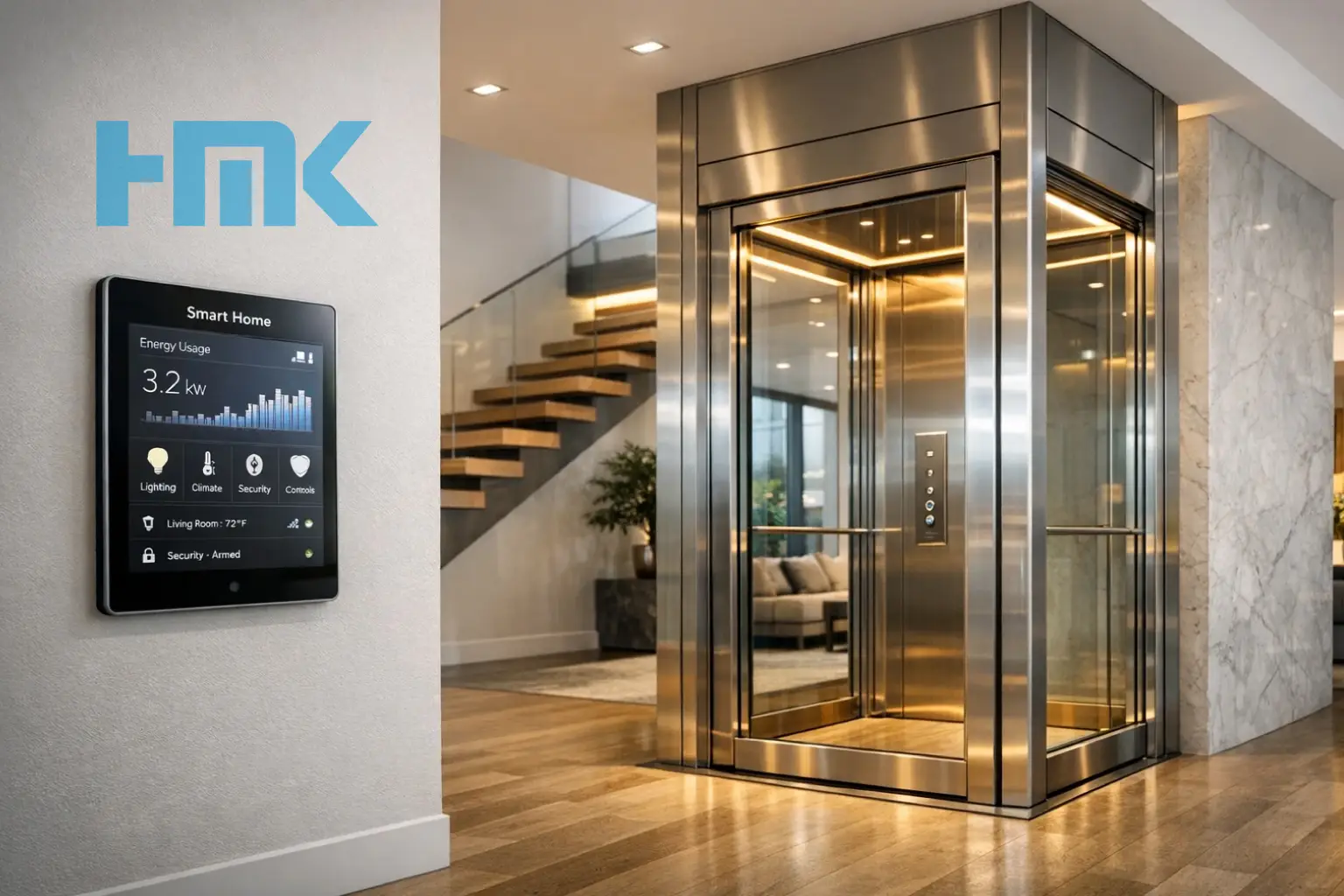
As our living spaces become increasingly interconnected, the concept of a "smart home" has evolved far beyond automated lights and voice-activated thermostats. Today, true home automation encompasses every aspect of residential infrastructure, including vertical mobility. The modern home lift is no longer just a mechanical convenience; it is a sophisticated, digitally integrated component of the contemporary smart residence.
Integrating a home lift into your smart home ecosystem offers more than just luxury—it provides unparalleled accessibility, enhanced security, and a seamless living experience. In this article, we will explore how state-of-the-art home lifts are becoming the centerpiece of intelligent home design and how you can plan for this integration.
The Evolution of Residential Mobility
Historically, a residential elevator was viewed as a niche installation—a heavy, purely mechanical device reserved for multi-story mansions. Today, the modern home lift has been reimagined. Current models are sleek, energy-efficient, and, most importantly, "connected."
The transition from a standard mechanical lift to a smart, IoT-enabled system marks a significant leap in domestic technology. By utilizing IoT (Internet of Things) sensors, modern lift systems can communicate with other smart devices, creating a synergy that enhances both safety and user experience.
Key Benefits of Smart Lift Integration
- Seamless User Experience: Through integration with smart home hubs (like Google Home, Amazon Alexa, or Apple HomeKit), users can call the lift to their floor via voice commands or pre-set routines.Through integration with smart home hubs (like Google Home, Amazon Alexa, or Apple HomeKit), users can call the lift to their floor via voice commands or pre-set routines.
- Predictive Maintenance: Smart lifts monitor their own performance metrics—motor temperature, belt tension, and door sensor reliability. These systems can alert homeowners or service technicians of potential issues before they become breakdowns.
- Advanced Security Protocols: Biometric scanners (fingerprint or facial recognition) can be integrated directly into the lift’s control panel, ensuring that only authorized users can operate the device.
- Energy Efficiency: Intelligent systems can enter a "sleep" mode when not in use and optimize travel paths to minimize power consumption, syncing with your home's energy management system.
Designing a Home Lift
Designing a home lift is a collaborative process that blends architectural aesthetics with structural engineering. When you decide to install a lift in a modern home, the "smart" aspect must be part of the initial design phase, not an afterthought.
1. Structural Planning and Spatial Efficiency:
Modern home lifts, specifically traction or hydraulic models, require far less space than commercial equivalents. Designers now favor "pitless" designs or shallow-pit configurations that minimize the impact on the home’s foundation.
When designing the shaft, it is critical to account for "connectivity zones." These are dedicated pathways for low-voltage wiring that will house your sensors, cameras, and IoT controllers. Hiding this infrastructure behind sleek, minimalist paneling ensures that the tech remains invisible while fully operational.
2. Aesthetic Harmony
The design of the lift cabin should reflect the interior design of the rest of the house. Contemporary trends favor glass-walled shafts that offer panoramic views, or enclosed cabins finished in bespoke materials like brushed steel, wood veneer, or smart glass that transitions from opaque to transparent at the push of a button.
3. Integrating the Smart Interface
The control panel is the most critical design element. Avoid cluttered physical buttons. Instead, consider flush-mounted touchscreens that can display weather updates, calendar events, or control other smart devices in the room (e.g., lighting or music) while you are in transit.
How Connectivity Transforms Safety
Safety is paramount in residential mobility. Smart home integration allows for a multi-layered safety approach that far exceeds traditional standards.
- Real-Time Monitoring:If the lift stops between floors due to a power outage or error, the smart system can immediately notify pre-set emergency contacts or a remote monitoring service.
- Health and Wellness Tracking:For elderly residents, smart lifts can integrate with fall-detection sensors. If a user enters the lift and their vitals are off, or if a prolonged stay in the cabin is detected, the system can trigger an automated alert to caregivers.
- Obstruction Detection: Advanced LiDAR and infrared sensors provide granular obstruction detection, ensuring that the lift doors cannot close if pets, children, or luggage are in the path.
The Role of IoT in Vertical Transportation
The Internet of Things (IoT) is the backbone of modern lift automation. In a fully connected smart home, the lift becomes a "node" on your home network.
Consider a scenario where you arrive home with heavy groceries. As your smart lock detects your presence and disarms the security system, your home lift could automatically descend to the ground floor, preparing to take you—and your groceries—up to the kitchen level. This level of anticipatory automation turns the lift from a tool into a personalized concierge.
Furthermore, cloud-based data analytics allow manufacturers to update the software of your home lift remotely. Much like a smartphone or electric vehicle, your elevator can receive "over-the-air" updates, ensuring that security patches and performance optimizations are always current without needing a physical technician visit.
Choosing the Right System
When selecting a home lift, it is essential to prioritize compatibility. Not all systems are "open." Some manufacturers use proprietary, locked-down software that prevents integration with third-party smart home hubs.
Always look for:
- API Openness: Does the manufacturer provide an API (Application Programming Interface) that allows integration with platforms like Home Assistant or Control4?
- Modular Architecture:Can you add sensors or smart modules later, or are you locked into the feature set you bought on day one?
- Backup Power Integration: Ensure your lift’s backup power (UPS) can communicate with your smart home's battery storage system.
Conclusion
The integration of smart technology with a modern home lift is a transformative step toward future-proofing your residence. By viewing the lift not just as a mechanical necessity for vertical movement, but as a dynamic, interconnected device, homeowners can achieve new levels of convenience, accessibility, and safety.
Whether you are designing a new build or retrofitting an existing property, the key is to prioritize "intelligent infrastructure." By planning for connectivity from the start and selecting systems that embrace the IoT ecosystem, you ensure that your investment in a home lift provides value for decades to come. The future of residential mobility is connected, intelligent, and tailored to the rhythm of your daily life.
FAQ
1- Can I add smart home features to an existing, older home lift?
It is possible, but it depends on the controller unit of your existing lift. Retrofitting smart sensors is often easier than changing the primary control system. Consult with your lift provider or an automation specialist to see if your legacy system can be "bridged" using smart relays or aftermarket IoT controllers.
2- Are smart home lifts safe from cyber threats?
Like any connected device, a smart lift is susceptible to security risks if not properly secured. It is crucial to choose reputable manufacturers who prioritize cybersecurity, use encrypted communication protocols, and ensure your home network has a strong firewall and updated firmware.
3- Does smart integration make the lift slower?
No, smart integration generally does not affect the physical speed of the lift. If anything, it makes the experience more efficient by optimizing "call" patterns and reducing idle time.
4- Is a home lift energy-efficient enough for a smart home?
Most modern home lifts are designed with high energy efficiency in mind, often using LED lighting, standby power-saving modes, and regenerative drives that feed energy back into the house grid when the lift descends.
5- Do I need professional help to integrate a home lift into my smart ecosystem?
Yes. While some smart home components can be DIY-installed, a lift involves significant structural, electrical, and safety regulations. You should always work with both a certified lift installer and a professional smart home integrator to ensure the system is safe and compliant with local building codes.
Hamyar Mechanic Koosha Editorial Team
Specialized content team in biomedical engineering and rehabilitation
Hamyar’s editorial team consists of biomedical engineering experts who provide practical, technical content in plain language to raise public awareness.
Related Articles
No articles found.