
The ability to travel and maintain a sense of normalcy is a vital aspect of life, yet for individuals with limited mobility, the logistical challenges can often feel insurmountable. When managing temporary care needs, whether due to post-surgical recovery, short-term injury, or the desire to visit family, having the right mobility aid can transform a stressful situation into a manageable and even enjoyable experience. A patient lift serves as a fundamental piece of transfer equipment designed to bridge the gap between surfaces, ensuring that the movement from a bed to a wheelchair or a chair to a commode is handled with dignity, security, and minimal physical strain.
While home-based care equipment is often permanent and bulky, the advent of portable technology has provided new avenues for those who do not wish to be tethered to their primary residence. Understanding the nuances of portable lift technology is essential for caregivers and patients alike to navigate the complex landscape of travel and temporary care.
Ensuring Mobility During Travel
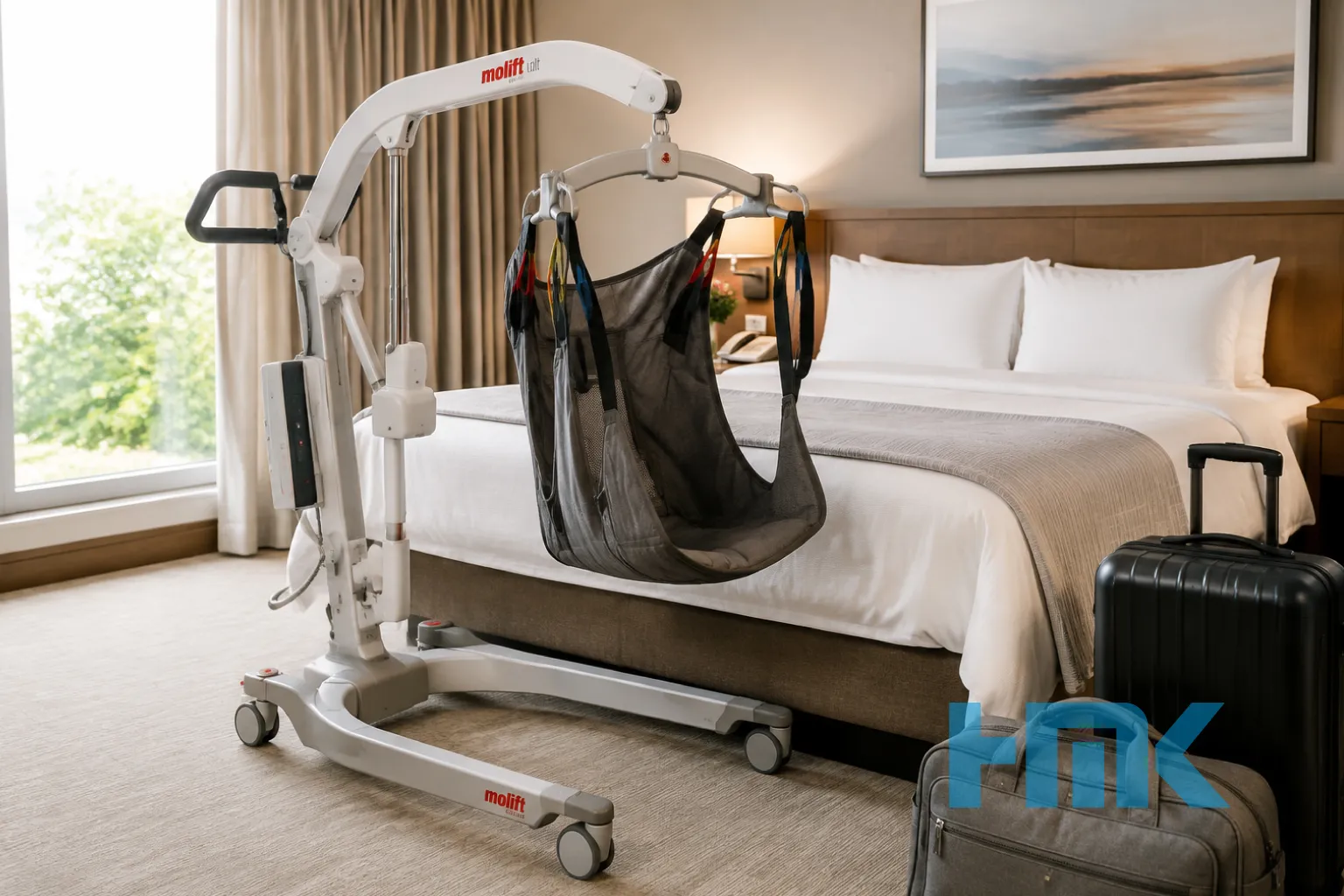
Traveling with a disability requires meticulous planning and the right tools. A portable patient lift, often referred to as a folding lift, is specifically engineered to be disassembled or collapsed into a compact form that fits within the trunk of a standard vehicle. This portability is a game-changer for those seeking to maintain a social life outside the confines of the home. The primary function of these devices is to assist in weight-bearing transitions, which are often the most hazardous moments in a daily routine. By utilizing a high-quality lift, the user and their caregiver can navigate hotel stays, vacation rentals, and visits to relatives with confidence.
The psychological benefit of maintaining mobility through travel cannot be overstated. When a patient feels that they can safely navigate different environments, their overall outlook on rehabilitation and quality of life improves significantly. Furthermore, the use of a reliable transfer aid reduces the anxiety associated with unpredictable environments where traditional grab bars or floor layouts may not support the specific needs of the individual. By choosing a lift designed for travel, families can ensure that their transitions are seamless, regardless of the destination's architecture.
Manual vs. Electric Patient Lifts
When exploring the market for a portable patient lift, one of the most critical decisions involves choosing between a manual hydraulic system and a battery-operated electric model. Manual lifts rely on a hydraulic pump mechanism that requires the caregiver to physically operate a lever to raise and lower the patient. These units are often lighter in total weight and do not require charging, making them a popular choice for those concerned about battery longevity or long-term storage where electricity might not be immediately available. However, they demand a higher level of physical exertion from the caregiver to maintain a steady and smooth motion.
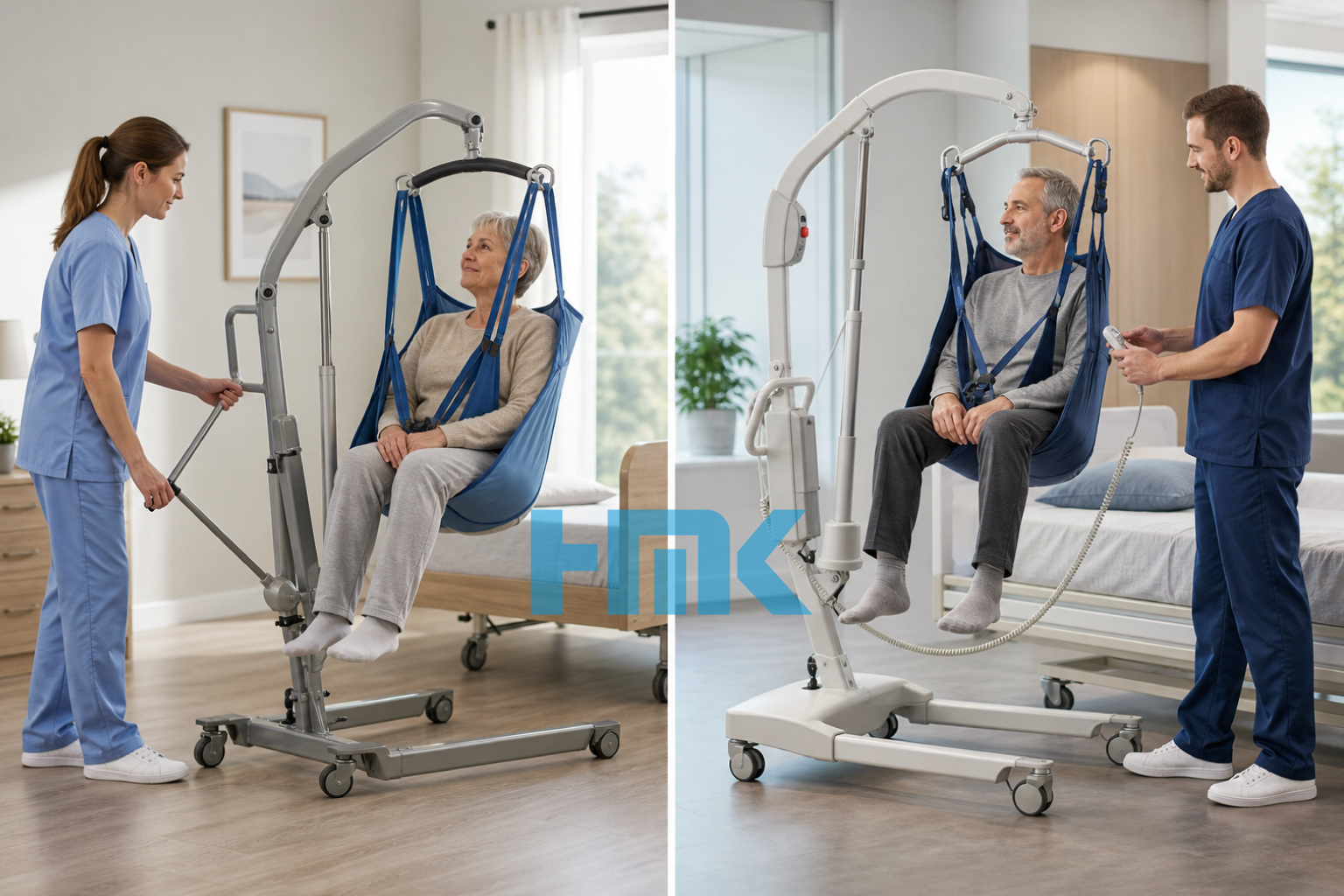
In contrast, electric lifts represent the modern standard for convenience and safety. These units utilize powerful actuators and rechargeable battery packs to handle the lifting motion at the touch of a button. The primary advantage of an electric lift is the consistency of the speed and stability of the lift, which creates a more comfortable experience for the patient. Because the machine does the heavy lifting, the risk of caregiver injury is drastically reduced. While these models are typically heavier than their hydraulic counterparts, most portable electric versions are designed with modular components that can be separated, allowing for easier transport in smaller vehicles. For families prioritizing the ease of operation and the physical well-being of the caregiver, the electric model is almost always the preferred investment, despite the necessity of managing battery levels and charging cycles.
Also Read: Manual vs. Electric Patient Lifts
Prioritizing Caregiver Safety
Caregiver safety is a paramount concern in any transfer scenario. Chronic back injuries and musculoskeletal strain are statistically high among those who provide daily assistance to mobility-impaired individuals. A patient lift acts as a crucial line of defense against these occupational hazards. When a caregiver is forced to manually lift a patient, the mechanics of the human body are often pushed past their limits, particularly during repetitive motions. By incorporating a mechanical aid into the caregiving routine, the physical workload is shifted from the person to the device.
Effective use of a lift also involves proper education and training. Caregivers should be familiar with the weight capacity, the base adjustment mechanisms, and the emergency release features of their specific equipment. Moreover, positioning is everything. A portable lift allows the caregiver to approach the transfer from the most stable angle, ensuring that the patient remains centered and secure throughout the process. By emphasizing ergonomics, such as maintaining proper posture while navigating the lift and ensuring the brakes are locked before any transition begins, caregivers can extend their capacity to provide long-term care without compromising their own physical health.
Selecting the Right Equipment
For those who only require a lift for a temporary period, the decision-making process shifts slightly toward flexibility and rental versus purchase. Many medical supply providers offer rental programs for high-quality lifts, which is an excellent solution for those recovering from surgeries who anticipate returning to full mobility within a few months. When selecting a rental or a temporary purchase, it is vital to evaluate the specific needs of the patient, including their weight, height, and the sling type required for their condition.
A sling, which is the harness part of the hoyer lift system, is not a one-size-fits-all component. Some patients require a full-body sling for complete support, while others may only need a sit-to-stand harness that encourages weight-bearing activity. Assessing the environment where the lift will be used is also critical. If the destination has tight doorways or narrow hallways, the base width of the lift must be narrow enough to pass through, yet stable enough to prevent tipping. Checking these specifications before finalizing an equipment choice ensures that the transition period is as smooth and dignified as possible.
Conclusion
The journey toward maintaining independence or providing compassionate temporary care is defined by the tools we choose to utilize. Portable patient lifts represent a significant advancement in the quality of life for mobility-impaired individuals, offering the freedom to travel, recover, and participate in daily life outside the home. By understanding the differences between manual and electric models, prioritizing caregiver ergonomics, and carefully selecting equipment that fits both the user and the environment, families can remove the physical barriers that prevent meaningful experiences. Whether for short-term recovery or a planned trip, investing in the right mobility solutions ensures that every transfer is safe, efficient, and dignified. As technology continues to improve the portability and ease of use of these devices, more individuals will find that a limited physical capacity does not have to result in a limited life experience.
FAQ
1- What is the weight limit for most portable patient lifts?
Most portable lifts are designed to accommodate a wide range of weights, typically between 300 and 450 pounds, but it is essential to verify the manufacturer specifications for the specific model you intend to use to ensure it matches the user’s weight.
2- Can a portable lift be checked on an airplane?
While some small, folding lifts can technically be checked as baggage, airlines have strict regulations regarding medical equipment and battery types. It is highly recommended to contact the airline in advance to discuss their specific policies regarding lithium-ion batteries and oversized medical items.
3- How long does a typical battery-operated lift charge last?
On a full charge, most modern electric lifts can perform between 50 and 100 transfers, depending on the weight of the patient and the frequency of use. It is standard practice to keep the lift plugged into a power source when not in use to ensure it is always ready for the next transfer.
4- Is it possible to use a patient lift on carpeted surfaces?
While a lift can be used on low-pile carpet, it is much easier to maneuver on hard, flat surfaces like tile, hardwood, or laminate. If you must use the lift on thick carpet, ensure that the base is stable and that the caregiver exercises extra caution, as the friction can make rolling the unit more difficult.
5- What should I look for in a professional-grade hoyer lift?
Look for robust construction, locking caster wheels, a manual emergency lowering function for safety during power outages, and compatibility with a variety of universal sling sizes to accommodate different body types.
Hamyar Mechanic Koosha Editorial Team
Specialized content team in biomedical engineering and rehabilitation
Hamyar’s editorial team consists of biomedical engineering experts who provide practical, technical content in plain language to raise public awareness.
Related Articles
No articles found.