
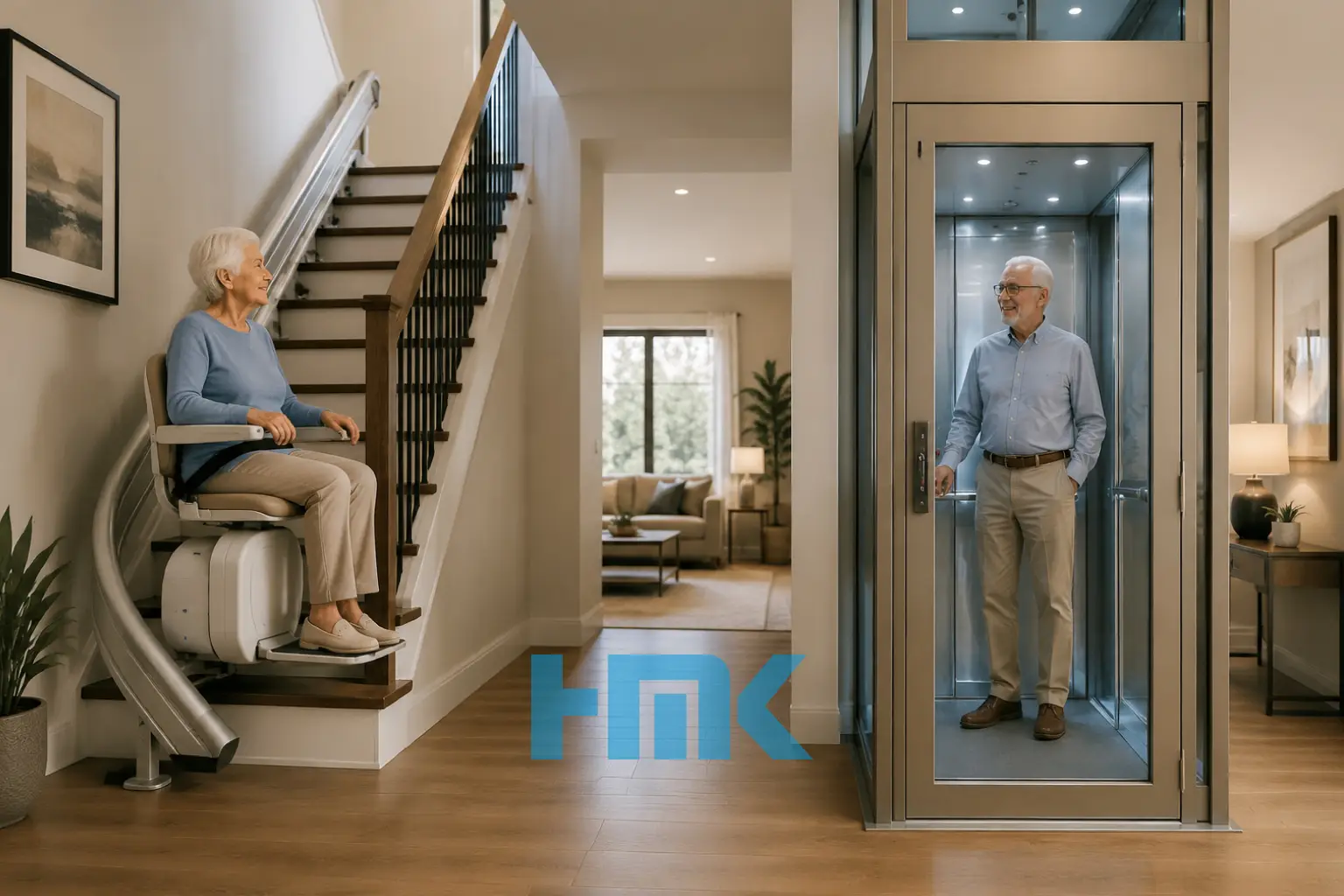
Creating a safe, accessible home is a priority for many households, especially for older adults, people with limited mobility, or anyone planning to age in place. Two of the most common solutions are stairlift and home lift (also called residential elevators). Both options are designed to improve mobility and independence, yet they differ greatly in cost, installation, functionality, and long term value.
If you’re trying to decide between a stairlift and a home lift, this in depth guide will help you understand the strengths, limitations, and best fit scenarios for each option.
What is a Stairlift?
A stairlift is a motorized chair that travels along a rail installed on an existing staircase. Users sit on the chair, buckle in, and ride smoothly along the stairs without needing to climb steps. Stairlifts are available for straight, curved, and even outdoor staircases.
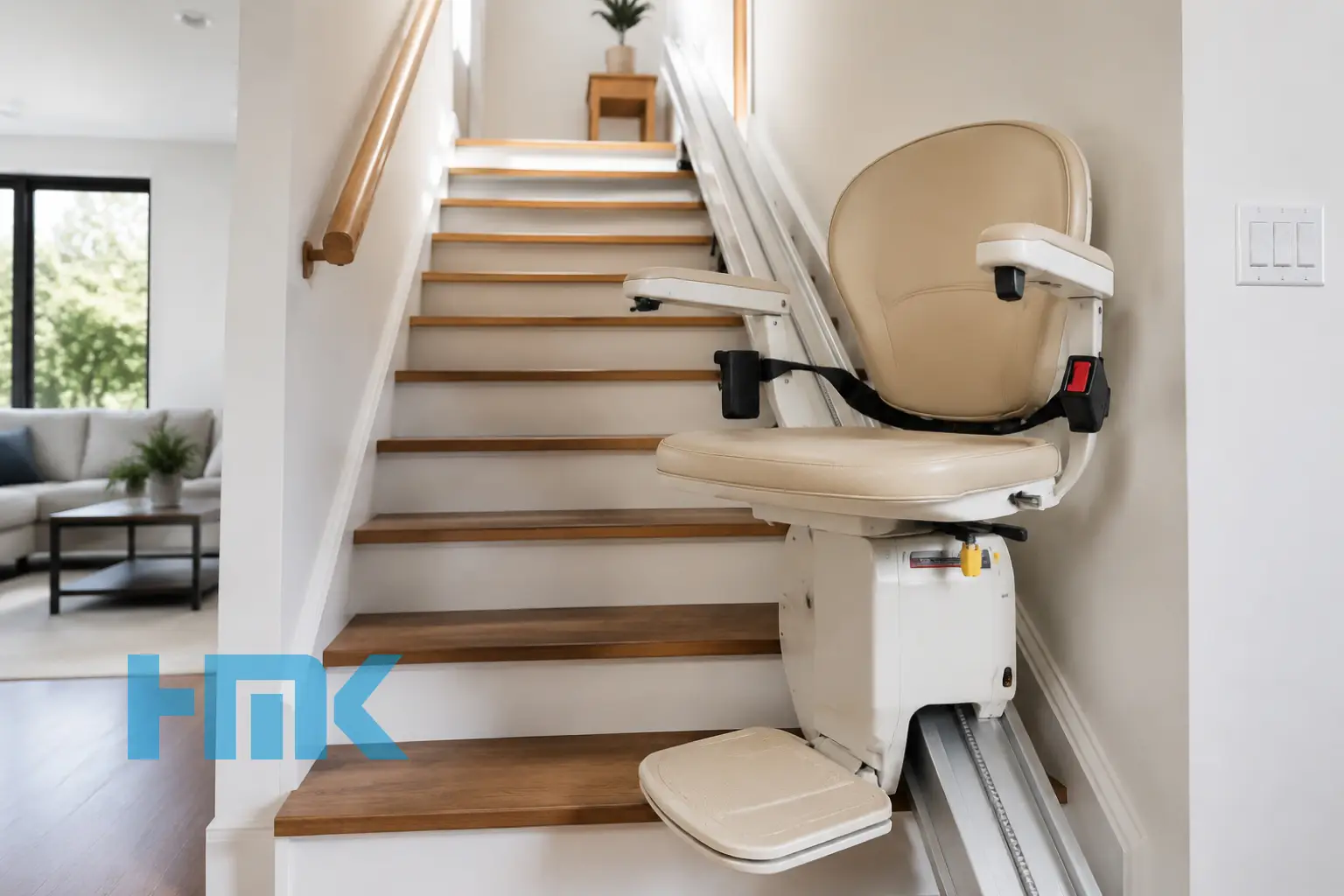
Key features of stairlifts:
- Rail mounted on the staircase (not the wall)
- Foldable chair, armrests, and footrest
- Low installation complexity
- More affordable than home lifts
- Ideal for single-user households
Stairlifts are typically chosen when stairs are the only mobility barrier and the homeowner wants a practical, budget friendly accessibility solution.
What is a Home Lift?
A home lift (residential lift or house elevator) is a vertical lift that moves people between floors using a cabin or platform. Unlike stairlifts, home lifts provide a standing or wheelchair-accessible space, making them suitable for users with a wide range of mobility needs.

Key features of home lifts:
- Vertical travel between floors
- Wheelchair friendly models available
- Various drive systems (hydraulic, traction, pneumatic, shaft-less)
- High load capacity
- Adds value and modern convenience to the home
A home lift is more than an accessibility tool, it can be a long term investment that improves comfort, independence, and property value.
Stairlift vs. Home Lift
Below is a thorough look at how stairlifts and home lifts compare across essential factors such as cost, installation, appearance, maintenance, safety, and long term suitability.
1. Installation Requirements
Stairlift Installation:
Stairlifts are usually installed directly onto your existing staircase. They don’t require structural changes, major construction work, or electrical rewiring (beyond a simple power outlet). Straight stairlifts can often be installed in a single day, while curved models take longer due to custom rail measurements.
Ideal for:
- Older homes with narrow hallways
- Renters seeking a reversible modification
- People who want immediate installation
Home Lift Installation:
A home lift requires more planning. Some models need a shaft or pit, while others, such as vacuum or shaft less lifts, can be installed with minimal structural work. Installation may take a few days to several weeks depending on the complexity and the number of floors. Although more involved, home lift installation results in a seamless and modern addition to the home.
Ideal for:
- Long term living arrangements
- Homes with multiple floors
- Users needing full wheelchair access
2. Space Requirements:
Stairlifts:
Since they run along the staircase, stairlifts take up very little usable space. When folded, they leave the staircase nearly unobstructed for other household members.
Perfect for small homes, narrow staircases, or properties where floor space is limited.
Home Lifts:
Home lifts require dedicated space, either a pre built elevator shaft or an area to install a compact shaft less lift system. While modern models are space efficient, they still occupy a noticeable footprint.
Best for medium to large homes or homes undergoing renovation.
3. Cost and Budget Considerations:
Costs vary widely depending on the model, features, and the complexity of your home layout.
Typical stairlift price ranges:
- Straight stairlift: moderate cost
- Curved stairlift: higher cost due to customization
- Outdoor stairlift: moderate to high cost
Stairlifts are generally the more budget friendly option.
Typical home lift price ranges:
- Shaft less home lift: moderate to high
- Hydraulic or traction home lift: higher
- Multi story configurations: higher
Although home lifts cost more upfront, many homeowners consider them a long-term investment that increases property value and enhances lifestyle convenience.
4. Ease of Use:
Stairlifts:
Stairlifts are designed for simplicity. Users simply sit, fasten the safety belt, and push a button. However, transferring into and out of the chair requires balance and upper body strength. For individuals with severe mobility limitations, this may be challenging.
Home Lifts:
Home lifts are easier for wheelchair users, people with walkers, or users with limited strength. The spacious cabin allows standing, sitting, or entering with mobility aids. Operation typically involves a simple push button control panel.
5. Capacity and Functionality:
Stairlifts:
Designed for a single rider at a time. They cannot carry large loads, medical equipment, or household items safely.
Home Lifts:
Support higher weight capacity and can transport:
- Wheelchairs
- Mobility scooters
- Groceries
- Laundry baskets
This makes home lifts more versatile for everyday use.
6. Appearance and Aesthetic Appeal
Stairlifts:
While functional, stairlifts have a more mechanical appearance. They are visible on the staircase and may not match modern interior aesthetics.
Home Lifts:
Home lifts are often seen as premium upgrades. With glass panels, sleek cabins, and customizable finishes, they can blend seamlessly into home décor and even enhance the design.
7. Safety Features:
Both solutions offer safety features, but they differ in approach.
Common stairlift safety features:
- Safety belt
- Swivel seat
- Obstruction sensors
- Battery backup
Common home lift safety features:
- Emergency stop button
- Battery descent
- Door interlocks
- Overload protection
- Fully enclosed cabin
Home lifts offer a more robust safety envelope due to their enclosed design and advanced control systems.
8. Maintenance Requirements:
Stairlifts:
- Annual service recommended
- Occasional rail cleaning
- Motor and battery checks
Maintenance is simple and affordable.
Home Lifts:
- Professional service required
- Annual or biannual inspections
- More complex components
Though maintenance is more involved, home lifts are engineered for durability.
9. Long Term Suitability:
Stairlifts are best suited for individuals with mild to moderate mobility challenges, or for those needing short term assistance, such as during recovery from surgery.
Home Lifts are ideal for:
- Wheelchair users
- Multi generational households
- Aging in place
- Future-proofing a forever home
In the long run, home lifts provide greater accessibility, comfort, and resale value.
Pros and Cons Summary
| Equipment | Pros | Cons |
|---|---|---|
| Stairlift | Affordable | Not wheelchair accessible |
| Fast installation | Requires ability to get in/out of the chair | |
| Minimal home modification | Visible on staircase | |
| Ideal for single users | Less suitable for long-term advanced mobility needs | |
| Home Lift | Fully accessible for wheelchairs and walkers | Higher upfront cost |
| Adds value to home | Requires installation space | |
| Modern design and user-friendly cabin | Longer installation time | |
| High load capacity | ||
| Future-proof long-term solution |
Which Solution Is Right for You?
Choosing between a stairlift and a home lift depends on your needs, budget, home layout, and long term goals.
Choose a Stairlift if:
- You have a limited budget
- You need a quick mobility solution
- Stairs are the only barrier in your home
- You can safely operate a chairlift
- You don’t require wheelchair access
Choose a Home Lift if:
- You want a fully accessible solution for any mobility level
- You use a wheelchair or mobility device
- You plan to stay in your home long-term
- You want to increase your home’s convenience and resale value
- You prefer a modern and discreet appearance
Conclusion
Both stairlifts and home lifts offer valuable accessibility options for homeowners, but they serve different needs and lifestyles.
A stairlift is more budget-friendly, faster to install, and ideal for users who can safely sit and transfer into the chair. It is best for short-term mobility limitations or homes where space is tight.
A home lift, on the other hand, is a versatile, future-proof solution that accommodates wheelchairs, mobility devices, and multiple users. It adds convenience, comfort, and long-term value to your property.
Ultimately, the right choice depends on your mobility requirements, home layout, and long term plans. Whether you choose a stairlift or a home lift, both solutions can significantly enhance safety, independence, and quality of life in your home.
FAQ
1- Is a home lift worth the higher cost?
Yes. Although home lifts require a larger investment, they offer unmatched comfort, accessibility, and property value. For wheelchair users or aging homeowners, a home lift can provide independence for many years.
2- Can a stairlift be installed on any type of staircase?
Most staircases can accommodate a stairlift, including straight, curved, and multi-landing stairways. Custom curved rails may increase installation time and cost.
3- How much space does a home lift need?
Compact home lift models can fit into surprisingly small areas, sometimes as little as a small wardrobe or corner. Larger models require more space, especially those with full elevator shafts.
4- Do home lifts require major structural changes?
Not always. Some models, such as shaft less or vacuum home lifts, require minimal construction and no pit. Traditional hydraulic lifts need more extensive building work.
5- Are home lifts safe for children and elderly users?
Absolutely. Home lifts are equipped with safety sensors, interlocking doors, battery backups, and emergency controls, making them safe for users of all ages.
6- Can a stairlift be removed later?
Yes. Stairlifts can be removed without major damage to the staircase, making them a good option for temporary mobility needs.
Hamyar Mechanic Koosha Editorial Team
Specialized content team in biomedical engineering and rehabilitation
Hamyar’s editorial team consists of biomedical engineering experts who provide practical, technical content in plain language to raise public awareness.
Related Articles
No articles found.