
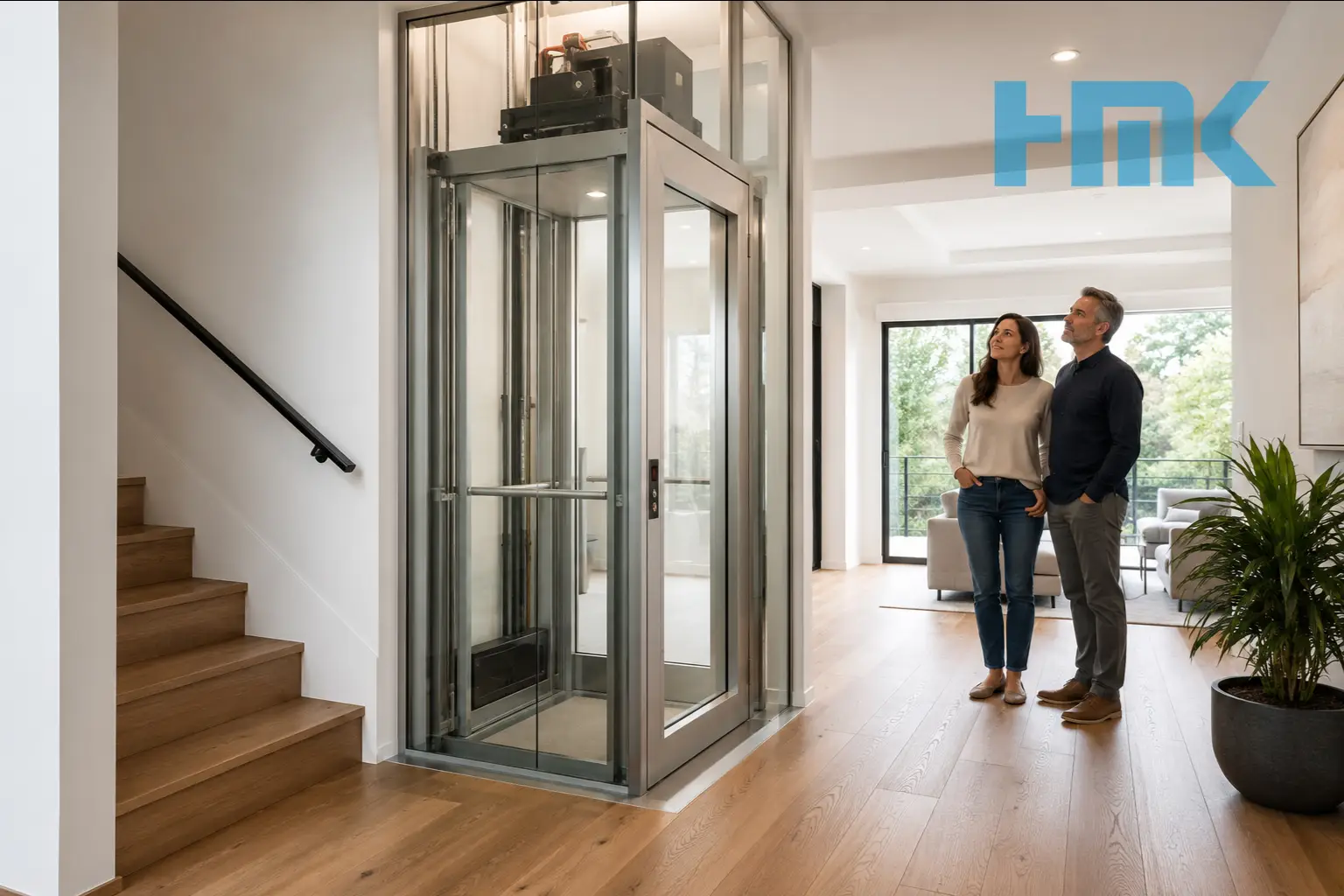
A home lift can change the way you live in your house. For some people it’s about future-proofing staying in a beloved home as mobility needs evolve. For others it’s about convenience: carrying laundry between floors, moving groceries, or making a multi-level home easier for kids and grandparents alike. But once you start researching, the choices can feel overwhelming. Hydraulic, traction, vacuum, shaftless, through-floor each has its own benefits, limitations, space needs, and budget range.
This guide is written for homeowners who are ready to consider a home lift but aren’t sure which model fits their house, lifestyle, and long-term plans. We’ll break down the main types of residential lifts, what they’re best at, what you’ll need to install them, and the practical questions to ask before you decide.
What “Right” Means for a Lift
Before comparing models, it helps to define what “right” looks like for you. Most purchase regrets happen when people choose a lift based on one factor (price, design, or speed) and ignore the installation realities of their home.
Consider these decision points:
- Who will use it? Aging parents, wheelchair users, kids, guests, or just occasional convenience?
- How many floors? Two stops (ground + first) is simpler than three or more.
- Space constraints: Do you have room for a shaft, or do you need a compact option?
- Weight and size needs: Standing passenger, seated user, wheelchair access, or moving bulky items?
- Noise sensitivity: Bedrooms nearby? Open-plan layout that amplifies sound?
- Home design: Modern aesthetic, traditional interior, or you want the lift to “disappear”?
- Budget range: Include not only purchase price, but construction work, electrical upgrades, and ongoing servicing.
- Future-proofing: If mobility changes, will the lift still work for you?
With that in mind, let’s explore the main residential elevator options.
1) Hydraulic Home Lifts
Hydraulic home lifts use a pump to move hydraulic fluid into a cylinder, pushing the cab upward. To descend, valves release the fluid back into a reservoir.
Best for
- Homeowners wanting a smooth, steady ride
- People prioritizing reliability and familiar technology
- Houses where there’s space for a shaft and a small machine area
| Pros | Cons |
|---|---|
| Strong lifting power and stable movement | Typically needs more space than compact lift types |
| Generally comfortable ride quality | May require a machine room or controller space depending on design |
| Good option for wheelchair-accessible cabins | Hydraulic systems can be less energy efficient than some traction models (especially on ascent) |
| Well-established technology with many suppliers and parts availability | Potential for oil-related maintenance (though modern systems reduce issues) |
Installation
Hydraulic residential elevators often require a built shaft (or hoistway). If you’re already planning a renovation or extension, this can be a natural fit. In existing homes, it may mean structural work.
Choose hydraulic if: you have adequate space and want a proven, comfortable home lift that can be configured for accessibility.
2) Traction Home Lifts:
Traction lifts use a motor to move a counterweight and cab via ropes or belts. This is similar to many commercial elevator systems, scaled for residential use.
Best for
- Multi-story homes (especially three or more stops)
- People who want energy efficiency
- Homeowners who care about long-term performance
| Pros | Cons |
|---|---|
| Often more energy-efficient than hydraulic systems | Can be more complex mechanically |
| Good for higher travel and multiple floors | Depending on model, may produce more audible motor/gear noise |
| Can offer soft start/stop features for comfort | Typically still needs a shaft/hoistway |
| No hydraulic fluid, which some homeowners prefer |
Installation
Traction elevators can be a great solution for taller homes. If you’re planning a lift for long-term aging in place, traction is often shortlisted for its efficiency and capability.
Choose traction if: you want an efficient residential elevator suited to multiple floors and you’re comfortable with a shaft-based installation.
3) Vacuum Home Lifts:
Vacuum home lifts (a.k.a pneumatic home lifts) use air pressure differences to move the cab. A vacuum pump creates suction above the cab to lift it; controlled air release allows it to descend.
Best for
- Homes with limited space
- People who want a modern, architectural “statement” lift
- Faster installs where major construction is difficult
| Pros | Cons |
|---|---|
| Typically compact footprint | Cabin size may feel narrower than traditional elevators |
| Often requires less structural work than full shaft lifts | Noise profile is different: the pump can be noticeable during travel |
| Eye-catching design; can work in open-plan layouts | May have limitations on wheelchair accessibility depending on the model and local standards |
| Many models use self-supporting structures | Fewer providers compared with hydraulic/traction in some regions |
Installation
Vacuum lifts can be appealing for retrofit projects because they may not require a conventional elevator shaft. That said, you still need to plan for ceiling height, floor openings (if required), and placement that suits your home’s structure.
Choose vacuum if: you want a space-saving home lift with a distinctive design and you’re prioritizing a simpler retrofit.
4) Shaftless Home Lifts:
“Shaftless” is a broad category. These home lifts are designed to operate without a traditional enclosed hoistway. Many travel through a cut-out in the floor and park at one level, leaving the floor aperture covered when the lift is elsewhere.
Best for
- Two-story homes needing a simple, compact vertical solution
- Homeowners who want to minimize construction
- People who don’t want a full elevator shaft taking up usable space
| Pros | Cons |
|---|---|
| Space-efficient compared with traditional residential elevators | Commonly limited to two stops (sometimes more, but often designed for 2) |
| Can be quicker to install in existing homes | Design and capacity vary widely; not every model supports full wheelchair access |
| Often a good match for aging in place planning | Placement is crucial because the lift occupies space at each level |
| Many models are designed for indoor residential use with modern safety features |
Installation
These lifts can be ideal if your home has the right layout such as a corner that can accommodate the unit on both floors, or a spot near a stairwell. You’ll still need electrical work and structural checks for floor openings and load-bearing requirements.
Choose shaftless if: you need a practical home lift for two floors and want to preserve space without building a full shaft.
5) Through-Floor Home Lifts:
Through-floor lifts travel directly through a cut-out in the floor, usually between two levels, and often do not require a shaft. They’re commonly chosen for accessibility and daily practicality.
Best for
- Households needing step-free access between ground and first floor
- People with mobility challenges who want a simple, functional lift
- Homes where wheelchair access is a priority (depending on cabin size)
| Pros | Cons |
|---|---|
| Often one of the most straightforward retrofit options | Generally limited to two floors |
| Designed for accessibility use cases | A visible unit in living spaces; aesthetics vary by model |
| Typically lower build complexity than shaft-based elevators | Requires careful planning for where the lift “parks” and how it affects furniture layout |
| Efficient use of space for two-level travel |
Installation
If your main need is to avoid stairs day-to-day, a through-floor lift may be the most practical choice. The key is planning a location that works naturally near a hallway, living area, or bedroom zone where it won’t disrupt circulation.
Choose through-floor if: your priority is functional, accessible movement between two floors with minimal structural work.
Platform Lifts vs. Cabin-Style
Some homeowners compare a home lift to a platform lift. A platform lift is often used for short rises (like a porch or a small internal level change) and may be more utilitarian in appearance. A cabin-style home lift (residential elevator or domestic lift) is usually designed for regular inter-floor travel and may better match interior design expectations.
Rule of thumb:
- Short rise / access ramp alternative: platform lift
- Full floor-to-floor living convenience: home lift / residential elevator
Your local building codes and accessibility requirements also matter, so it’s worth checking what is permitted and recommended in your area.
Choosing the Right Home Lift
To choose the right model, you need to follow several steps
Step 1: Match the lift to your layout
- If you can accommodate a shaft, hydraulic or traction opens up more cabin options.
- If your home is tight on space, consider vacuum, shaftless, or through-floor models.
Step 2: Decide what “accessibility-ready” means
If there’s any chance a wheelchair user will need the lift now or later confirm:
- Door width and clear opening
- Cabin dimensions
- Threshold height and entry approach
- Turning space outside the lift on both floors
A home lift that’s convenient for walking passengers can be very different from one that truly works for mobility equipment.
Step 3: Think about noise and placement
A lift near bedrooms or a quiet office should be selected and positioned with noise in mind. Ask suppliers about:
- Motor/pump noise during travel
- Vibration transfer through walls
- Options for soft start/stop and acoustic isolation
Step 4: Plan the real budget (not just the unit price)
Total cost usually includes:
- Building work (openings, shaft, supports)
- Electrical supply upgrades
- Permits/inspection (where applicable)
- Finishes (doors, trims, interior cabin upgrades)
- Maintenance plan and servicing schedule
Step 5: Maintenance and reliability
Ask what routine servicing involves, how often it’s required, and typical lead times for parts. A home lift is a long-term system; support matters as much as specs.
Conclusion
Choosing a home lift isn’t just about picking a model, it’s about matching technology to your home’s structure and your day-to-day needs. If you have space and want a traditional residential elevator feel, hydraulic or traction may be ideal. If you’re working with tight square footage or want a simpler retrofit, vacuum, shaftless, or through-floor home lifts can be excellent solutions, especially for two-level living and accessibility planning.
The smartest next step is to shortlist two or three suitable types, then arrange an in-home assessment with a reputable installer. Bring your must-haves (wheelchair use, cabin size, quiet operation, minimal construction) and ask for a clear breakdown of total home lift cost , timeline, and maintenance requirements. That’s how you move from “I think we need a home lift” to “this is the right home lift for our house.
FAQ
1) Do I need a shaft for a home lift?
Not always. Traditional residential elevators (hydraulic and traction) typically use a shaft/hoistway. Vacuum, shaftless, and through-floor home lifts may not require a conventional shaft, though they still need proper structural support and safe installation clearances.
2) What type of home lift is best for a small house?
If space is limited, homeowners often consider vacuum lifts or compact shaftless designs because they can have a smaller footprint and may reduce major construction. The best choice depends on your layout, number of floors, and whether you need wheelchair access.
3) Are home lifts safe for children and older adults?
Yes, when installed correctly and maintained. Modern home lift systems typically include safety sensors, emergency lowering, interlocks, and backup options. Your installer should explain the safety features, emergency procedures, and what to do in a power outage.
4) Can a home lift be installed in an existing house?
In many cases, yes. Retrofit installations are common. The feasibility depends on structural constraints (joists, load-bearing walls, floor thickness), available space, and how many floors you want to serve. A site survey is usually the first step.
5) Which home lift type is most energy efficient?
Traction models are often considered energy-efficient, especially for multi-floor travel, because they use a counterweight system. Vacuum lifts and modern domestic lifts can also be efficient depending on usage. Your actual energy use will depend on frequency of travel, weight, and lift design.
Hamyar Mechanic Koosha Editorial Team
Specialized content team in biomedical engineering and rehabilitation
Hamyar’s editorial team consists of biomedical engineering experts who provide practical, technical content in plain language to raise public awareness.
Related Articles
No articles found.