Plan entry into the water and the return journey together.
A pool lift is one option for water access for people with limited mobility. Selection depends on the pool edge, transfer area, user needs and the actual equipment specification.
Assess the edge and transfer space
Plan for user and attendant
Match the pool environment
Start with your needs
Wheelchair users
Assess seat height, transfer method and approach space; reaching the pool edge is only part of access.
Households with a pool
Identify users, assistance and equipment storage so operation and care have a clear plan.
Sports facility managers
Review changing-room access, poolside circulation and trained operating responsibility alongside the installation.
Care and aquatic activity teams
Match body support and transfer needs to the care plan; a diagnosis alone does not select the seat.
What matters when choosing this option?
Access beyond the pool edge
Lift assessment brings water entry and return into the access plan.
Plan the transfer area
Assess wheelchair, attendant and seat positions together to avoid conflicting movement paths.
Choose for the environment
Describe water, moisture and outdoor exposure before ordering so the model documents can be assessed accordingly.
Assign operating responsibility
Assign training, pre-use checks and ongoing care to an identified person or team.
Understand the product and its use
Reaching the poolside does not necessarily make the water accessible. Someone may arrive in a wheelchair yet need appropriate assistance or equipment for the transfer and return. Assess the whole sequence: changing area to poolside, wheelchair parking, transfer onto the lift, movement into the water and exit. Leaving out one stage can undermine everyday usability.
At a home pool, the discussion can focus on known users. At a public or therapy facility, varied users, operating responsibility and assistance in the water also matter. A lift alone does not establish suitability for swimming or therapy. Water activity and support needs require a separate assessment by the responsible professionals.
Introduction video. Follow the model manual and handover training for operation.
Price and quotation scope
Contact for pricing
Confirm the model, included items and installation or delivery costs in the order proposal.
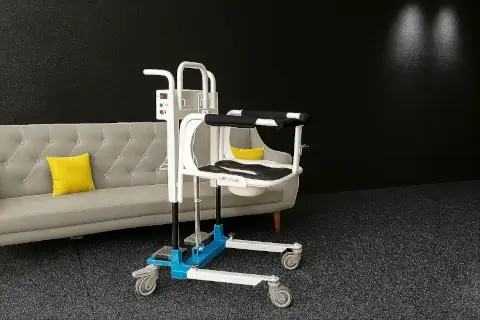
Images and videos help explain the equipment’s form. Obtain base, anchorage, movement and seat details from the model proposal. If relocation between locations is required, state this early and assess the base and setup at each position. Wheels or removable parts alone do not establish suitability for mobile operation beside water.
Technical information needed for selection
Confirm rated load, seat dimensions, travel into the water, base-to-edge geometry and foundation requirements. For power or batteries, obtain supply, charging, charger-location and power-loss instructions. Match materials and protection to the actual pool environment. Moisture resistance does not mean every component may be washed or submerged.
Measure the site and assess the pool edge
Record the edge height, overflow arrangement, nearby obstacles and water depth at the proposed position. Stone or tile finishes do not establish the strength beneath them; base anchorage requires foundation assessment. Keep swimmer circulation and attendant access in the plan. At an outdoor pool, sun, rain, storage and a suitable charging location also need review.
Describe the transfer before buying
Describe how the user will transfer from a wheelchair or chair and what support is needed in the water. Sitting, control access and assistance require an individual assessment. A video demonstration does not replace practical training with the delivered unit. Ask training to cover entry, exit, stopping and assistance during a problem, with the model’s limitations made clear.
A pool lift is different from a patient lift
A patient lift is assessed for care transfers using specified support equipment. Moving it beside a pool does not make it a pool lift. Pool-edge geometry, movement into water and environmental conditions are part of the pool-lift application. Seat-based access, another transfer method or a changed access route should be assessed against the person and facility. Similar appearance or stated capacity does not make equipment interchangeable.
Prepare for use and unexpected stops
Follow the manual’s pre-use checks for the seat, attachments, controls and installation position. Agree assistance and poolside responsibility in advance. If the user is distressed or operation becomes abnormal, stop the movement and seek help under the training and pool safety plan. Do not bypass protection or dismantle occupied equipment to free it. Seek appropriate emergency help if there is immediate danger.
Quotation, maintenance and service scope
The quotation should identify the model, base and anchorage, preparation, delivery, installation and training. Use the model instructions for permitted cleaning products, water-exposed components and inspection schedules. Obtain written warranty terms for the pool environment, local service costs and parts arrangements. A listed price does not establish the same project cost for every pool.
Describe the pool, edge shape and height, poolside space, user transfer needs and location.
2
Assess suitability
Review the model, environment and user needs with a competent assessor.
3
Written proposal
Clarify the model, included items, preparation, costs and service terms before ordering.
4
Handover and training
Request operation checks, the model manual, user training and a maintenance plan at handover.
Questions, answered
Explore questions about choosing, using and maintaining this product.
No matching questions. Try another term or contact us.
Before purchase
On which pool types can this lift be installed?+
Match edge geometry, transfer space, entry depth and foundation to the model. Indoor or outdoor location is only part of the assessment; a flat poolside surface alone does not establish installation suitability.
Is floor/wall demolition required for installation?+
Base anchorage and the underlying structure determine the work. A survey should establish drilling, reinforcement or service requirements. Installation without building work cannot be promised without model and site assessment.
What is the maximum load capacity?+
Use the model plate and technical sheet for rated load and comply with installation conditions. Provide user weight and support needs; a generic percentage margin does not replace model and base assessment.
Does it run on mains power or battery?+
Obtain the model’s supply and charger requirements, electrical setup and power-loss behaviour. Do not assume a battery, a number of journeys or operation while charging. Connect and prepare the equipment only as instructed.
Is it suitable for wheelchair users?+
Assess wheelchair transfer against the person, seat and poolside space. Establish assistance and caregiver numbers; wheelchair users do not all use the same transfer method.
Is it resistant to water and chlorine?+
Check model documentation for materials and permitted water and chemical exposure. General chlorine or corrosion resistance is not assumed. Match cleaning and care to the instructions and pool conditions.
How long does installation take?+
Timing follows assessment of the base, foundation, services and commissioning. Preparation and anchorage work may affect the programme; there is no fixed installation time for every pool.
Is there a portable model?+
If relocation is needed, request a suitable model and setup assessment for each position. Portable availability and its rating need confirmation; wheels alone do not permit use at any pool edge.
Is a special permit required for installation?+
Check site requirements with the project’s technical adviser, building management and relevant authority. Use, shared areas, structural changes and escape routes may affect the decision. Private ownership or a compact device does not establish exemption from approvals.
What warranty/guarantee does it include?+
Obtain the written warranty for the ordered model before purchase. Confirm the start and duration, covered components and battery, exclusions, visit costs and service provider. Terms for another model or an older page do not establish coverage for your order.
During use
How do we seat the user on the lift chair properly?+
A person-specific assessment and seat instructions should determine and teach the transfer. Height, body support and attendant space matter. Do not pull the person or add an unapproved transfer board to bridge a height difference.
What safety checks should we do before the user sits?+
Follow the manual’s checks for base and anchorage, seat and attachments, controls and power. Check the transfer area and assistant access too. Do not use equipment with damage, a fault or uncertain setup.
How to seat the user correctly and fasten the safety belt?+
Support and restraint adjustment must be specified and taught for the person and model. Do not use a generic belt-tightness rule or add arbitrary straps. Assess seated stability and comfort as part of the transfer.
How to level the seat with the pool edge or wheelchair for a smooth transfer?+
Adjust seat height and position only within model limits and the trained method. If the transfer surface does not match the wheelchair or deck, reassess the method; improvised pads or supports do not establish compatibility.
Where should hands and feet be during descent to avoid hitting the wall?+
Use the trained body and limb positioning and check clearance from the edge and wall. Do not improvise changes to angles or components to overcome a collision problem.
How long does one full down/up cycle take, and when should we release the button?+
Cycle time and control behaviour depend on the model and travel. Learn holding and releasing controls on the actual equipment; a fixed time or universal button sequence is inappropriate for different controls.
If the lift stops mid-travel or the user panics, how to use the emergency stop?+
Stop movement as trained, remain with the user and use the pool assistance plan. Do not reset an emergency control without addressing the cause. Release or lowering procedures require model-specific training; seek emergency help if there is immediate danger.
What is the ideal water depth at the entry point?+
Assess entry depth and position against the model, user and aquatic activity. A general depth range does not suit everyone. The facility team and assessor should establish entry, exit and support in the water.
Can the user operate the controls alone, or should a caregiver always be present?+
Independent use or attendant support must be established in the individual assessment and pool safety plan. Access to a remote does not establish unattended suitability. Agree how to request help and leave the water in advance.
How to quickly rinse and dry the seat and chlorine-exposed parts after use?+
Use the manual’s cleaning method and products; water-exposed and electrical components may have different instructions. Do not pour water over the motor, controls or charger unless explicitly permitted.
After-sales support
How long is the device warranty?+
Obtain the written warranty for the ordered model before purchase. Confirm the start and duration, covered components and battery, exclusions, visit costs and service provider. Terms for another model or an older page do not establish coverage for your order.
What should we do in case of a malfunction?+
Stop using faulty equipment and give support the model, serial number and symptoms or error code. Do not repeatedly test it with a user aboard, remove protection or attempt an improvised repair. The assessment determines the service method and timing.
Can we obtain spare parts?+
Provide the model, serial number and part details for compatibility assessment. Stock, price and supply time need confirmation when requested. Do not substitute lookalike parts or modify protective components without technical approval.
Which cities are covered by support?+
State the equipment location, model and service needed. Confirm whether a visit, parts delivery or workshop work is available and what travel costs apply. Do not assume permanent coverage everywhere or an immediate visit.
Is there a user manual?+
Request practical training and the manual for the delivered model. Users and assistants need to understand operation, pre-use checks, stopping and assistance during a problem. A general video does not replace training or an individual assessment.
How much does periodic service cost?+
Request separate diagnosis, parts, labour and transport or travel costs. Agree the estimate and repair scope before work starts. An older page amount or another device’s repair bill is not a fixed tariff for your request.
Can I upgrade or trade in the device?+
Exchange or upgrade availability depends on the model, condition and current sales terms. Obtain written compatibility, cost and return or collection terms. A newer component does not authorise increased capacity or a different use.
How long do the batteries last?+
Battery life depends on type, charging and use. Obtain replacement and performance-loss criteria from model documents; no universal duration is stated. A replacement battery must be compatible and approved.
Can the warranty be extended?+
Check warranty extensions against current model terms. Obtain duration, coverage, exclusions and cost separately from the original warranty; automatic or universal extension is not assumed.
Do you provide in-person training?+
Request practical training and the manual for the delivered model. Users and assistants need to understand operation, pre-use checks, stopping and assistance during a problem. A general video does not replace training or an individual assessment.
Product introduction and demonstration videos
Demonstrated conditions may differ from your site. Confirm specifications and operation for the ordered model.
Lift shown at the poolside
Seat and movement at a pool
Your product review
Share your experience or ask a question.
Leave a comment
No published reviews yet. Be the first to share your experience.
Discuss the pool access point
Describe the pool, edge shape and height, poolside space, user transfer needs and location.

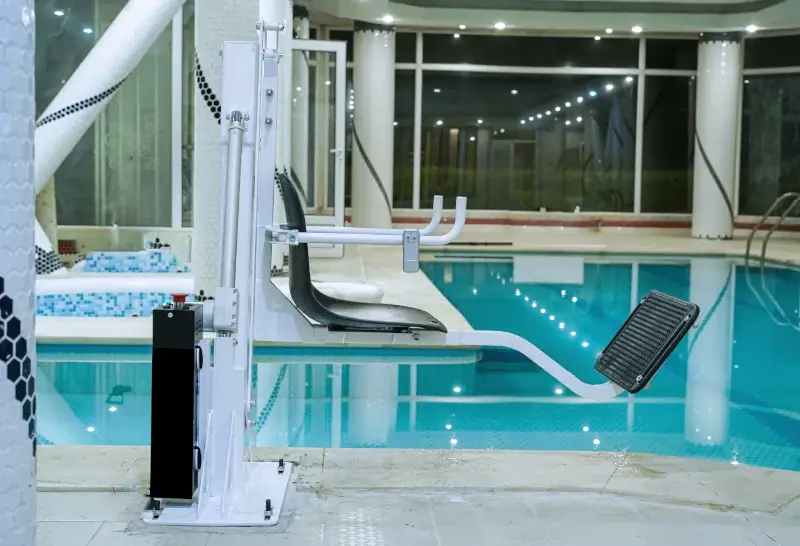 Image unavailable. Contact us to see this product.
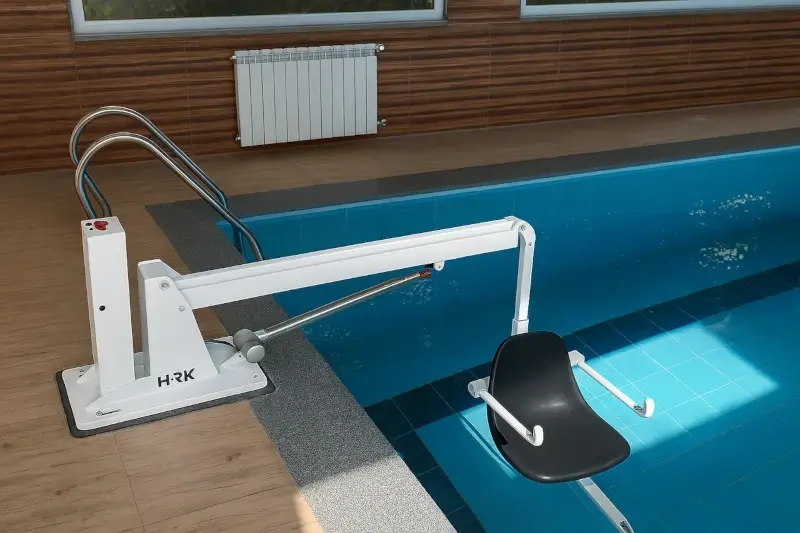 Image unavailable. Contact us to see this product.
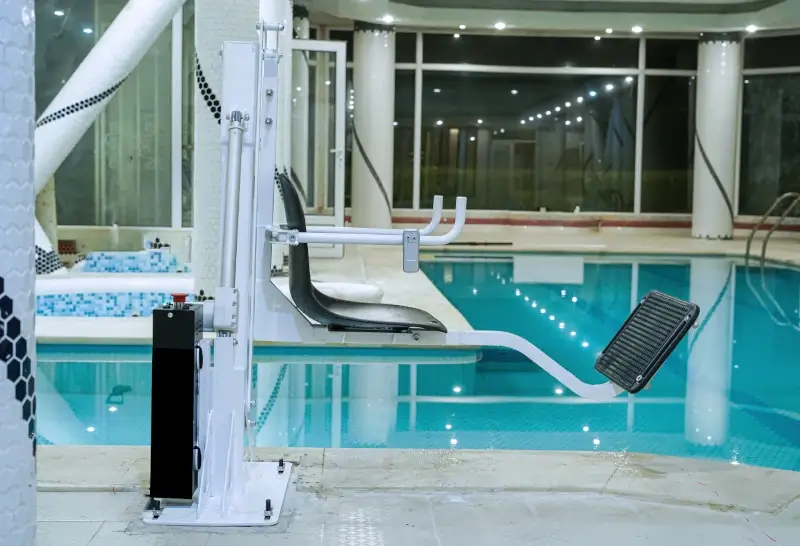 Image unavailable. Contact us to see this product.
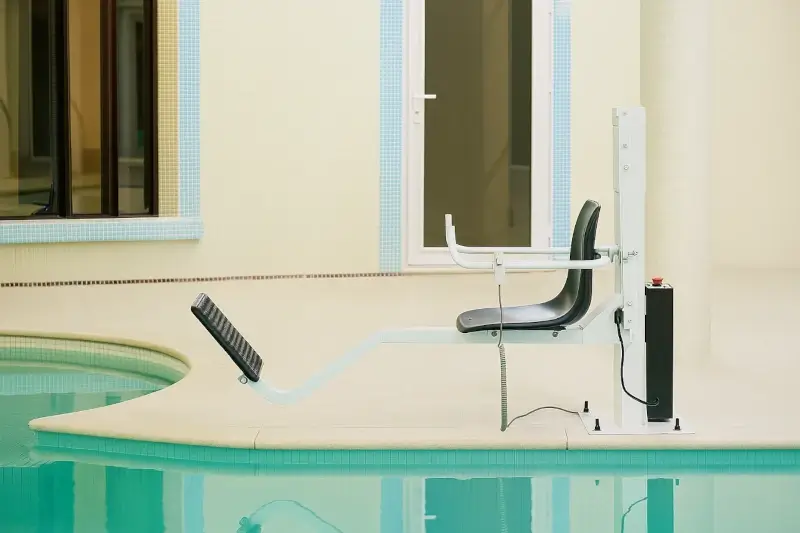 Image unavailable. Contact us to see this product.
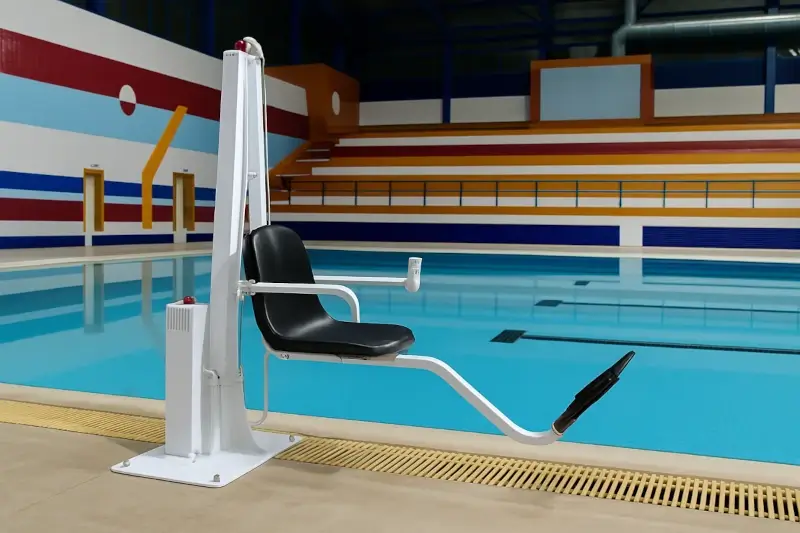 Image unavailable. Contact us to see this product.
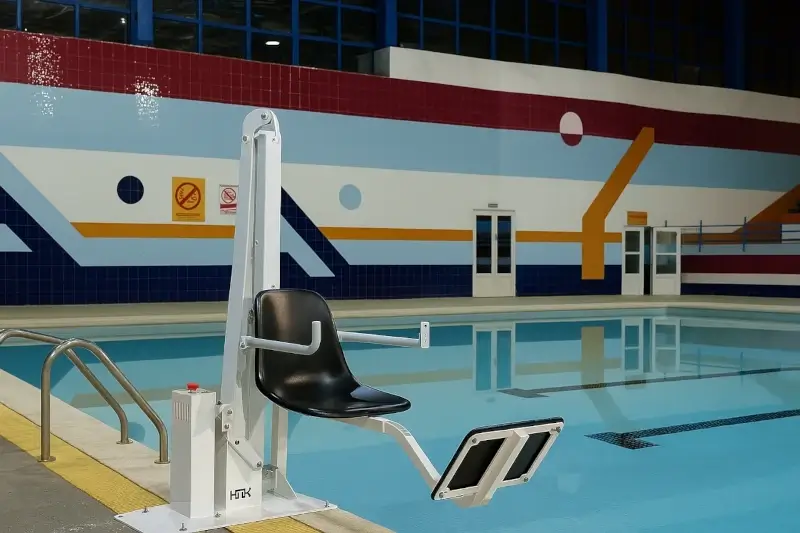 Image unavailable. Contact us to see this product.
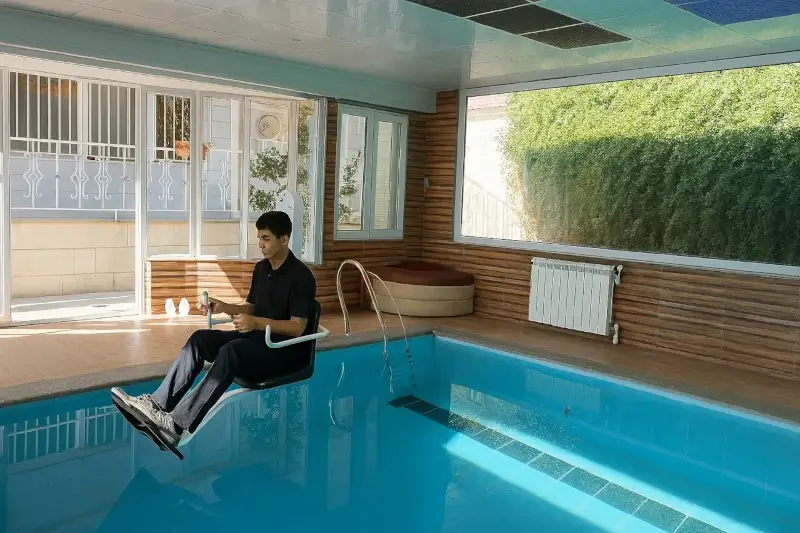 Image unavailable. Contact us to see this product.
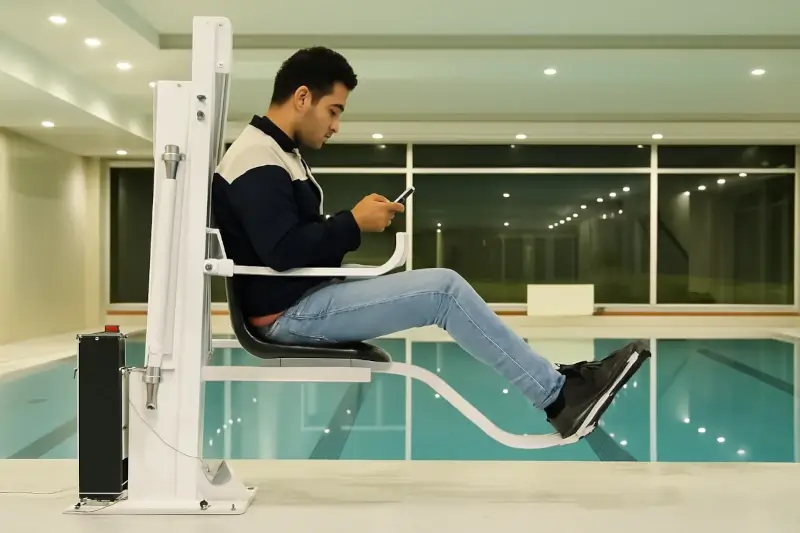 Image unavailable. Contact us to see this product.
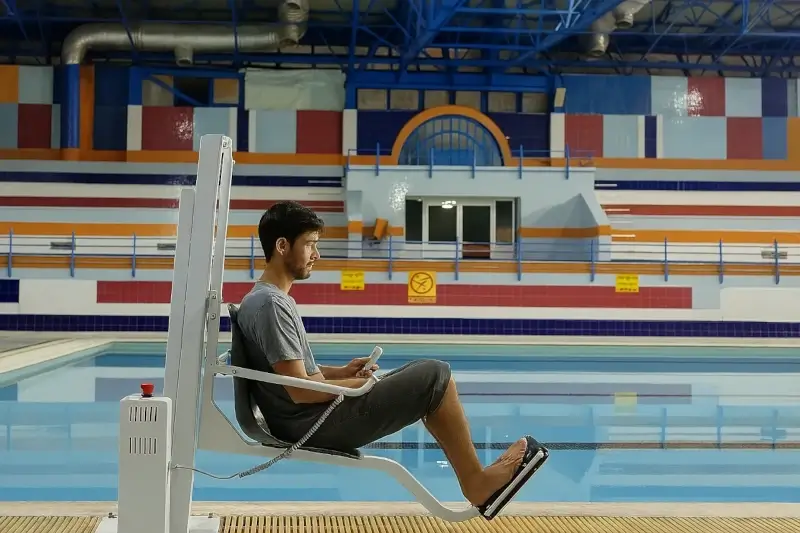 Image unavailable. Contact us to see this product.
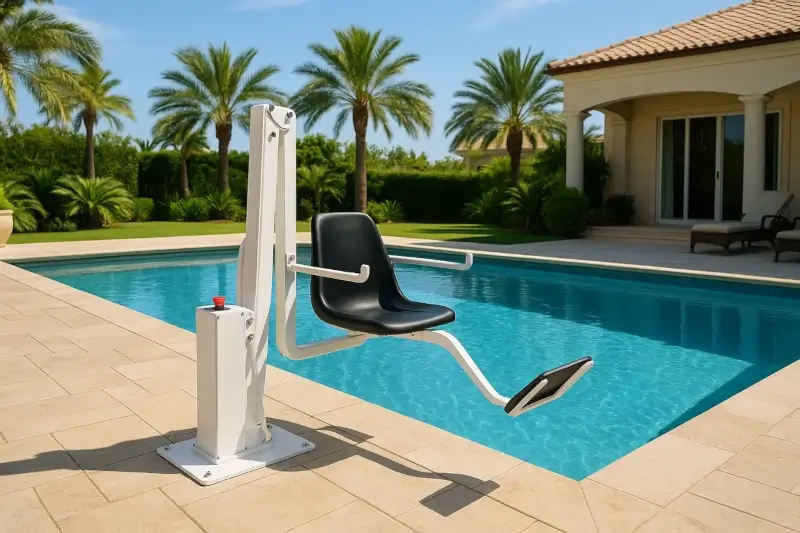 Image unavailable. Contact us to see this product.
View details
Your product review
Share your experience or ask a question.
Leave a comment
No published reviews yet. Be the first to share your experience.